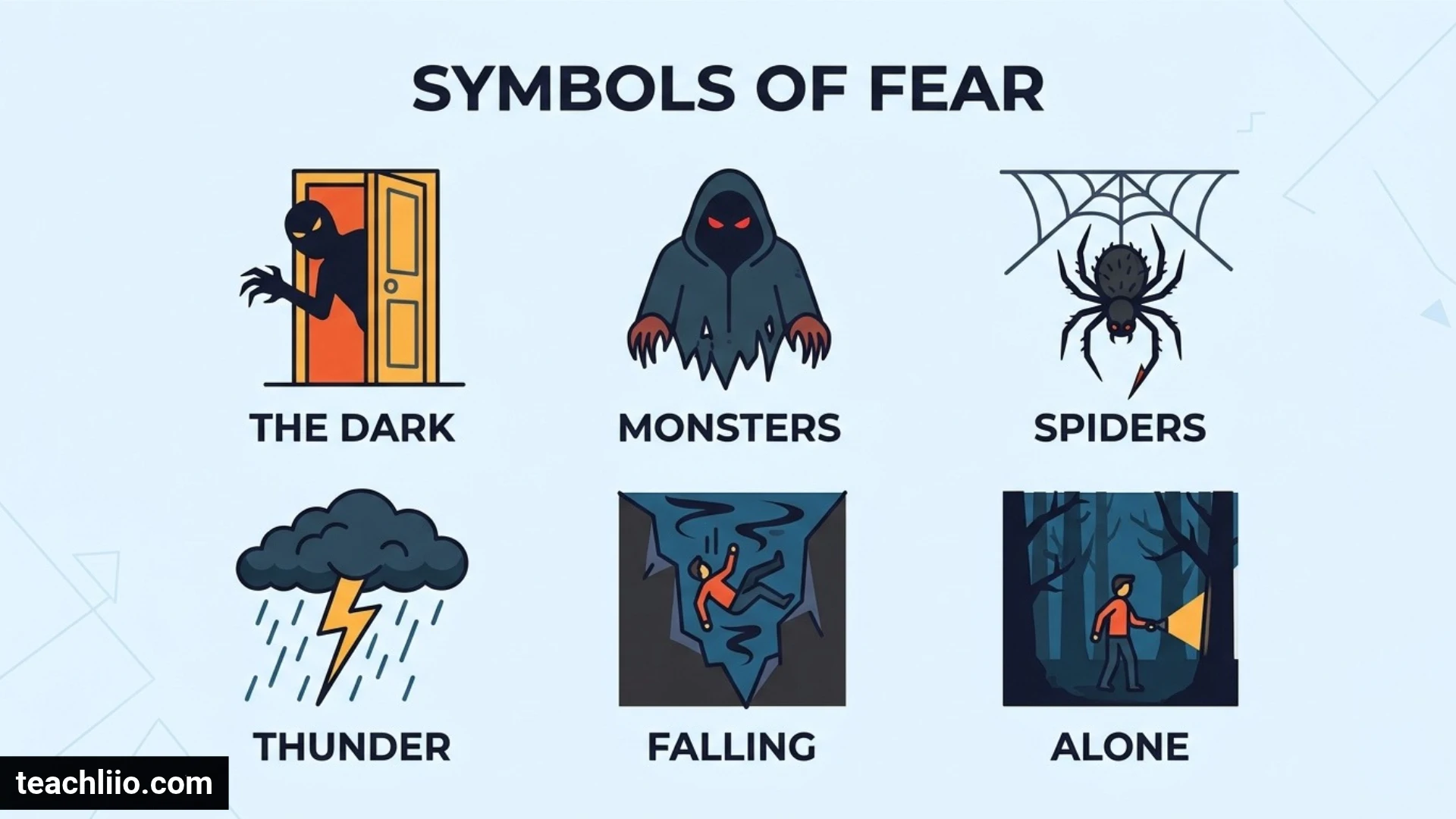
Fear is a powerful emotion that can be difficult to express with words alone. A dark shadow, a skull, a sudden storm, or an empty hallway can communicate danger and uncertainty without showing what is frightening. These images are known as symbols of fear because they can represent emotions, threats, or experiences that make people feel uneasy.
Symbols of fear appear in literature, mythology, movies, artwork, folklore, and everyday visual communication. Some represent death or physical danger, while others suggest anxiety, hidden truths, isolation, or the fear of the unknown. Their meanings are not always the same because culture, personal experience, and context influence how people interpret them.
In this guide, you will discover 15 common symbols of fear, learn what they can represent, and explore how writers, artists, and designers use them to communicate frightening ideas. You will also learn how to distinguish symbols of fear from symbols of danger and understand why the same image can have different meanings in different situations.
What Are Symbols of Fear?
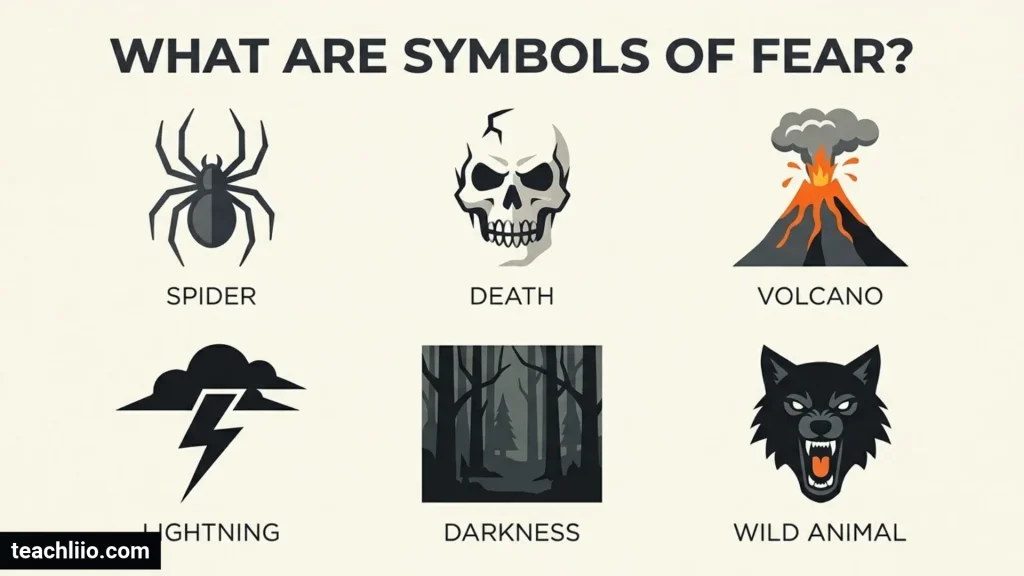
Symbols of fear are objects, animals, colors, places, or images that represent or communicate feelings of dread, anxiety, danger, or uncertainty. They allow people to express an emotion indirectly through something that readers or viewers can recognize.
For example, a skull may suggest death, while a shadow in a dark hallway can create uncertainty about what is nearby. A storm might represent an approaching crisis, and a locked door may suggest a secret that someone is afraid to discover.
A symbol does not have to be frightening by itself. Its meaning often depends on how it appears in a particular situation.
The Difference Between Fear, Danger, and the Unknown
Although these concepts are connected, they are not identical.
- Fear is an emotional response to a perceived threat or frightening possibility.
- Danger refers to a threat or the possibility of harm.
- The unknown refers to something that is not understood, visible, or predictable.
A warning sign may communicate danger directly. A shadow may suggest an unknown presence. A character who sees the shadow and becomes terrified demonstrates fear.
Understanding these differences helps you choose symbols that communicate the exact idea you want to express.
Why Do People Use Symbols of Fear?
Symbols make frightening ideas easier to communicate and remember. In a horror story, an unexplained sound can create suspense because the audience does not know its source. In a painting, dark colors and isolated surroundings can communicate loneliness or unease.
Writers and artists also use fear symbols to explore deeper themes, such as mortality, guilt, insecurity, loss, and uncertainty. Instead of telling the audience that a character feels afraid, they can show the character avoiding a dark room or staring nervously at a locked door.
15 Common Symbols of Fear and Their Meanings
The following symbols are frequently used to communicate fear, danger, suspense, or the unknown. Their interpretations are common associations rather than universal definitions.
1. Skull and Bones — Death and Mortality
A skull is one of the most recognizable symbols associated with death. It can represent mortality, the fragility of life, danger, or the reminder that every living person eventually dies.
Skulls appear in horror stories, Gothic artwork, warning signs, and historical imagery. A skull and crossbones, for example, is widely used to communicate certain types of serious danger, including poisonous substances.
However, skulls do not always represent fear or evil. They can also symbolize remembrance, the acceptance of mortality, or the importance of appreciating life.
Example: A writer might place a skull on an abandoned table to suggest that the location has a dangerous history.
2. Shadows — The Fear of the Unknown
Shadows can represent hidden threats, uncertainty, secrecy, or the parts of a situation that remain unexplained. They are especially effective in frightening scenes because viewers cannot always identify the object or person creating them.
A familiar room may feel threatening when an unfamiliar shadow appears on its wall. The uncertainty encourages the imagination to consider possibilities that may be more frightening than reality.
In literature, shadows can also represent concealed emotions, guilt, or a character’s hidden side.
Example: A character notices a tall shadow moving across a doorway but cannot see anyone standing outside.
3. Ravens — Mystery and Foreboding
Ravens are often associated with mystery and ominous moods in Gothic literature and horror stories. Their dark appearance, intelligence, and presence in certain historical and literary settings have contributed to these associations.
In a frightening scene, a raven sitting silently on a bare branch may suggest that something troubling is about to happen. Nevertheless, ravens also carry meanings connected with wisdom, knowledge, and spiritual significance in different traditions.
Their meaning depends on the story and cultural background rather than the bird itself.
Example: A raven appearing repeatedly before a character discovers a family secret can create a sense of foreboding.
4. Snakes — Hidden Danger and Threat
Snakes can symbolize danger because they may remain concealed before suddenly appearing. In stories, they can represent a hidden threat, betrayal, deception, or fear of something difficult to control.
Their symbolic meanings are varied. Some traditions associate snakes with renewal, healing, transformation, or wisdom. A snake shedding its skin, for instance, may suggest change rather than danger.
Example: A snake concealed beneath fallen leaves might represent a threat that the main character has not yet noticed.
5. Spiders and Webs — Entrapment and Anxiety
Spiders and their webs can symbolize entrapment, helplessness, or the feeling of being caught in a situation that is difficult to escape. Their use in horror imagery may evoke discomfort, particularly when a character encounters a web in an abandoned or confined place.
A web can also represent a complicated problem, a trap, or a network of secrets. However, spiders are not exclusively frightening symbols; they can represent patience, craftsmanship, and creativity as well.
Example: A character walking through a web-covered room might feel that the place has been abandoned for years and that something is waiting inside.
6. Darkness — Uncertainty and Vulnerability
Darkness often represents fear because it limits visibility. When people cannot clearly see their surroundings, it becomes harder to understand what is happening or identify possible threats.
In stories, darkness can create suspense, represent isolation, or suggest hidden information. It may also symbolize sadness or a period of uncertainty in a character’s life.
Darkness does not always have a negative meaning. It can also represent rest, privacy, mystery, or reflection.
Example: A character entering a dark basement may become frightened because every sound seems unfamiliar and every corner hides something from view.
7. Fog — Confusion and Uncertainty
Fog makes familiar surroundings difficult to recognize. It can symbolize confusion, a lack of direction, uncertainty about the future, or the inability to understand a situation clearly.
In horror and mystery stories, fog often conceals important details. It allows the writer to reveal information gradually and keeps readers wondering what might appear next.
Fog is particularly useful when a character must make a decision without having all the facts.
Example: A traveler becomes lost in thick fog and cannot tell whether the distant shape is a building, a tree, or another person.
8. Storms — Chaos and Emotional Turmoil
Storms can represent danger, conflict, disruption, or overwhelming emotions. Thunder, lightning, strong winds, and heavy rain create a dramatic atmosphere that can reflect what is happening inside a character.
A storm may symbolize an approaching crisis or a situation that has become difficult to control. In other stories, a storm can mark a turning point before a character begins a new chapter.
Example: A violent storm begins as two characters argue, reflecting the growing tension between them.
9. Ghosts — The Unseen and Unresolved Past
Ghosts often represent the supernatural, uncertainty about death, unresolved grief, or memories that refuse to disappear. Their frightening effect comes partly from the question of whether they are real, imagined, or connected to something the characters do not understand.
Ghosts can also symbolize guilt or unfinished business. In some stories, the ghost is not the main threat but a reminder of a painful event that has not been resolved.
Example: A character hears familiar footsteps in an empty house and begins to suspect that someone from the past has returned.
10. Masks — Hidden Identity and Deception
Masks can symbolize concealed identity, secrecy, deception, or the inability to understand another person’s intentions. An expressionless mask may feel unsettling because it hides the wearer’s emotions.
In horror stories, masks can make a character appear unfamiliar or unpredictable. In other settings, masks may represent celebration, performance, protection, or cultural traditions.
Example: A masked stranger stands silently at the end of a hallway, leaving the main character unable to judge whether the stranger is friendly or dangerous.
11. Wolves — Wildness and Perceived Threat
Wolves can symbolize danger, predatory power, or fear of the wilderness. In some traditional fairy tales, a wolf represents a threatening outsider or a dangerous creature that a character must outsmart.
However, wolves can also symbolize loyalty, independence, instinct, and community. Their meaning depends on the story rather than a universal association between wolves and evil.
Example: The distant howl of a wolf may increase a traveler’s fear of being alone in an unfamiliar forest.
12. Black Cats — Mystery and Superstition
Black cats appear in some Western folklore and modern Halloween imagery as symbols of mystery, magic, or bad luck. These associations have influenced how black cats are portrayed in certain stories and illustrations.
However, beliefs about black cats differ across cultures and communities. They are not inherently unlucky, dangerous, or supernatural.
Example: A black cat crossing the path of a character in a superstition-focused story might make that character fear that something bad is about to happen.
13. Locked Doors — Secrets and the Unknown
A locked door can symbolize a hidden truth, an obstacle, or something a character is afraid to discover. The fear comes from uncertainty about what lies behind the door and whether opening it will lead to danger.
Locked doors can also represent emotional barriers, forbidden knowledge, or the feeling of being trapped.
Example: A character finds a locked room in an old family home and becomes increasingly anxious after hearing a sound from inside.
14. Cracked Mirrors — Fragile Identity and Distorted Reality
A cracked mirror can symbolize a damaged self-image, a broken relationship, instability, or the fear that reality is not what it seems.
In horror stories, a mirror may create discomfort when a reflection appears distorted or unexpected. In a more realistic story, it may represent a character struggling with identity or a painful change in their life.
A cracked mirror does not have one fixed meaning, so its interpretation should fit the story.
Example: After a frightening experience, a character looks into a cracked mirror and feels that their familiar life no longer seems the same.
15. Hourglasses and Clocks — Time Running Out
Clocks and hourglasses can symbolize mortality, urgency, deadlines, or the fear of losing control over time. They become especially powerful when a character knows that an important event is approaching but cannot stop it.
A ticking clock can increase suspense by reminding the audience that time is passing. An hourglass can create a visual image of a limited opportunity or an unavoidable ending.
Example: A character watches the sand fall through an hourglass while trying to solve a problem before time runs out.
Colors That Symbolize Fear
Colors can create an emotional atmosphere before a viewer understands the details of an image. Their associations are influenced by culture, personal experience, and the way colors are used in art and media.
Black — Darkness and the Unknown
Black is frequently used in horror imagery to suggest darkness, secrecy, death, or uncertainty. A black background can make a figure difficult to see, encouraging the viewer to imagine what may be hidden.
Black can also represent elegance, authority, mourning, or strength. Its meaning depends on the context.
Red — Danger and Urgency
Red may suggest blood, injury, anger, warning, or immediate danger. In a frightening scene, a red light or a small red stain can draw attention to a possible threat.
Red also represents love, celebration, passion, and vitality in many settings. It should not automatically be interpreted as a sign of fear.
Gray — Gloom and Uncertainty
Gray skies, fog, and faded surroundings can create an atmosphere of sadness, uncertainty, or emotional heaviness. Gray can be effective when a story needs to communicate a lack of clarity or a sense that something is wrong.
Green — The Unnatural or Unsettling
Unusual shades of green sometimes appear in horror artwork to suggest sickness, decay, or something unnatural. This is a visual convention rather than a universal cultural meaning.
How to Combine Colors to Create Fear
Artists can make fear more convincing by combining color with lighting and setting. A dark hallway with a single red warning light may suggest a threat, while a gray landscape covered in fog may create uncertainty.
The key is to use color to support the scene’s message rather than assuming that a particular color always represents fear.
Symbols of Fear in Literature and Horror
Writers use symbols to communicate emotions, create suspense, and explore deeper themes. The same object can have a different meaning depending on the character’s experiences and the events surrounding it.
Darkness and Shadows in Stories
Darkness limits what a character can see, while shadows suggest that something may be present but remains unidentified. Together, they can communicate vulnerability and uncertainty.
A writer can make these symbols more effective by revealing details gradually. For example, a character might first notice a shadow, then hear footsteps, and only later discover what caused them.
Blood, Bones, and Mortality
Blood can represent injury, guilt, violence, sacrifice, or vulnerability. Bones and skulls often remind readers of death and the temporary nature of life.
The meaning depends on the scene. Blood on a battlefield may suggest the cost of conflict, while blood on a character’s hands may symbolize guilt or responsibility.
Abandoned Places and Isolation
Empty houses, deserted roads, and abandoned buildings can symbolize loneliness, forgotten memories, or fear of being without help. Their frightening effect often comes from the contrast between what the place once was and what it has become.
A familiar school, home, or workplace can become unsettling when it is unexpectedly empty.
How to Interpret a Fear Symbol in Literature
To analyze a symbol, ask three questions:
- What is the symbol? Identify the object, setting, animal, or image.
- What happens around it? Consider the character’s actions, emotions, and the events in the scene.
- What larger idea might it represent? Explain how the symbol connects to fear, uncertainty, danger, or another theme.
For example, a locked door may simply be part of a building. But if a frightened character repeatedly avoids opening it, the door may also represent a truth the character does not want to face. Support your interpretation with details from the text rather than treating the meaning as automatic.
Symbols of Fear Across Different Cultures
Fear symbolism is not identical across all cultures. Folklore, religion, history, local environments, and personal experiences influence how people interpret animals, colors, objects, and supernatural figures.
Skulls and Remembrance
Skulls are used in horror imagery to communicate death and danger. However, skull imagery also appears in traditions connected with remembrance and reflection on mortality.
For example, Mexican Día de Muertos traditions include decorated skulls and other imagery associated with honoring deceased loved ones. In this context, the imagery can express remembrance, family connection, and celebration rather than simply fear.
Ravens and Crows
Ravens and crows appear in stories with a variety of meanings. Some literary traditions associate them with ominous events, death, or mystery, while other traditions connect them with intelligence, knowledge, or spiritual significance.
It is therefore inaccurate to describe these birds as universally unlucky. Their meaning should be understood within the particular story or tradition.
Snakes and Transformation
Snakes may represent danger or deception in some stories, but they can also symbolize healing, wisdom, renewal, or transformation.
A snake appearing in a frightening scene may represent a threat. A snake shedding its skin, on the other hand, may suggest change or renewal.
Why Cultural Context Matters
Before using a traditional or religious symbol in a story, artwork, or tattoo, research its background. Identify the specific culture or tradition, distinguish historical meanings from modern interpretations, and avoid assuming that every member of a community understands the symbol in the same way.
This approach makes symbolic interpretations more accurate and respectful.
Symbols That Represent Anxiety and Fear of the Unknown
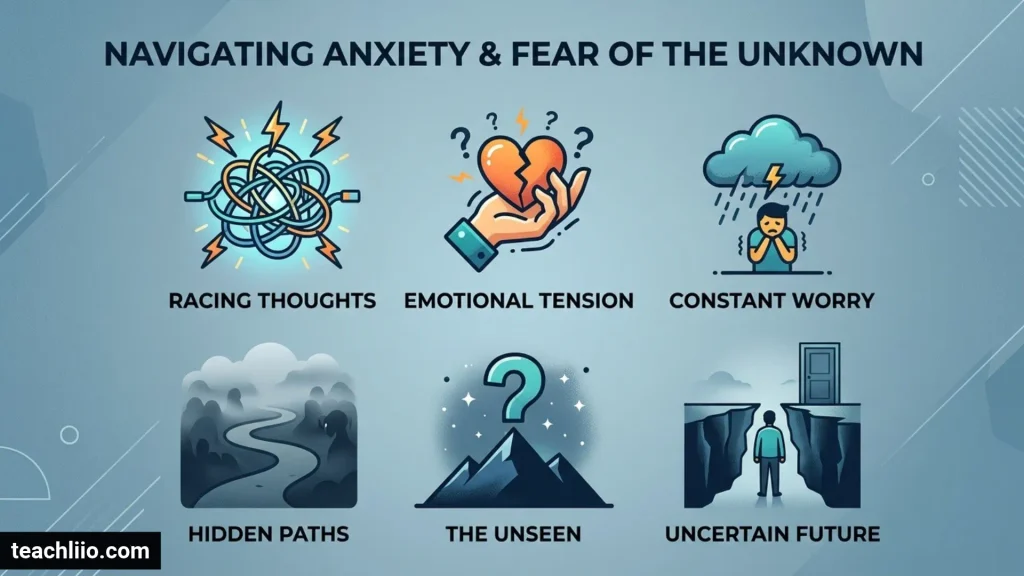
Fear does not always come from an obvious threat. Sometimes it comes from uncertainty, isolation, or the feeling that an important event is approaching.
Fog and Mazes
Fog can represent confusion because it hides the path ahead. A maze can symbolize feeling trapped, overwhelmed, or unable to find a solution.
These images are useful when a character does not understand their situation or cannot identify a clear way forward.
Empty Hallways and Isolated Places
An empty hallway may represent loneliness, anticipation, or vulnerability. Its meaning becomes more powerful when the character expects someone to be nearby but finds nobody.
Isolation can also increase suspense by removing the possibility of immediate help.
Flickering Lights and Unexplained Sounds
A flickering light can suggest uncertainty because it prevents a character from seeing their surroundings clearly. An unexplained sound can create fear by suggesting that something may be nearby.
Neither image has a fixed symbolic meaning. Their effectiveness depends on how the scene establishes uncertainty and how the character responds.
Locked Doors and Cracked Mirrors
A locked door may represent an unknown truth or an obstacle that a character fears confronting. A cracked mirror may suggest a damaged identity, an unstable situation, or a distorted understanding of reality.
These symbols can be especially useful in psychological stories because they communicate internal fears without requiring a visible monster or physical threat.
How to Choose a Symbol of Fear for Art, Writing, or Tattoos
The best symbol depends on what you want to communicate. Fear of death, fear of uncertainty, and fear of losing control are different experiences, so they may need different visual representations.
For Stories and Poems
Choose a symbol that connects to the character’s situation. Shadows can represent an unknown threat, a ticking clock can create urgency, and a storm can reflect growing conflict.
Use the symbol consistently enough to establish its importance, but avoid explaining its meaning every time it appears. Let the reader interpret how it connects to the story.
For Drawings and Graphic Design
Think about composition, contrast, lighting, and empty space. A small figure surrounded by a dark landscape may communicate vulnerability, while a partly hidden face may create uncertainty.
You can also combine symbols. For example, a locked door in a foggy hallway can suggest both a hidden truth and an uncertain path.
For Tattoos and Personal Designs
First decide whether you want to represent fear itself, a difficult experience, or the process of overcoming fear.
A skull might express mortality or acceptance of life’s limits. A storm clearing into sunlight could represent hope after hardship. An open door may symbolize moving forward rather than remaining trapped by uncertainty.
Research the cultural background of any traditional symbol before choosing it, especially if it has religious or ceremonial significance.
For School Assignments
Start with a clear definition of the symbol, identify where it appears, and explain how it connects to the text’s events or themes.
For instance, instead of writing that “fog means fear,” explain how the fog hides the character’s surroundings, prevents them from identifying a safe route, and increases their uncertainty. This makes the interpretation more specific and convincing.
Frequently Asked Questions
What Is the Most Common Symbol of Fear?
Darkness, shadows, skulls, and threatening creatures are common symbols associated with fear. There is no single symbol that represents fear in every culture or situation. The most appropriate choice depends on whether the intended meaning is danger, mortality, uncertainty, or anxiety.
What Animal Symbolizes Fear?
Snakes, spiders, and wolves are frequently used to evoke fear in particular stories and visual settings. Ravens can also create a mysterious or ominous atmosphere. However, these animals can have positive or complex meanings in other traditions.
What Color Represents Fear?
Black is often used to suggest darkness or the unknown, while red may communicate danger or urgency. Gray can create a gloomy atmosphere, and unusual green shades sometimes appear in horror imagery. Color meanings vary across contexts and cultures.
What Symbol Represents Fear of the Unknown?
Shadows, fog, dark forests, locked doors, and empty hallways can represent fear of the unknown. These images hide information or make it difficult to understand what might happen next.
What Symbol Represents Overcoming Fear?
An open door, a rising sun, a light appearing in darkness, or a storm clearing can represent hope and the movement beyond fear. These are interpretive choices rather than universal definitions, so select an image that fits your intended message.
Are Symbols of Fear the Same Across All Cultures?
No. Symbols are shaped by cultural history, folklore, religion, art, and personal experience. An image associated with fear in one setting may represent wisdom, protection, remembrance, or good fortune in another.
How Are Symbols of Fear Used in Literature?
Writers use symbols of fear to build suspense, express emotions, and explore themes such as mortality, guilt, isolation, and uncertainty. Shadows, storms, abandoned places, and locked doors can suggest threats or internal struggles without explaining every feeling directly.
What Is the Difference Between a Fear Symbol and a Warning Sign?
A warning sign is generally intended to communicate a specific hazard or instruction. A fear symbol communicates an emotional or thematic idea, such as uncertainty or vulnerability. A skull-and-crossbones image may function as a practical warning in one context and a symbol of mortality in another.
Conclusion
Symbols of fear help people communicate frightening emotions and difficult ideas through recognizable images. Skulls can represent mortality, shadows can suggest hidden threats, fog can express uncertainty, and storms can reflect conflict or overwhelming emotions. Animals, colors, masks, and isolated places can also create fear when their meanings fit the surrounding context.
The most effective symbol is not necessarily the darkest or most frightening image. It is the one that communicates the intended idea clearly. Whether you are writing a story, completing a school assignment, designing artwork, or exploring cultural symbolism, consider the symbol’s context and explain how it connects to the emotion you want to express.
Remember that symbolic meanings are not universal. Research cultural traditions carefully, avoid treating interpretations as fixed definitions, and use examples to show how a symbol works in practice. With thoughtful choices, symbols of fear can communicate much more than fear alone: they can reveal uncertainty, hidden truths, vulnerability, and the courage it takes to face the unknown.

I’m Arthur Ellison, a British writer with a fascination for numbers, quantities, and the questions people ask about how many. I enjoy researching facts, comparisons, measurements, and everyday statistics, presenting them in straightforward language. My goal is to make numerical information easy to understand, useful, and interesting for curious readers everywhere.
Books:
The Curious World of How Many
Numbers, Quantities and Everyday Facts