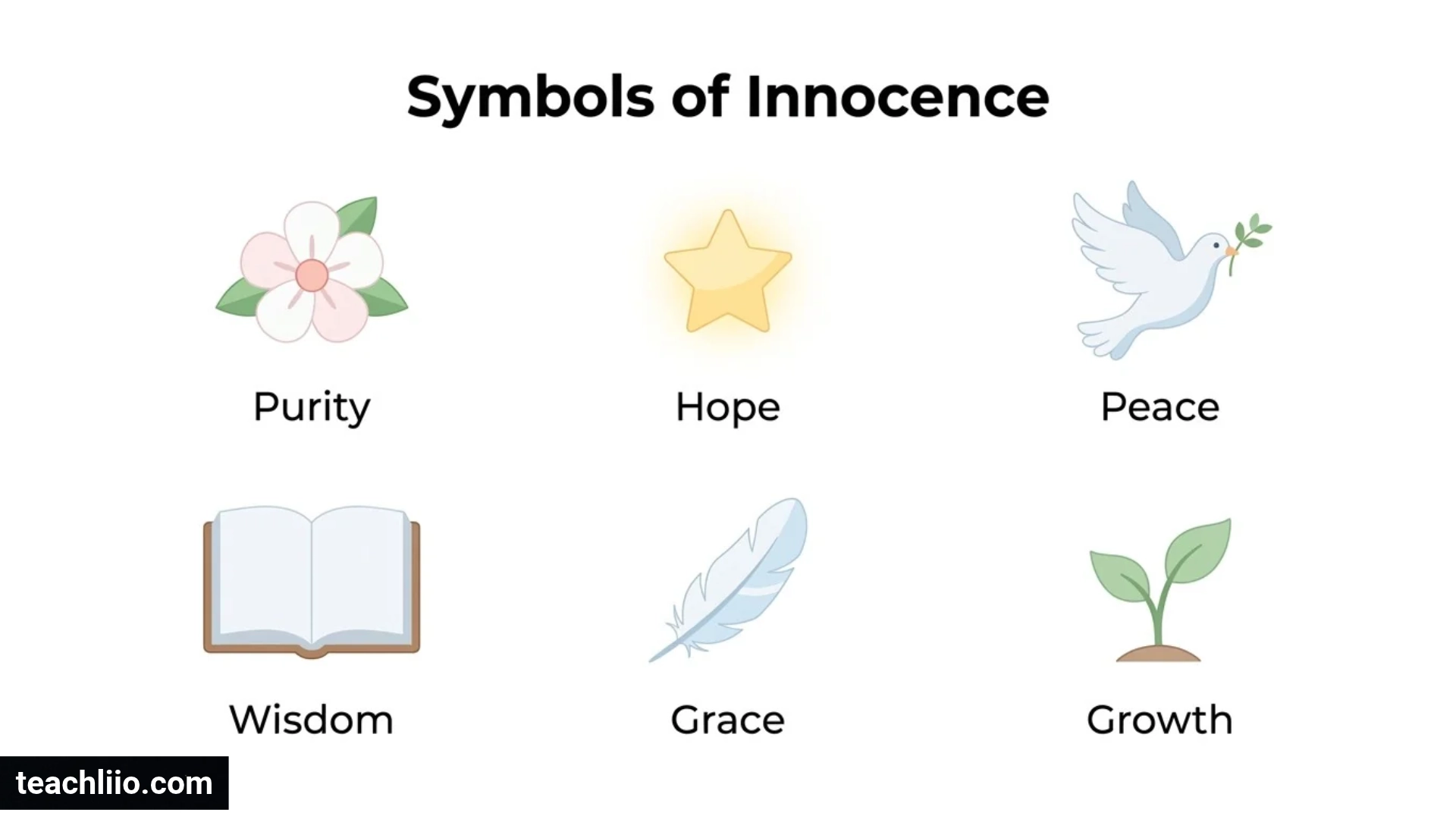
Innocence is often connected with a pure heart, honest intentions, kindness, trust, and the simple beauty of childhood. Across art, literature, religion, and everyday life, people use different symbols to express these qualities. A white dove may suggest peace and gentleness, a lamb can represent harmlessness, and a daisy may remind us of a child’s carefree spirit.
But not every symbol of innocence means exactly the same thing. Some have deep historical or religious roots, while others are modern artistic associations. Understanding the difference helps you choose a symbol that expresses the message you really want.
In this guide, you will discover 25 symbols of innocence, their meanings, backgrounds, and common uses. You will also learn which animals, flowers, colors, and childhood objects represent innocence, along with ideas for tattoos, writing, artwork, and meaningful designs.
What Does Innocence Symbolize?
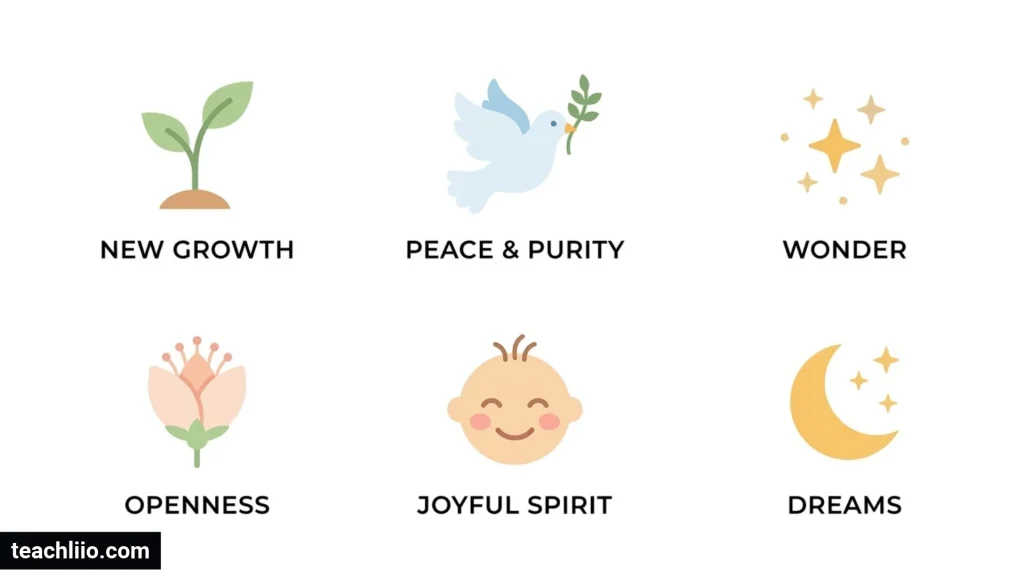
Innocence commonly symbolizes freedom from harmful intentions, sincerity, trust, gentleness, and a lack of experience with wrongdoing. It can also represent childhood, emotional openness, hope, and a fresh beginning.
The meaning changes with the situation. In a story, innocence might describe a character’s honesty or lack of worldly experience. In religious artwork, it may refer to spiritual purity. In a memorial design, it may express the tenderness associated with a child or the memory of someone loved.
Innocence vs. Purity: What Is the Difference?
Innocence and purity are closely related, but they are not identical.
- Innocence often describes a person who has not intended harm, has little experience of wrongdoing, or approaches the world with trust and openness.
- Purity usually suggests cleanliness, sincerity, moral goodness, or spiritual wholeness.
- Peace refers to calm, harmony, and freedom from conflict.
- Gentleness describes a kind and careful way of treating others.
A white dove, for example, is widely associated with peace and has Christian connections to the Holy Spirit. It can also suggest innocence because of its gentle appearance. However, peace and innocence are different ideas, even when one image represents both.
Why Are White Objects Often Connected With Innocence?
White is frequently used to communicate innocence because it is visually associated with cleanliness, simplicity, and light. In many Western Christian traditions, white clothing and flowers appear in ceremonies connected with purity and new beginnings.
However, colors do not have one universal meaning. Their associations depend on culture, religion, historical period, and context. White can represent mourning in some traditions, so it should not automatically be described as a symbol of innocence everywhere.
25 Symbols of Innocence and Their Meanings
The following symbols include animals, flowers, natural elements, and familiar objects. Some have established historical or religious associations, while others are mainly used in modern art and popular visual culture.
1. White Dove — Peace, Gentleness, and Innocence
White dove isolated on white background
The white dove is one of the most recognizable images associated with peace, gentleness, and spiritual hope. Its calm appearance and soft white feathers make it a natural visual choice for representing a peaceful heart.
In Christian art, the dove is especially important as a symbol of the Holy Spirit. It also appears in stories and artwork connected with peace and reconciliation. Its association with innocence is often an extension of these qualities rather than its only traditional meaning.
What it represents: Peaceful intentions, gentleness, hope, and spiritual goodness.
2. White Lamb — Harmlessness and Childlike Innocence
cute little lamb on fresh green meadow
A white lamb often represents innocence because it is young, gentle-looking, and commonly associated with vulnerability. Its image can suggest a life that deserves care and protection.
The lamb also has a strong place in Christian symbolism. The phrase Lamb of God refers to Jesus Christ, connecting the animal with sacrifice and redemption. In cemetery art, lambs have also been used on children’s graves to express innocence and tenderness.
What it represents: Harmlessness, vulnerability, gentleness, and spiritual innocence.
3. White Lily — Purity and Spiritual Innocence
The white lily has a long history in European Christian art. It is especially associated with the Virgin Mary and is used to communicate purity, chastity, and spiritual virtue.
Its elegant shape and bright petals also make it a popular flower for weddings, religious ceremonies, and memorial arrangements. Its meaning is not limited to innocence, but purity is one of its best-established associations.
What it represents: Purity, virtue, spiritual goodness, and new beginnings.
4. White Rose — Sincerity and Pure Affection
White Rose Isolated on Blurred Background
A white rose can express sincere affection, respect, innocence, and purity. Unlike a red rose, which is commonly connected with romantic love and passion, the white rose often communicates a quieter and more restrained emotion.
It is frequently chosen for weddings, remembrance arrangements, and occasions where someone wants to express heartfelt respect. In literature and art, it can suggest an honest heart or a relationship untouched by selfish intentions.
What it represents: Sincere love, purity, respect, and innocence.
5. Daisy — Simplicity and Childlike Joy
Sunshine Daisies Vibrant Wild Meadow by Fotovoyager
The daisy is a familiar symbol of innocence, simplicity, and cheerful feelings. Its uncomplicated appearance makes it especially suitable for representing childhood and an uncomplicated view of life.
Daisies also appear in gardens, children’s illustrations, spring decorations, and flower crowns. In some Western Christian symbolic traditions, the flower is associated with innocence. In modern design, it often creates a friendly, youthful mood.
What it represents: Childlike joy, simplicity, freshness, and innocence.
6. Butterfly — Transformation and New Beginnings
A butterfly is widely used to represent transformation because it changes from a caterpillar into a winged adult. This life cycle makes it a meaningful image for personal growth, renewal, and the beginning of a new chapter.
In memorial art, butterflies can also symbolize resurrection or the soul’s journey, particularly in Christian-influenced settings. Its connection with innocence is more interpretive: its delicate appearance and association with new life can suggest freedom, openness, and a gentle spirit.
What it represents: Transformation, renewal, hope, and delicate beauty.
7. Angel — Protection and Spiritual Goodness
PREMIUM Guardian angel, white marble sculpture
Angels are common symbols of protection, guidance, and spiritual goodness. In Christianity, angels are heavenly messengers who serve God. In visual art, their wings and peaceful expressions often communicate comfort and protection.
Angels are also used in memorial designs and children’s illustrations. They can represent the idea that innocence deserves to be protected, although angels have a broader religious meaning beyond innocence alone.
What it represents: Protection, goodness, guidance, and spiritual comfort.
8. White Feather — Lightness and Gentleness
Single delicate fluffy white bird feather
A white feather is often used in modern decorative and spiritual artwork to suggest lightness, gentleness, peace, and freedom. Its soft texture and delicate structure make it a suitable visual metaphor for a tender personality.
Unlike the dove or lamb, the white feather does not have one universally established historical meaning as a symbol of innocence. Its interpretation depends strongly on the artist, culture, or personal belief.
What it represents: Gentleness, lightness, peaceful feelings, and delicate beauty.
9. Newborn Baby — New Life and Innocence
Newborn baby hand holding adult finger forming bond
A newborn baby is one of the clearest modern images of innocence. Babies are often associated with vulnerability, trust, dependence, and the beginning of life.
In photographs, stories, and family artwork, a newborn can represent a fresh start and the hope of a future not yet shaped by experience. This is a symbolic association, not a claim that babies have a particular moral or spiritual status.
What it represents: New life, vulnerability, trust, and fresh beginnings.
10. Snowflake — Freshness and Delicate Beauty
A snowflake can symbolize delicacy, uniqueness, and a fresh beginning. Each snowflake has a distinctive structure, which makes it a popular metaphor for individuality.
Its white appearance also connects it visually with cleanliness and purity. In modern artwork, a snowflake can suggest a quiet, untouched world, although its connection with innocence is mainly symbolic rather than rooted in one universal tradition.
What it represents: Uniqueness, freshness, delicacy, and a clean beginning.
11. White Swan — Grace and Gentle Beauty
View of a beautiful swan in a lake on a sunny day
The white swan is often associated with grace, beauty, and elegance. Its calm movement across water makes it a popular subject in poetry, ballet, paintings, and romantic artwork.
In stories and modern visual design, a white swan can suggest a gentle or seemingly untouched character. However, its strongest common associations are beauty and grace rather than innocence alone.
What it represents: Grace, elegance, beauty, and gentleness.
12. Clear Water — Honesty and Clarity
HD wallpaper: water, stream, nature, forest, body of water, creek, river | Wallpaper Flare
Clear water is often used as a metaphor for honesty, transparency, and emotional clarity. Because people can see through it, it can suggest a heart without hidden intentions.
Water also carries different meanings in religious traditions, including cleansing, renewal, and spiritual transformation. Its connection with innocence usually comes through the idea of being clean, open, and free from deception.
What it represents: Honesty, clarity, cleansing, and renewal.
13. White Horse — Nobility and Gentle Strength
Summer Risks and Laminitis – Equine America EU
A white horse often appears in myths, legends, religious imagery, and fantasy stories. Depending on the tradition, it can represent nobility, victory, power, freedom, or spiritual significance.
In modern stories, a white horse may be used to portray a noble character or a hopeful journey. Its association with innocence is therefore contextual, not a universal traditional meaning.
What it represents: Nobility, freedom, hope, and honorable intentions.
14. Pearl — Inner Beauty and Simplicity
How to Tell If Freshwater Pearls Are Real
A pearl develops inside a mollusk, making it a natural image of beauty formed over time. Its smooth surface and gentle shine have made it a symbol of value, elegance, and refinement.
In some religious and literary contexts, pearls represent wisdom or something precious. In modern designs, a white pearl can suggest quiet beauty and sincerity, qualities that may be associated with innocence.
What it represents: Inner beauty, preciousness, simplicity, and refinement.
15. White Rabbit — Gentleness and Vulnerability
Rabbit grazing on fresh green grass, springtime freshness and vibrant nature.
A white rabbit is often used in children’s illustrations, spring decorations, and storybook scenes. Its small size and soft appearance can create a feeling of gentleness and vulnerability.
The rabbit also has different meanings in folklore and popular culture, including fertility, luck, curiosity, and speed. Its connection with innocence is mostly a modern visual association, so it is best used when the intended message is softness or childlike charm.
What it represents: Gentleness, vulnerability, curiosity, and childlike charm.
16. Morning Sunrise — Hope and a Fresh Start
Beautiful sunrise over a lush green landscape with trees and morning mist
A morning sunrise represents the beginning of a new day. Its first light can suggest hope, renewal, optimism, and the chance to start again.
In poetry and artwork, sunrise imagery is often used when a character leaves behind a difficult experience and moves toward a more hopeful future. It can also suggest the openness and optimism associated with innocence.
What it represents: Hope, renewal, optimism, and fresh beginnings.
17. Snowdrop — Hope and Renewal
Snowdrop (Galanthus) | Snowdrop Flowers & Bulbs – One Click Plants
Snowdrops are small white flowers that often bloom near the end of winter. Their appearance before spring makes them a natural symbol of hope and renewal.
Their delicate petals can also suggest modesty and quiet beauty. While they are not universally recognized as symbols of innocence, they work well in artwork about gentle beginnings and the return of hope.
What it represents: Hope, modesty, renewal, and delicate beauty.
18. White Candle — Light and Spiritual Reflection
Finding Clarity During Life Transitions
A white candle can represent light, reflection, remembrance, and spiritual devotion. The flame is often used as a metaphor for hope or the presence of goodness in difficult moments.
In religious ceremonies and memorial settings, candles may have specific meanings that vary by tradition. A white candle can suggest innocence when it is used to express purity, sincerity, or a peaceful intention.
What it represents: Light, hope, reflection, and spiritual sincerity.
19. White Unicorn — Magical Purity and Wonder
The unicorn is a legendary creature associated in medieval European traditions with purity and, in some accounts, chastity. It became an important figure in religious and courtly art, where it could carry complex symbolic meanings.
In modern children’s stories and fantasy artwork, a white unicorn often represents wonder, goodness, magic, and an idealized world. Its innocent appearance is especially common in contemporary illustrations.
What it represents: Wonder, purity, imagination, and magical goodness.
20. White Lotus — Spiritual Growth and Purity
The lotus has deep significance in several Asian religious and cultural traditions, including Hinduism and Buddhism. It grows in muddy water yet rises above the surface with a beautiful flower, making it a powerful image of spiritual development.
The white lotus is often connected with purity, spiritual understanding, and the possibility of rising above difficulties. Its meaning is more specific than simply being innocent: it can express a disciplined and awakened state of mind.
What it represents: Spiritual growth, purity, wisdom, and inner peace.
21. Baby’s Breath — Tenderness and Pure Affection
Baby’s breath is a delicate flower commonly used in wedding bouquets and floral arrangements. Its tiny white blossoms create a soft appearance that complements larger flowers.
In modern floral design, it is often used to express lasting affection, tenderness, and innocence. These meanings are common in contemporary flower-gifting culture, although flower symbolism can vary by region and occasion.
What it represents: Tenderness, affection, simplicity, and innocence.
22. Olive Branch — Peace and Reconciliation
Olive branch on white background, space for text
The olive branch is an established symbol of peace and reconciliation. Its meaning is connected with ancient Mediterranean traditions and the biblical story of Noah, in which a dove returns with an olive leaf after the flood.
The branch does not traditionally mean innocence in every context. However, it can support an innocence-related message when the focus is on forgiveness, peaceful intentions, and a desire to avoid conflict.
What it represents: Peace, reconciliation, hope, and forgiveness.
23. Garden — Natural Beauty and Carefree Childhood
14 Tips to Create a Cottagecore Garden | The Garden Blueprint
A garden can represent growth, care, natural beauty, and a protected place. In children’s stories and illustrations, it may become a setting where curiosity and imagination develop freely.
A well-kept garden can also suggest a gentle world where living things are protected. Its association with innocence is mainly literary and artistic, rather than a fixed historical meaning.
What it represents: Growth, care, childhood wonder, and natural beauty.
24. White Clothing — Simplicity and Ceremonial Purity
Robe de mariée simple pour mariage civil : 10 modèles élégants et discrets | Le Clair Rossignol
White clothing is used in many cultures and ceremonies, but its meaning is not identical everywhere. In some Western wedding traditions, a white dress is associated with purity and a new beginning. White garments also appear in certain religious ceremonies and rites.
In photographs, stories, and visual design, white clothing can make a character appear gentle, sincere, or peaceful. It should not be treated as proof of a person’s innocence; it is a visual convention whose meaning depends on context.
What it represents: Simplicity, ceremonial purity, sincerity, and new beginnings.
25. Morning Dew — Freshness and Untouched Beauty
Morning dew on blades of grass during sunrise
Morning dew forms as tiny water droplets on leaves and grass. Its fresh appearance makes it a beautiful image of a world waking up at the start of a new day.
In poetry and modern artwork, dew can suggest freshness, delicacy, and something untouched. It is not a widely established historical symbol of innocence, but it can be effective as a creative metaphor for a pure beginning.
What it represents: Freshness, delicacy, renewal, and untouched beauty.
Quick Guide: Which Symbols Best Represent Innocence?
Different symbols communicate different sides of innocence. This table can help you choose one that fits your purpose.
| Symbol | Main meaning | Best use |
| White dove | Peace and spiritual goodness | Art and religious designs |
| White lamb | Harmlessness and vulnerability | Children’s memorials and Christian art |
| White lily | Purity and virtue | Weddings and religious artwork |
| White rose | Sincere affection | Gifts and remembrance |
| Daisy | Childlike joy | Illustrations and decorations |
| Butterfly | Transformation and renewal | Tattoos and personal growth |
| Angel | Protection and goodness | Memorial and spiritual designs |
| Newborn baby | New life and trust | Family and birth artwork |
| White lotus | Spiritual growth | Spiritual and cultural artwork |
| Olive branch | Peace and forgiveness | Reconciliation themes |
Animals That Symbolize Innocence
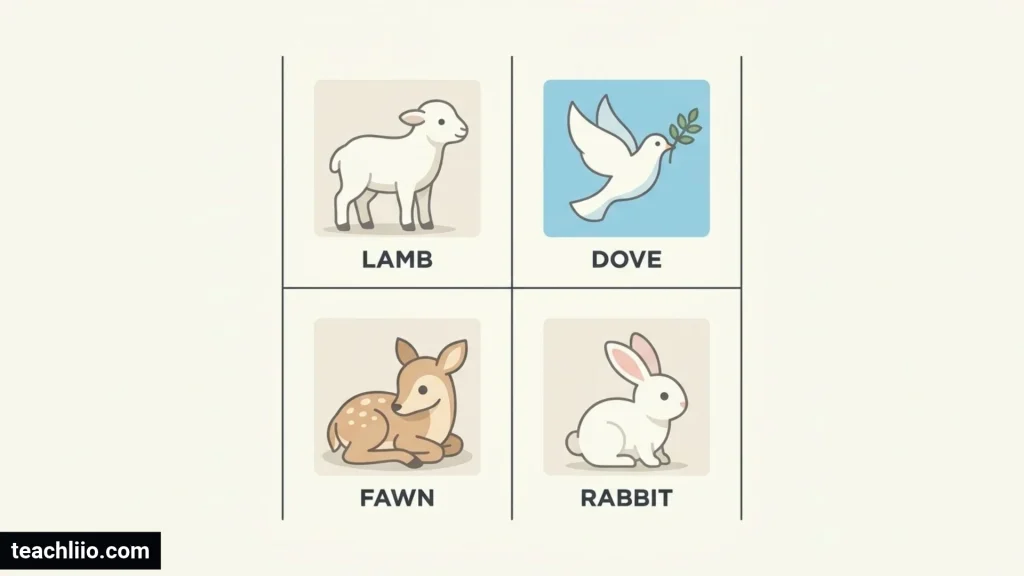
Animals are powerful symbols because people often connect their appearance and behavior with human qualities. Some animals have long-standing symbolic roles, while others are used mainly in modern storytelling.
White Dove
The white dove is a strong choice when you want to express peace, gentleness, and spiritual goodness. Its Christian association with the Holy Spirit gives it an established religious background.
Lamb
The lamb is especially suitable for representing harmlessness and vulnerability. Its connection with Christian imagery and children’s memorial art makes it one of the more historically grounded innocence-related animals.
Butterfly
A butterfly works well when innocence is connected with change, freedom, or a new chapter. In memorial artwork, it may also suggest resurrection or the soul’s journey.
White Swan and White Rabbit
A swan can communicate grace and beauty, while a white rabbit can suggest softness and childlike charm. These are useful artistic choices, but their meanings should not be presented as universal traditions.
Flowers That Represent Innocence
Flowers are often chosen for their appearance, cultural history, and emotional associations. If you want a flower that communicates innocence, consider these options.
White Lily
The white lily is a particularly strong choice for religious and traditional artwork because of its historical association with purity and the Virgin Mary in Christian art.
White Rose
A white rose can express sincere affection, respect, and purity. It is a suitable choice for weddings, remembrance, and messages of heartfelt appreciation.
Daisy
The daisy is a friendly symbol of simplicity and childlike joy. It works especially well in designs that need a cheerful and youthful feeling.
Snowdrop and Baby’s Breath
Snowdrops suggest hope and renewal, while baby’s breath is often used in modern floral design to express tenderness and affection. Both can support an innocence theme without having exactly the same meaning as a lily or white rose.
Colors That Represent Innocence
Color symbolism depends on culture and context, but certain colors are commonly used in modern art and design to communicate innocence-related qualities.
White — Purity and Simplicity
White is frequently connected with purity, cleanliness, sincerity, and fresh beginnings. It is a common choice for religious imagery, weddings, and memorial designs in some cultural traditions.
Pink — Tenderness and Gentle Affection
Soft pink is often used to express warmth, affection, sweetness, and tenderness. In modern illustrations and decorations, it can create a gentle, youthful mood.
Light Blue — Calm and Trust
Light blue is commonly associated with calmness, openness, and peaceful feelings. It can help communicate a gentle personality, although it is not a universal symbol of innocence.
Green — Growth and Renewal
Green often suggests nature, life, and growth. It is useful when innocence is presented as a connection with nature, childhood development, or a new beginning.
Symbols of Childhood Innocence
Childhood innocence is often shown through familiar objects and experiences rather than religious symbols. These images can create a feeling of safety, curiosity, imagination, and carefree happiness.
Teddy Bear
A teddy bear can represent comfort, security, and the emotional world of childhood. It is a meaningful image for nursery artwork, children’s books, and sentimental designs.
Toy Blocks
Toy blocks suggest early learning, creativity, and the simple pleasure of discovering how things work. They can symbolize a child’s developing imagination.
Balloons
Balloons often communicate celebration, freedom, and carefree happiness. In illustrations, they can create a playful atmosphere associated with childhood.
Storybooks
A storybook can represent imagination, curiosity, and a child’s first experience of fictional worlds. It is particularly useful in designs about learning and growing up.
Baby Shoes
Tiny baby shoes can symbolize the beginning of life’s journey. They are often used in birth announcements, family keepsakes, and memorial designs.
Daisy Chains
A daisy chain can bring to mind outdoor play, friendship, and simple childhood memories. It is a gentle visual symbol for carefree happiness.
Spiritual and Religious Symbols of Innocence
Spiritual meanings require care because the same image may have different interpretations across traditions. The following examples focus on specific contexts rather than claiming that every religion uses each symbol in the same way.
Christian Symbolism
In Christian art, the white dove is associated with the Holy Spirit, while the lamb has connections with Christ and the idea of sacrifice. The white lily is associated with the Virgin Mary and purity. These symbols can communicate spiritual goodness, but each has its own theological meaning.
Hindu and Buddhist Traditions
The lotus is important in both Hindu and Buddhist traditions, although its interpretations differ across texts, deities, schools, and artistic settings. It can represent purity, spiritual development, or awakening. The white lotus is especially suitable when the intended message is spiritual growth rather than simply childlike innocence.
Personal Spiritual Symbolism
Some people use candles, feathers, sunrise imagery, or clear water to express personal ideas about peace, hope, and spiritual renewal. These associations can be meaningful, but they should be described as personal or modern interpretations when they do not have a clearly established religious history.
How Innocence Is Represented in Literature and Art
Writers and artists often use symbols to communicate a character’s innocence without explaining it directly. A white flower might suggest sincerity, a lamb may represent vulnerability, and a garden can create a setting that feels safe and untouched.
Innocence in Literature
In stories, innocence can be shown through a character’s trust, honesty, curiosity, or limited experience of the world. A writer might use a young animal, a spring landscape, or a simple object to reinforce these qualities.
However, innocence does not always mean weakness. An innocent character can be brave, intelligent, and strong. The symbol should support the character’s personality rather than replace it.
Innocence in Visual Art
Artists often use light colors, soft natural settings, flowers, gentle animals, and open spaces to create an innocent atmosphere. A white lily may communicate spiritual purity, while a garden can suggest childhood wonder.
The meaning also depends on the surrounding details. A white dress in a wedding painting, for example, may communicate a ceremonial tradition rather than a statement about the character’s personal history.
Symbols of Innocence for Tattoos and Personal Designs
An innocence-themed tattoo can represent a gentle personality, a meaningful memory, a new beginning, or a commitment to kindness. The best design is one whose meaning is personally important to you.
White Dove Tattoo
A white dove tattoo can express peace, hope, and a desire to live with gentle intentions. It can be designed with an olive branch or a small line-art outline.
White Lily or Rose Tattoo
A white lily is a suitable choice for spiritual purity and virtue, while a white rose can communicate sincere affection and remembrance. A small floral design can keep the meaning simple and elegant.
Butterfly Tattoo
A butterfly can represent personal transformation, freedom, and the beginning of a new chapter. Adding a small date or name may make the design more personal.
Lamb or Angel Tattoo
A lamb may represent vulnerability, harmlessness, or a meaningful religious connection. An angel can express protection, guidance, or remembrance.
Minimalist Nature Tattoo
A tiny snowdrop, daisy, morning dew design, or olive branch can communicate gentle beauty without relying on a large image. These designs work well when you prefer subtle symbolism.
Before choosing a tattoo, consider the cultural or religious meaning of the symbol and whether it matches the message you want to express.
Common Misunderstandings About Innocence Symbols
Symbolism can be flexible, but it is important not to present every interpretation as a historical fact.
Not Every White Object Is a Traditional Symbol of Innocence
White objects are often used to suggest purity, but this does not mean every white animal, flower, or item has a documented historical connection with innocence. A white feather or white rabbit may work as a modern artistic symbol without having the same background as the Christian white lily.
Innocence and Purity Are Not Always the Same
A person may be innocent without being described as spiritually pure. Similarly, a symbol of purity may communicate religious virtue rather than childhood innocence. Explaining this distinction makes an article or design more accurate.
Symbolic Meanings Change Across Cultures
A color, animal, or flower can carry different meanings in different societies. White is associated with weddings in some traditions but mourning in others. Always consider the cultural setting before assigning a universal meaning.
Modern Interpretations Should Be Identified Clearly
A sunrise, garden, snowflake, or morning dew can be a beautiful metaphor for innocence. However, these are often creative interpretations rather than symbols with one fixed historical meaning. Describing them honestly helps readers understand the difference.
Frequently Asked Questions
What Is the Most Common Symbol of Innocence?
The white dove is one of the most recognizable symbols connected with peace, gentleness, and spiritual goodness. The white lamb is another strong symbol because it is associated with harmlessness and vulnerability, including in Christian and memorial imagery.
What Flower Symbolizes Innocence?
The daisy is commonly associated with innocence and childlike simplicity. The white lily is strongly connected with purity and spiritual virtue in Christian art, while the white rose often represents sincerity and purity.
What Animal Represents Innocence?
A lamb is a strong traditional choice for innocence because it suggests harmlessness and vulnerability. White doves and butterflies are also frequently used in artwork to communicate peace, gentleness, and renewal.
What Color Represents Innocence?
White is commonly associated with innocence, purity, and simplicity in many Western artistic and religious settings. Soft pink can suggest tenderness, while light blue may communicate calmness and trust. Color meanings vary across cultures.
What Symbol Represents a Pure Heart?
A white rose, white lily, or white dove can represent a pure heart, depending on the intended meaning. The rose often suggests sincere affection, the lily spiritual purity, and the dove peace and goodness.
What Is a Spiritual Symbol of Innocence?
In Christian art, the white lily, lamb, and dove have established spiritual associations. In Hindu and Buddhist traditions, the lotus can represent purity and spiritual development. The precise meaning depends on the religious context.
Does a Butterfly Symbolize Innocence?
A butterfly is more widely associated with transformation, renewal, and new life. Its delicate appearance can also suggest innocence in modern artwork, while some memorial traditions use it as an image of resurrection or the soul’s journey.
What Is a Good Tattoo Symbol for Innocence?
A white dove, white lily, daisy, butterfly, lamb, or angel can make a meaningful innocence-themed tattoo. Choose a design based on whether you want to express peace, purity, childhood memories, spiritual beliefs, or personal growth.
What Symbol Represents Childhood Innocence?
A teddy bear, toy blocks, balloons, storybooks, baby shoes, and daisy chains are familiar images of childhood innocence. They can represent comfort, curiosity, imagination, and carefree happiness.
Are Innocence and Purity Symbols the Same?
Not always. Innocence usually relates to harmless intentions, trust, or limited experience of wrongdoing. Purity often refers to moral or spiritual cleanliness. Some symbols represent both, but their meanings should be explained according to their context.
Conclusion
Symbols of innocence help people express qualities that can be difficult to describe with words alone. A white dove can communicate peace, a lamb can suggest harmlessness, a daisy can remind us of childhood joy, and a white lily can represent spiritual purity. Other images, such as butterflies, sunrise, gardens, and baby shoes, offer more personal or modern ways to express gentleness and new beginnings.
The most meaningful symbol depends on the message you want to share. If you are choosing one for a tattoo, story, gift, religious design, or piece of artwork, consider its history and cultural context. A symbol becomes more powerful when its meaning is understood rather than simply assumed.
Editorial accuracy note: The article distinguishes established historical and religious associations from modern creative interpretations. The white lily’s connection with purity in European Christian art, the dove’s Christian symbolism, and the lamb’s use in children’s memorial art are supported by historical and symbolic references.
Oxford Academic+3

I’m Arthur Ellison, a British writer with a fascination for numbers, quantities, and the questions people ask about how many. I enjoy researching facts, comparisons, measurements, and everyday statistics, presenting them in straightforward language. My goal is to make numerical information easy to understand, useful, and interesting for curious readers everywhere.
Books:
The Curious World of How Many
Numbers, Quantities and Everyday Facts