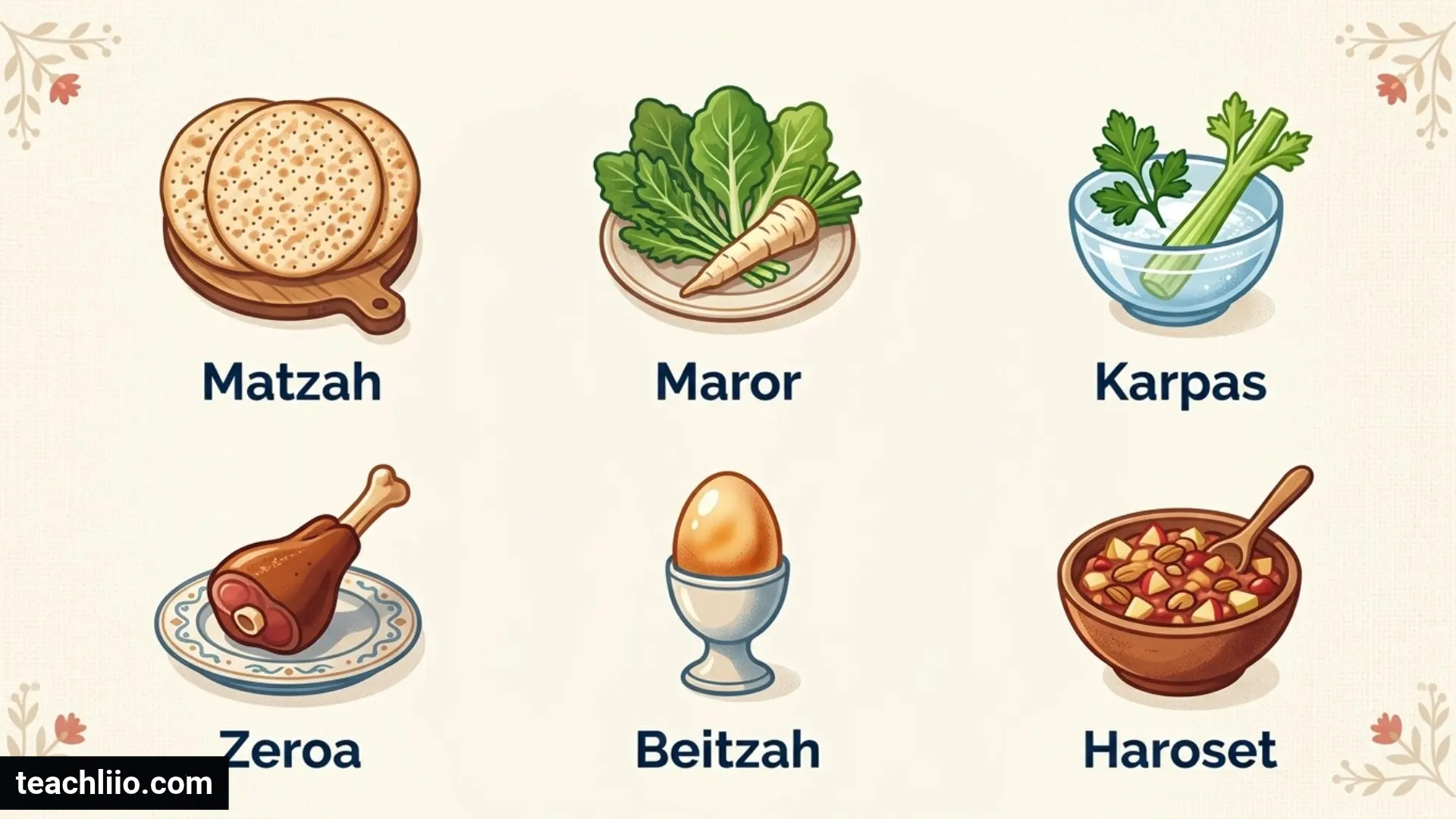
Passover symbols help tell the story of the Israelites’ liberation from slavery in ancient Egypt. These symbols include matzah, bitter herbs, charoset, a roasted egg, a shank bone, salt water, and several meaningful items used during the Passover Seder. Each object connects participants with the history, traditions, and central messages of the holiday.
The most familiar Passover symbols appear on the Seder plate, where foods represent different parts of the Exodus story, the hardships of slavery, and the hope of freedom. Other traditions, including the four cups of wine or grape juice, Elijah’s cup, the afikomen, and the Haggadah, also play important roles.
Although many Jewish families share these traditions, customs and interpretations can vary between communities and households. Understanding the meaning behind each symbol makes Passover easier to appreciate and helps families explain its traditions to children and guests.
What Are Passover Symbols?
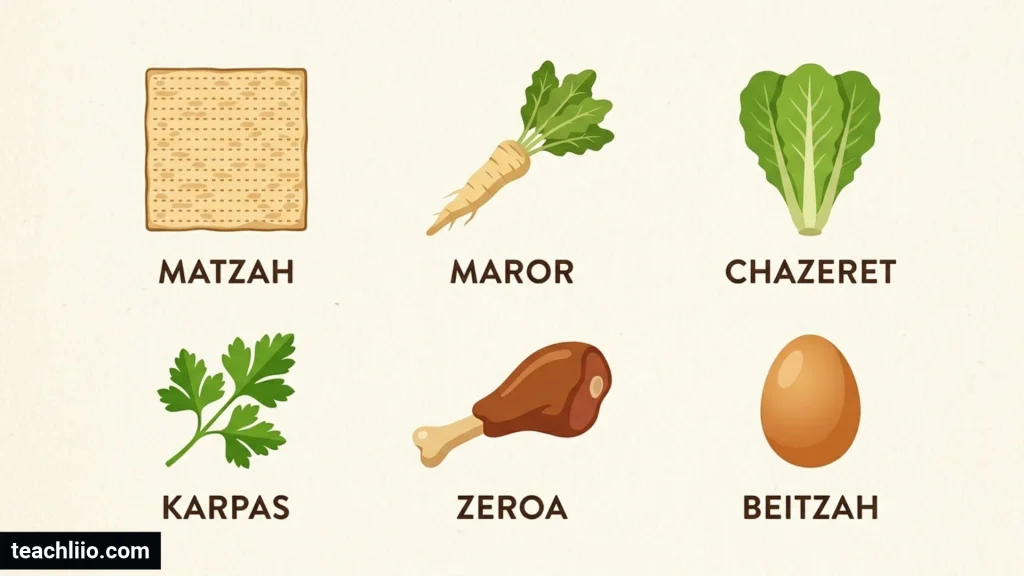
Passover symbols are foods, objects, and ritual items that help Jewish people remember the Israelites’ escape from slavery in ancient Egypt. They also communicate ideas such as freedom, suffering, renewal, faith, and hope.
Passover, also called Pesach, is one of the major Jewish festivals. During the holiday, families and communities gather for a special meal and ceremony called the Seder. The word Seder means “order,” referring to the structured sequence of readings, questions, prayers, foods, and activities followed during the ceremony.
Rather than remembering the Exodus story through words alone, the Seder uses physical experiences. Participants eat bitter herbs, taste unleavened bread, dip vegetables, drink ritual cups, and read from the Haggadah.
These actions help make the story meaningful across generations.
Passover Symbols and Their Meanings at a Glance
The following table provides a quick guide to the most familiar Passover symbols.
| Passover symbol | Common meaning |
| Matzah | The unleavened bread associated with the Exodus |
| Maror | The bitterness of slavery |
| Charoset | Mortar associated with forced labor |
| Karpas | Spring, growth, and renewal |
| Zeroa | The ancient Passover sacrifice |
| Beitzah | The festival offering and, in some interpretations, mourning or the cycle of life |
| Salt water | Commonly associated with tears and suffering |
| Chazeret | An additional bitter herb |
| Four cups | Important stages and promises of redemption |
| Elijah’s cup | Hope for future redemption and the coming of Elijah |
| Afikomen | A piece of matzah eaten toward the end of the Seder |
| Haggadah | The text used to tell the Exodus story |
Meanings may differ slightly across Jewish traditions. Some symbols also carry more than one interpretation, so the explanations below describe common associations rather than universal rules.
Symbols on the Passover Seder Plate
The Seder plate is one of the most recognizable symbols of Passover. It holds several foods that help participants remember the Exodus story and reflect on the experience of slavery and liberation.
A traditional Seder plate often includes six symbolic foods or designated spaces for them. Matzah and salt water are also important to the Seder, although they are commonly placed beside the plate rather than directly on it.
Matzah: The Bread of Freedom
Matzah is flat, unleavened bread eaten during Passover. It represents the bread associated with the Israelites’ departure from Egypt, traditionally understood as leaving before their dough could rise.
During Passover, Jewish dietary traditions prohibit leavened grain products known as chametz. Matzah therefore has both a practical role in the holiday and a deep connection to the Exodus narrative.
Matzah also carries a contrast. It recalls the urgency of leaving Egypt, but it is sometimes described as the bread of affliction, reminding participants of the hardship experienced under slavery.
During the Seder, matzah is eaten at specific points in the ceremony. It is also central to the afikomen tradition, in which a piece is set aside and eaten later.
Maror: The Bitter Herbs
Maror represents the bitterness of slavery in Egypt. Tasting a bitter herb gives participants a physical way to remember the suffering described in the Exodus story.
Horseradish is commonly used for maror in many Ashkenazi Jewish households. Other traditions may use different bitter greens, depending on their customs and interpretations.
The ritual encourages participants to do more than learn historical facts. By tasting something bitter, they connect the story with a sensory experience.
Maror is often eaten with matzah during the Seder. The combination reinforces the relationship between the hardship of slavery and the story of liberation.
Charoset: The Sweet Mixture
Charoset is a sweet mixture made from fruits, nuts, and other ingredients. It commonly represents the mortar used by the Israelites during forced labor in Egypt.
Its texture is especially meaningful because it can resemble the material used to hold bricks together. At the same time, its sweetness introduces another dimension to the Seder plate.
Ashkenazi recipes often use apples, nuts, cinnamon, and wine or grape juice. Sephardic and other Jewish communities may prepare charoset with dates, figs, raisins, or other fruits and spices.
There is no single recipe used by every Jewish family. Ingredients reflect regional food traditions and family customs.
Charoset is commonly eaten with maror or matzah during the Seder. Its sweet flavor contrasts with the bitterness of the herbs and helps make the ritual memorable.
Karpas: The Green Vegetable
Karpas is a vegetable, often parsley, celery, or another green vegetable, that is dipped in salt water during the Seder.
It is commonly associated with spring, new growth, and renewal. Since Passover takes place in the spring in the Northern Hemisphere, the green vegetable connects the holiday with the natural cycle of life.
The dipping ritual also introduces the Seder’s sequence of symbolic actions. Salt water is frequently associated with tears, although interpretations of the dipping ritual can vary.
Karpas demonstrates how a simple food can carry several layers of meaning. It connects the holiday with nature while helping participants remember the suffering described in the Exodus story.
Zeroa: The Shank Bone
Zeroa is traditionally represented by a roasted shank bone placed on the Seder plate. It recalls the ancient Passover sacrifice associated with the Temple in Jerusalem.
The symbol connects the modern Seder with earlier Jewish religious practices. Although the ancient sacrifice is no longer performed as part of the contemporary Seder, the zeroa preserves its place in the ritual’s memory.
Some households use a roasted beet as a substitute, and practices vary among communities. The purpose of the symbol is not simply to display a particular food but to recall a historical religious tradition.
Because the zeroa is associated with the ancient sacrifice, it is useful to distinguish it from foods that represent the bitterness of slavery or the urgency of the Exodus.
Beitzah: The Roasted Egg
Beitzah is a roasted or cooked egg placed on many traditional Seder plates. It is commonly associated with the festival offering made in ancient Temple times.
Some interpretations also connect the egg with mourning for the destruction of the Temple. Other explanations emphasize the cycle of life, continuity, or renewal.
These meanings are not identical across all Jewish traditions. It is more accurate to explain the egg’s principal traditional association and then mention other interpretations rather than assign it only one meaning.
The egg also provides a recognizable reminder that Passover traditions preserve memories of earlier Jewish worship and history.
Chazeret: An Additional Bitter Herb
Chazeret is another bitter herb that appears on many traditional Seder plates. Romaine lettuce is commonly used, although customs differ.
Some Seder traditions use chazeret for a second bitter-herb ritual, including the practice of eating bitter herbs with matzah. Other families may use a different arrangement or follow a custom that gives chazeret a smaller role.
Its meaning is closely related to maror: it recalls the bitterness of slavery. The presence of two bitter herbs on some plates shows that the arrangement and use of Seder foods can vary.
Other Important Passover Symbols
Not every Passover symbol belongs on the Seder plate. Several other foods, ritual objects, and texts help shape the ceremony and communicate its central ideas.
The Four Cups of Wine or Grape Juice
During the Seder, participants traditionally drink four cups of wine or grape juice at designated points. The cups are associated with expressions of redemption found in the biblical Exodus story.
The four cups mark the ceremony’s progress and give structure to the evening. They are not simply drinks served with a holiday meal; they form part of the ritual.
Wine is traditional, while grape juice is used by people who prefer or require a nonalcoholic option. Families follow their own practices within their community’s traditions.
The cups reinforce one of Passover’s central messages: the movement from oppression toward freedom.
Elijah’s Cup: A Symbol of Hope
Elijah’s cup is an additional cup traditionally set out during the Seder. It is associated with the prophet Elijah and the hope for future redemption.
Jewish tradition connects Elijah with the anticipation of a future era of peace and restoration. During the Seder, many households open the door at a designated point in the ceremony as part of this custom.
Elijah’s cup is distinct from the four cups drunk by participants. Its presence adds a sense of expectation to the celebration, reminding participants that the story of redemption also points toward hopes for the future.
The Afikomen: The Hidden Matzah
The afikomen is a piece of matzah set aside during the Seder and eaten toward the end of the meal.
In many households, a piece of the middle matzah is broken early in the ceremony. One part is reserved as the afikomen, and families may hide it for children to find later or follow another version of the custom.
The search for the afikomen can make the Seder especially engaging for younger participants. It also gives children an active role in the ceremony rather than asking them only to listen.
Customs surrounding the afikomen differ, but the practice generally ensures that matzah remains an important part of the Seder’s concluding stages.
The Haggadah: The Book of the Seder
The Haggadah is the text used to guide the Seder. It contains readings, blessings, questions, explanations, and instructions that help participants retell the Exodus story.
The Haggadah is not simply a book of prayers. It organizes the ceremony and encourages discussion between generations.
One of the Seder’s central goals is to explain the story of liberation to children and other participants. Questions, readings, and symbolic foods help turn the story into a shared experience.
Different Haggadot may include traditional commentary, modern reflections, illustrations, poetry, or additional readings. These differences allow families and communities to approach the Seder in ways that reflect their traditions.
Miriam’s Cup: A Contemporary Symbol
Miriam’s cup is an optional addition used in some modern Seders. It is associated with Miriam, the biblical sister of Moses and Aaron, and is often connected with water, sustenance, and the contributions of women to Jewish history.
Unlike the traditional Seder plate foods, Miriam’s cup is not part of every Jewish family’s practice. Its use reflects particular contemporary interpretations and efforts to highlight aspects of the Passover story that may receive less attention in older ritual formats.
When discussing Miriam’s cup, it is important to distinguish its modern development from the older, widely established Seder customs.
The Orange on the Seder Plate
Some families place an orange on the Seder plate as a contemporary symbol of inclusion and belonging.
The orange is associated with efforts to recognize people and experiences that have historically received less attention in Jewish communal life. Its interpretation may differ depending on the community and the person explaining it.
It is not a required item on a traditional Seder plate. Instead, it represents one way some modern families connect the ancient story of liberation with present-day questions of dignity, participation, and inclusion.
How Passover Symbols Tell the Story of the Exodus
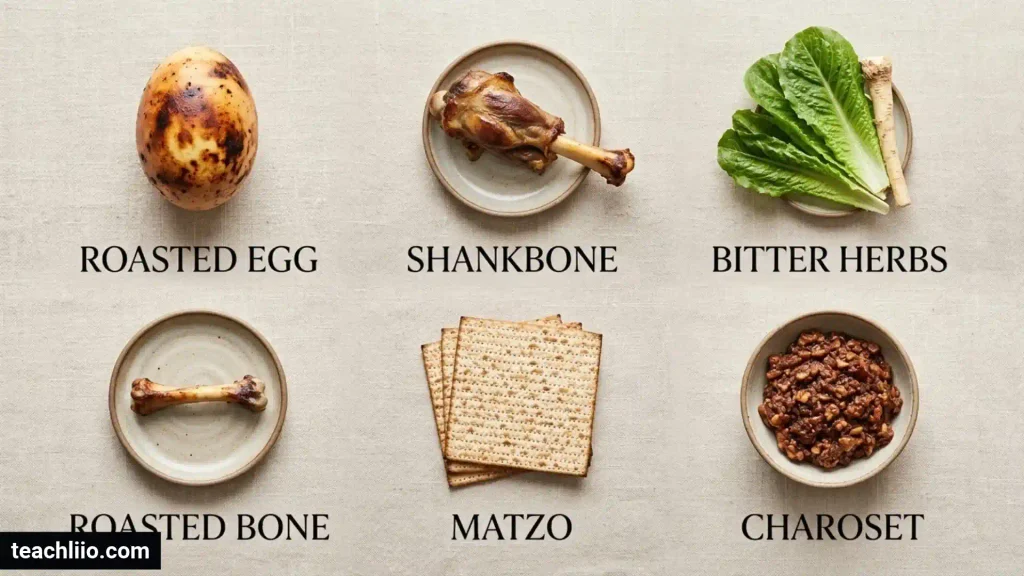
Passover symbols work together to make the Exodus story more personal and memorable. Each one highlights a different part of the experience of slavery, departure, and freedom.
Matzah recalls the hurried departure from Egypt, while maror brings attention to the bitterness of slavery. Charoset evokes the mortar associated with forced labor, and the zeroa recalls the ancient Passover sacrifice.
Karpas connects the Seder with spring and renewal. The egg carries associations with the festival offering and, in some traditions, mourning or the cycle of life. Salt water commonly evokes tears and suffering.
Other Seder rituals extend the story beyond the plate. The four cups mark the ceremony’s progress, Elijah’s cup expresses hope for redemption, and the Haggadah guides participants through the retelling.
Together, these symbols help connect memory with action. Participants do not merely hear about the Exodus; they taste, read, question, discuss, and reflect on its meaning.
The Seder also emphasizes passing the story to the next generation. Children ask questions, learn about the foods, and take part in traditions that help preserve Jewish memory.
How to Arrange and Explain Passover Symbols at the Seder
Understanding the symbols can make it easier to prepare a Seder table or explain the ceremony to family members and guests.
Arrange the Traditional Foods
Begin with a Seder plate or a suitable plate with designated spaces for the symbolic foods. Arrange the items according to your family’s Haggadah or community custom.
A common arrangement includes maror, charoset, karpas, zeroa, beitzah, and chazeret. Matzah is generally placed separately, often on a special matzah cover or tray. Salt water is also usually kept nearby.
There is no need to assume every family uses the same plate or arrangement. If you are attending a Seder hosted by someone else, follow the host’s practice.
Explain Each Symbol in Simple Language
For children, short explanations are often the most effective.
- Matzah: “This reminds us of the bread connected with leaving Egypt.”
- Maror: “The bitter taste helps us remember the bitterness of slavery.”
- Charoset: “This sweet mixture reminds us of the mortar used in forced labor.”
- Karpas: “This green vegetable reminds us of spring and new growth.”
- Zeroa: “This recalls the ancient Passover sacrifice.”
- Beitzah: “This egg is connected with the festival offering and other traditional interpretations.”
These short explanations can be expanded during the Seder as questions arise. It is also helpful to mention that some meanings have more than one interpretation.
Use the Haggadah as Your Guide
The Haggadah provides the sequence for the Seder and explains when particular foods, readings, and rituals are used.
If you are preparing a Seder for the first time, follow a Haggadah suited to your household’s tradition. Ask a knowledgeable family member, rabbi, or community educator if you are unsure about a particular custom.
You do not need to know every interpretation by heart. A thoughtful explanation of the main symbols is a useful starting point.
How Passover Symbols Vary Across Jewish Traditions
Jewish communities share many central Passover practices, but they do not all prepare the same foods or interpret every symbol in exactly the same way.
Ashkenazi charoset often includes apples and nuts, while Sephardic recipes may feature dates, figs, raisins, or other fruits. The vegetables used for karpas and the bitter herbs used for maror may also differ.
The zeroa may be represented by a roasted shank bone or, in some households, a roasted beet. The arrangement of the Seder plate can vary, as can the details of family rituals.
Modern additions, such as Miriam’s cup and the orange, are used in some Seders but are not universal traditions.
These differences do not mean there is one correct cultural expression for every household. They reflect the variety of Jewish histories, interpretations, and family practices.
When writing or teaching about Passover symbols, use phrases such as “commonly represents,” “in many traditions,” and “some families include” when practices vary. This approach respects the diversity of Jewish observance while still explaining the most familiar customs.
Frequently Asked Questions
What are the main symbols of Passover?
The main symbols associated with the Seder include matzah, maror, charoset, karpas, zeroa, beitzah, and, on many plates, chazeret. Other important symbols include salt water, the four cups, Elijah’s cup, the afikomen, and the Haggadah.
What does the Passover Seder plate represent?
The Seder plate brings together foods that help participants remember the Exodus from Egypt. Its symbols connect the experience of slavery with the journey toward freedom, while some items also evoke spring, renewal, and ancient religious practices.
Why is matzah eaten during Passover?
Matzah is connected with the Israelites’ departure from Egypt and the tradition that their bread did not have time to rise. It also serves as a reminder of affliction and is central to several parts of the Seder.
What does maror represent?
Maror, or bitter herbs, represents the bitterness of slavery in Egypt. Eating it during the Seder creates a sensory reminder of the suffering described in the Exodus story.
What does charoset symbolize?
Charoset commonly represents the mortar associated with the Israelites’ forced labor. Its ingredients and texture vary by Jewish tradition, and its sweetness contrasts with the bitterness of maror.
Why is there an egg on the Passover plate?
The beitzah, or egg, is commonly associated with the festival offering made in ancient Temple times. Some interpretations also connect it with mourning for the Temple, the cycle of life, or renewal.
What does Elijah’s cup mean?
Elijah’s cup is associated with the prophet Elijah and the hope for future redemption. It is an additional ritual cup, distinct from the four cups traditionally drunk during the Seder.
What is the afikomen?
The afikomen is a piece of matzah reserved earlier in the Seder and eaten toward the end of the ceremony. In many households, children participate in a tradition of finding the hidden piece.
Are Passover symbols the same in every Jewish community?
No. Many communities share the main Seder traditions, but ingredients, plate arrangements, interpretations, and optional additions can differ. Families generally follow the customs of their community and household.
Can children learn Passover symbols easily?
Yes. Simple explanations, pictures, and opportunities to identify or taste the symbolic foods can help children understand the Seder. Asking questions and using the Haggadah also encourages children to participate in the story.
Conclusion
Passover symbols make the story of the Exodus meaningful through foods, objects, readings, and shared rituals. Matzah recalls the departure from Egypt, maror represents the bitterness of slavery, and charoset evokes the mortar associated with forced labor. Other symbols, including the zeroa, beitzah, four cups, Elijah’s cup, and afikomen, connect the Seder with Jewish history, faith, and hope.
Understanding these meanings helps readers appreciate why Passover is more than a holiday meal. The Seder brings people together to remember the past, discuss freedom, and pass traditions from one generation to the next.
Although customs differ among Jewish communities and families, the central purpose remains clear: to retell the story of liberation and reflect on its meaning in the present. By learning the symbols and the stories behind them, anyone studying Passover can gain a deeper understanding of this important Jewish festival.

I’m Arthur Ellison, a British writer with a fascination for numbers, quantities, and the questions people ask about how many. I enjoy researching facts, comparisons, measurements, and everyday statistics, presenting them in straightforward language. My goal is to make numerical information easy to understand, useful, and interesting for curious readers everywhere.
Books:
The Curious World of How Many
Numbers, Quantities and Everyday Facts