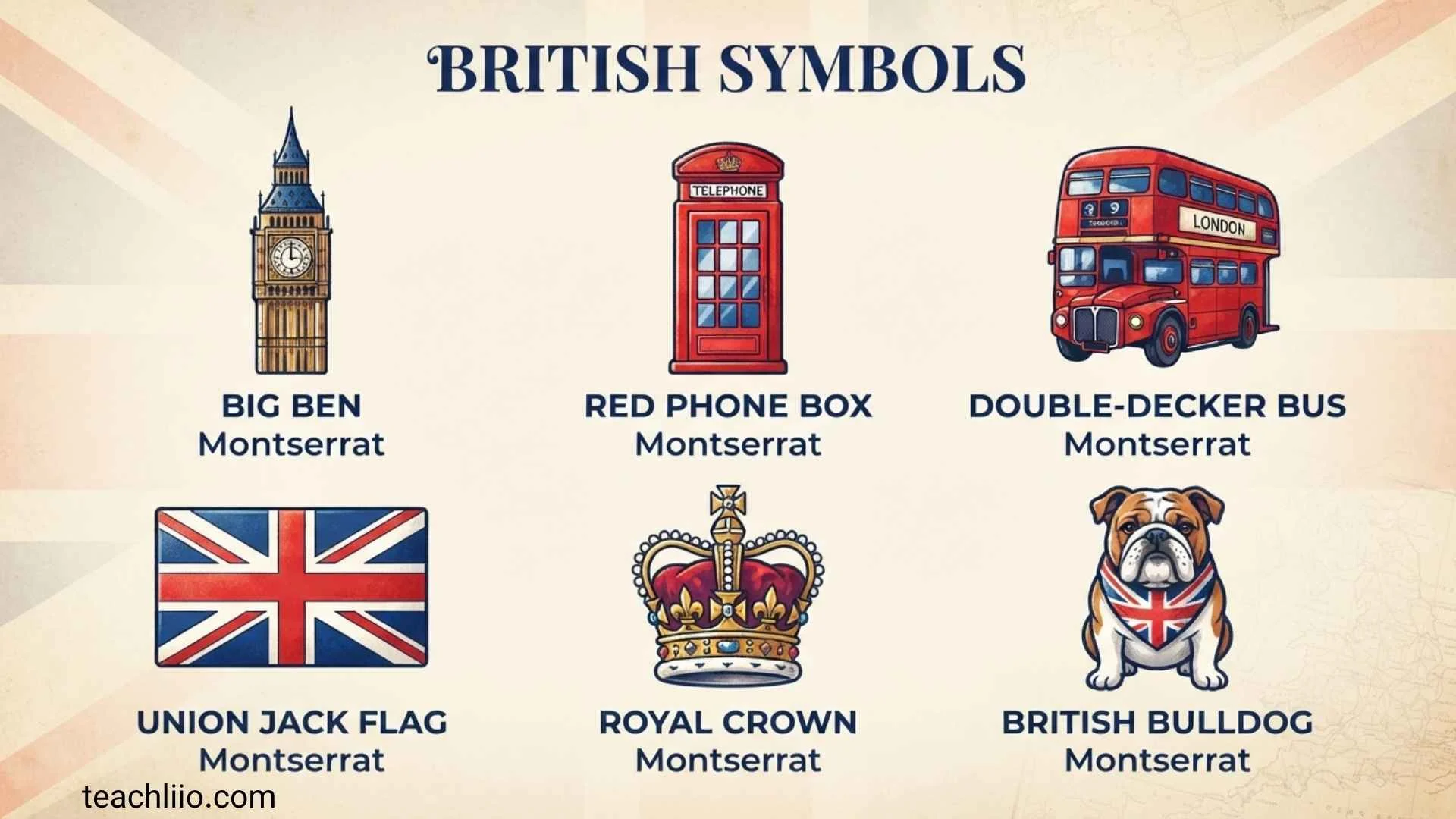
British symbols tell stories about the history, monarchy, nations, traditions, and cultural identity of the United Kingdom. Some are instantly recognizable, such as the Union Flag, while others, including the Tudor rose, Scottish thistle, Welsh dragon, and royal lion, have deeper historical meanings.
But there is an important distinction to understand: British, British national, UK, and English symbols are not always the same thing. A symbol strongly associated with England may not represent the whole United Kingdom.
This guide explains the most important British symbols, what they mean, where they come from, and how they are used today.
What Are British Symbols?
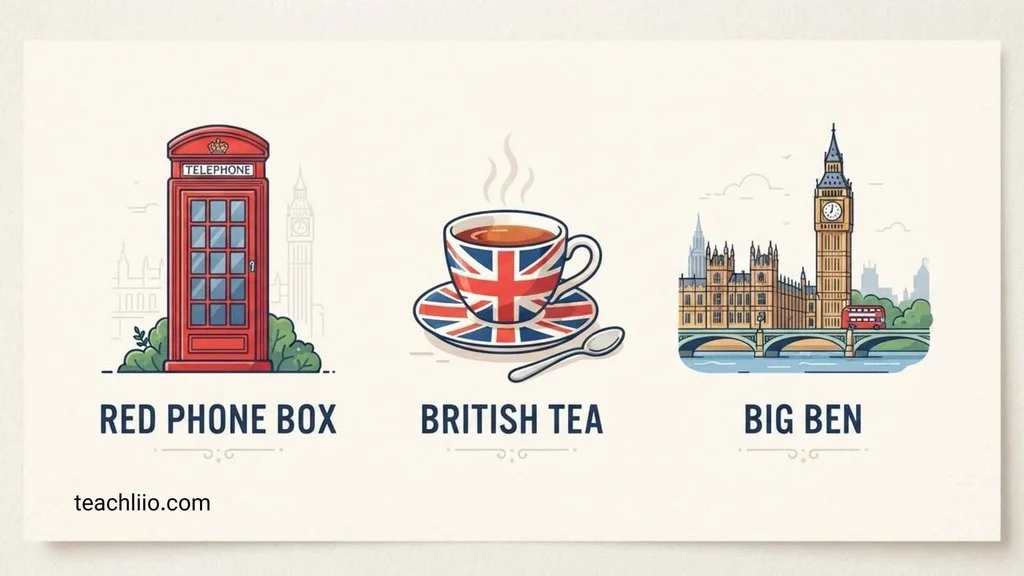
British symbols are images, emblems, flags, plants, animals, objects, and heraldic designs associated with Britain, the United Kingdom, or one of its constituent nations.
Some symbols represent the United Kingdom as a whole. Others are connected specifically with England, Scotland, Wales, or Northern Ireland. Royal symbols form another important category because the British monarchy has influenced heraldry, flags, ceremonies, and national imagery for centuries.
Common examples include the Union Flag, Royal Coat of Arms, crown, lion, unicorn, Tudor rose, thistle, daffodil, leek, shamrock, and Welsh red dragon.
Understanding the difference between these categories makes British symbolism much easier to understand.
Most Famous British Symbols and Their Meanings
| Symbol | Main association | Meaning or significance |
| Union Flag | United Kingdom | Union and national identity |
| Royal Coat of Arms | UK monarchy and government | Royal authority |
| Lion | England and royal heraldry | Strength and royal tradition |
| Unicorn | Scotland | Scottish royal tradition |
| Crown | Monarchy | The Crown and royal authority |
| Tudor Rose | England | English historical and royal identity |
| Thistle | Scotland | Scottish identity |
| Red Dragon | Wales | Welsh national identity |
| Daffodil | Wales | Welsh cultural identity |
| Leek | Wales | Traditional Welsh emblem |
| Shamrock | Northern Ireland | Cultural association |
| St George’s Cross | England | English national identity |
| Saltire | Scotland | Scottish national identity |
| Poppy | Remembrance | Commemoration of war dead |
These symbols should not all be described as official symbols of the entire United Kingdom. Their associations differ according to their history and national context.
The Union Flag
The Union Flag, commonly called the Union Jack, is the national flag of the United Kingdom.
Its design combines the crosses associated with England, Scotland, and St Patrick’s Cross. The first Union Flag appeared in 1606 after the crowns of England and Scotland were united under one monarch. The design used today dates from 1801, when the cross associated with St Patrick was incorporated following the political union with Ireland.
The flag therefore represents a history of political union rather than simply representing England.
What Does the Union Flag Represent?
The Union Flag represents the United Kingdom and its shared national identity.
Its design contains three important cross traditions:
- St George’s Cross associated with England
- St Andrew’s Saltire associated with Scotland
- St Patrick’s Cross associated historically with Ireland
One important detail is that Wales is not separately represented by a cross in the Union Flag. Wales was already incorporated into the Kingdom of England when the first Union Flag was created.
Union Jack or Union Flag?
Both names are widely used.
“Union Flag” is the formal name commonly used in official guidance. “Union Jack” is the familiar popular name and is especially common in everyday speech.
The design is also important. Because of the arrangement of the diagonal crosses, the flag can technically be displayed upside down.
The Royal Coat of Arms
The Royal Coat of Arms is one of the most important pieces of British royal symbolism.
It is not simply a decorative logo. The Royal Arms indicate the authority of the monarch, and the UK Government uses the Coat of Arms to show that it acts in the King’s name.
The design contains a shield, supporters, the Garter, a crown, and other heraldic elements.
The Lion and Unicorn
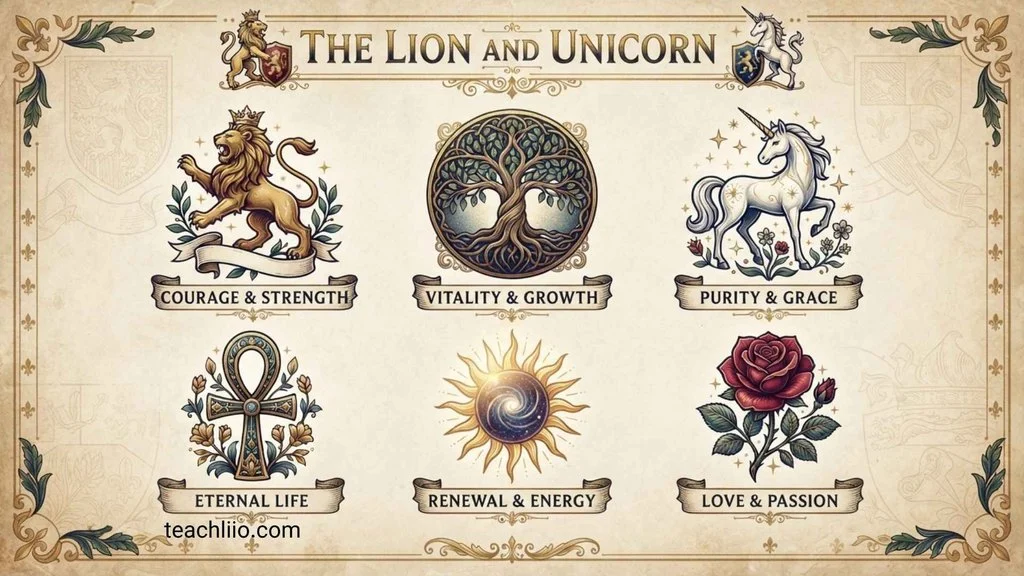
Two animals stand beside the shield:
- A lion represents England.
- A unicorn represents Scotland.
The combination reflects the historical relationship between the two kingdoms within the British monarchy.
The lion is particularly important in English royal heraldry, while the unicorn has a long association with Scottish royal symbolism.
The Shield
The central shield contains heraldic elements associated with England, Scotland, and Ireland.
Three lions appear for England, the Scottish lion appears within the Scottish quarter, and a harp represents Ireland.
The arrangement has developed through centuries of changes in royal heraldry, so the modern Royal Arms are best understood as the result of a long historical tradition rather than a single newly created emblem.
The Garter and Crown
The shield is surrounded by the blue Garter bearing the Order of the Garter’s motto.
Above the achievement is the royal crown.
Together, these elements connect the design with monarchy, royal authority, and the historic orders and institutions of the Crown.
The British Lion
The lion is one of the most recognizable symbols connected with British and English heraldry.
It appears prominently in the Royal Coat of Arms and has a long history as a royal emblem.
The lion is commonly associated with qualities such as strength, courage, sovereignty, and authority. However, its heraldic meaning should not be reduced to a simple modern slogan. Its importance comes largely from its long use in royal and national heraldry.
The famous three lions are particularly associated with England and appear in English heraldic traditions and sporting imagery.
The Scottish Unicorn
The unicorn is one of Scotland’s most distinctive national and heraldic symbols.
In Scottish royal tradition, the unicorn became strongly associated with the Scottish monarchy. It also appears as a supporter of the Royal Arms alongside the English lion.
The unicorn can symbolize purity, strength, independence, and royal tradition in popular interpretations, but its strongest historical importance comes from Scottish heraldry.
For readers searching for “why is the unicorn a British symbol?”, the more accurate answer is that the unicorn is especially associated with Scotland, rather than being an exclusive symbol of Britain as a whole.
The Crown
The crown is a powerful symbol of the British monarchy.
It appears on official insignia, royal emblems, military badges, government imagery, coins, documents, and ceremonial objects.
The word “Crown” can also have a constitutional meaning. In British government and law, the Crown is not simply a physical crown worn by a monarch. It can refer to the institution and authority of the monarch.
Different crowns have different historical and ceremonial roles, so it is useful to distinguish the general crown symbol from specific royal crowns.
The Tudor Rose
The Tudor rose is one of the best-known symbols associated with England.
It combines the imagery of the red rose traditionally associated with Lancaster and the white rose associated with York. The Tudor dynasty adopted the combined rose after the Wars of the Roses, making it a powerful emblem of dynastic union.
Today, the Tudor rose can be found in English heraldry, public institutions, military imagery, decorative designs, and cultural representations of England.
It is therefore better described as an English historical and heraldic symbol than as a universal symbol of the entire UK.
St George’s Cross
The Cross of St George is the national flag of England.
It consists of a red upright cross on a white background and is especially recognizable during English sporting events and national celebrations.
It should not be confused with the Union Flag.
The Union Flag represents the United Kingdom, while St George’s Cross represents England.
This distinction is one of the most useful facts for anyone learning about British symbols.
Scottish Saltire
The Saltire, or Cross of St Andrew, is Scotland’s national flag.
It features a white diagonal cross on a blue background.
The Saltire is one of the clearest examples of why “British symbols” and “national symbols of the UK” should not be treated as identical categories. The Saltire is Scottish, although Scotland is part of the United Kingdom and its cross forms part of the Union Flag.
The Saltire is widely used on Scottish buildings, sporting occasions, cultural events, and national celebrations.
The Scottish Thistle
The thistle is a famous Scottish national emblem.
It has been connected with Scottish identity and heraldry for centuries. A traditional story tells of an invading force being discovered when one of its soldiers stepped on a thistle and cried out, warning sleeping Scottish defenders.
Whether treated as historical tradition or legend, the story helped strengthen the thistle’s place in Scottish cultural symbolism.
Today, the thistle appears in Scottish emblems, organizations, souvenirs, architecture, and cultural designs.
The Welsh Red Dragon
The red dragon, or Welsh Dragon, is the most recognizable national symbol of Wales.
It appears on the Welsh flag, where a red dragon stands against a green-and-white background.
The dragon has a long and complicated history in Welsh tradition and has become an important expression of Welsh identity.
Unlike the Tudor rose or thistle, which are primarily floral symbols, the Welsh dragon provides Wales with a distinctive animal emblem that is immediately recognizable around the world.
The Welsh Daffodil
The daffodil is strongly associated with Wales.
It is especially visible around St David’s Day and has become one of the most familiar Welsh national emblems.
The daffodil is often displayed alongside the Welsh dragon and leek, giving Wales several recognizable cultural symbols rather than just one.
This is useful to remember when answering the question, “What is the symbol of Wales?” There is no need to reduce Welsh identity to a single emblem.
The Welsh Leek
The leek is another traditional Welsh emblem.
Its association with Wales is connected with long-standing tradition and the story of St David, Wales’s patron saint.
The leek is less visually dramatic than the red dragon, but it remains an important part of Welsh cultural symbolism.
Together, the leek and daffodil demonstrate how plants can become powerful national emblems through history, tradition, and public celebration.
The Shamrock and Northern Ireland
The shamrock is strongly associated with Irish identity and is also used as a cultural symbol in Northern Ireland.
It should be treated carefully in an article about UK symbols because the shamrock is not a simple equivalent of the Union Flag or the Royal Coat of Arms.
Its meaning depends on cultural and historical context.
This is another example of why a high-quality British symbols article should distinguish between UK-wide symbols and symbols associated with individual nations or communities.
British Royal Symbols
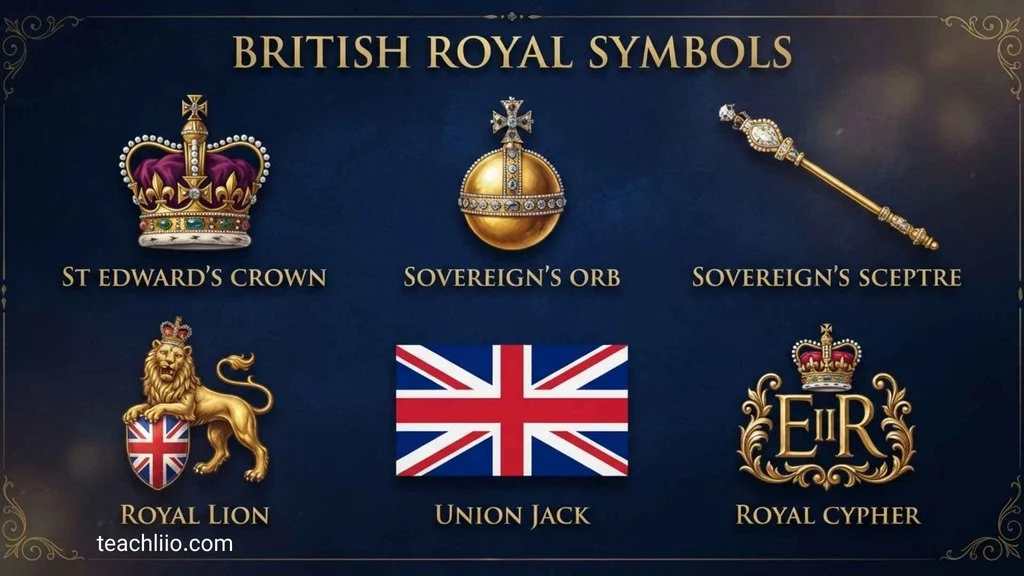
British royal symbolism extends far beyond the crown.
Important royal symbols include:
- The Royal Coat of Arms
- The Crown
- Royal Cyphers
- The Royal Standard
- The lion and unicorn
- The Garter
- Royal regalia
- Heraldic badges
These symbols can appear on government documents, ceremonial objects, official buildings, military insignia, coins, and royal occasions.
Royal symbols are particularly useful to study because they combine national history with the constitutional role of the monarchy.
Symbols of England
England has several important symbols that should not automatically be called symbols of the entire UK.
St George’s Cross
The red cross on a white field is England’s national flag.
Tudor Rose
The Tudor rose is a major English historical and heraldic emblem.
Three Lions
Three lions are closely associated with England’s royal heraldry and remain highly recognizable through English sporting culture.
English Oak
The oak has strong cultural and historical associations with England and British history, although it should be distinguished from formally designated national symbols.
These symbols together provide a much fuller picture of English identity than simply using the Union Flag.
Symbols of Scotland
Scotland has its own distinctive set of symbols.
Saltire
The blue-and-white Saltire is Scotland’s national flag.
Thistle
The thistle is one of Scotland’s best-known national emblems.
Unicorn
The unicorn has a major place in Scottish royal heraldry.
Lion Rampant
The lion rampant is another important Scottish heraldic image, although it should not be confused with the Royal Arms or the Union Flag.
These symbols are useful examples of how Scottish identity exists within the broader identity of the United Kingdom.
Symbols of Wales
Welsh symbols are particularly distinctive because Wales has both animal and plant emblems.
Red Dragon
The red dragon is Wales’s most recognizable national emblem.
Daffodil
The daffodil is one of the most popular Welsh floral symbols.
Leek
The leek has deep traditional connections with Welsh culture.
St David’s Cross
St David’s Cross is also associated with Welsh religious and cultural identity.
Together, these symbols give Wales a visual identity that is clearly different from the symbols of England and Scotland.
Symbols of Northern Ireland
Northern Ireland has a more complicated symbolic landscape because its history and political traditions contain different identities and interpretations.
The shamrock is a well-known cultural symbol associated with Ireland and is also used in Northern Irish contexts.
Other symbols connected with Northern Ireland include the red hand and St Patrick’s cross in historical and heraldic contexts.
It is important not to present every Irish symbol as an official symbol of Northern Ireland. Historical, cultural, religious, and political meanings can differ.
British Symbols on the Royal Coat of Arms
The Royal Coat of Arms can be understood as a compact visual history of the monarchy and the nations associated with the United Kingdom.
Some of its best-known elements include:
- Lion: associated with England
- Unicorn: associated with Scotland
- Harp: associated with Ireland
- Three lions: England
- Scottish lion: Scotland
- Garter: Order of the Garter
- Crown: monarchy
- Motto: royal heraldic tradition
Studying these elements individually makes the Coat of Arms much easier to understand.
It also demonstrates why the Royal Arms should not simply be described as a “British logo.” It is a formal heraldic achievement with constitutional and historical significance.
British Symbols vs. English Symbols
One of the most common mistakes is using “British” and “English” as if they mean the same thing.
They do not.
Britain can refer geographically to Great Britain, which consists of England, Scotland, and Wales.
The United Kingdom is the sovereign state officially known as the United Kingdom of Great Britain and Northern Ireland. It consists of England, Scotland, Wales, and Northern Ireland.
Therefore:
- Union Flag → United Kingdom
- St George’s Cross → England
- Saltire → Scotland
- Welsh Dragon → Wales
This distinction is essential for accurate writing about British symbols.
Historical and Cultural British Symbols
Not every symbol associated with Britain belongs to an official national-symbol category.
Some are better understood as cultural or historical symbols.
The Poppy
The red poppy is strongly associated with remembrance of military service and those who died in war.
It has become particularly prominent around Remembrance events in the United Kingdom.
The Bulldog
The bulldog has long appeared in popular British imagery and has sometimes been used as a personification of Britain.
It is better described as a popular cultural symbol than an official national emblem.
The Crown
The crown is both a royal symbol and a broader representation of the institution of the monarchy.
The Three Lions
The three lions are deeply associated with England and English sporting identity.
These examples show why a comprehensive article should distinguish between official, heraldic, historical, and popular symbols.
How to Identify British Symbols
If you see an unfamiliar British symbol, start by asking four questions.
Is It a Flag?
A red cross on white usually points toward England.
A white diagonal cross on blue points toward Scotland.
A red dragon points toward Wales.
The Union Flag represents the United Kingdom.
Is It a Plant?
A rose commonly points toward England.
A thistle points toward Scotland.
A daffodil or leek points toward Wales.
A shamrock may point toward Irish cultural identity and can appear in Northern Irish contexts.
Is It a Royal Animal?
A lion may indicate English or royal heraldic traditions.
A unicorn is strongly connected with Scottish heraldry.
Is It Part of a Coat of Arms?
Look for combinations of animals, crowns, shields, mottos, and heraldic bands.
A combination of a lion and unicorn supporting a shield is a strong clue that you are looking at the Royal Arms.
Why Are There So Many British Symbols?
Britain’s symbolism is complicated because its identity developed through centuries of kingdoms, unions, royal dynasties, political changes, and cultural traditions.
England, Scotland, Wales, and Ireland developed their own heraldic and cultural identities. Political unions later brought some of those symbols together.
The result is a layered system.
The Union Flag represents political union. National flags represent individual nations. Royal heraldry reflects monarchy and historical claims. Plants and animals provide cultural symbols. Modern sporting and remembrance traditions add another layer.
This is why there is no single image that explains every aspect of British identity.
Frequently Asked Questions
What is the most famous British symbol?
The Union Flag is arguably the most recognizable symbol associated with the United Kingdom. Other highly recognizable symbols include the Royal Coat of Arms, crown, lion, Tudor rose, Scottish thistle, and Welsh dragon.
What does the Union Jack represent?
The Union Jack, formally called the Union Flag, represents the United Kingdom. Its design combines the crosses associated with England, Scotland, and St Patrick’s Cross.
What is England’s main symbol?
England has several important symbols, including St George’s Cross, the Tudor rose, and the three lions of English heraldry.
What is Scotland’s national symbol?
The thistle is one of Scotland’s best-known national emblems. Scotland is also represented by the Saltire and has strong royal associations with the unicorn.
What is the symbol of Wales?
The red dragon is the best-known national symbol of Wales. The daffodil and leek are also important Welsh emblems.
What does the British lion symbolize?
The lion is strongly associated with England and royal heraldry. In the Royal Coat of Arms, the lion supporter represents England.
Why is the unicorn a symbol of Scotland?
The unicorn has a long association with Scottish royal heraldry and appears as one of the supporters of the Royal Coat of Arms.
What does the Tudor rose represent?
The Tudor rose represents England and is associated with the Tudor dynasty. Its design combines the traditional red and white rose imagery connected with Lancaster and York.
What is the difference between the Union Jack and the English flag?
The Union Jack represents the United Kingdom, while the English flag is the Cross of St George. The English flag has a red cross on a white background.
What are the four national symbols of the UK?
There is no single universally defined set of four symbols that covers every aspect of the four nations. Commonly associated floral emblems are the rose for England, thistle for Scotland, daffodil for Wales, and shamrock for Northern Ireland.
Are British and English symbols the same?
No. English symbols represent England, while British or UK-wide symbols can represent a broader political or geographic identity. The Union Flag is a UK symbol, whereas St George’s Cross is specifically English.
What is the Royal Coat of Arms used for?
The Royal Coat of Arms represents royal authority. The UK Government uses it to indicate that it acts in the King’s name.
Conclusion
British symbols are much more than attractive flags, animals, plants, and royal decorations. They form a visual record of the United Kingdom’s history and the individual identities of England, Scotland, Wales, and Northern Ireland.
The Union Flag represents the United Kingdom, while symbols such as St George’s Cross, the Saltire, and the Welsh dragon represent individual nations. The Royal Coat of Arms brings together several layers of royal and national heraldry, including the lion of England and unicorn of Scotland.
Learning these differences makes British symbolism easier to understand and prevents one of the most common mistakes: treating every English, Scottish, Welsh, or Irish-associated symbol as though it represents the entire United Kingdom.
Whether you are studying British history, researching national emblems, identifying a flag, or simply curious about UK culture, understanding the meaning, origin, and context of each symbol provides a much clearer picture of Britain.

I’m Oscar Radcliffe, a British writer who enjoys uncovering the numbers hidden within ordinary questions. My work explores quantities, counts, statistics, measurements, and fascinating comparisons across different subjects. I aim to present reliable information clearly, helping readers satisfy their curiosity while discovering interesting facts they may never have considered before.
Books:
The Science of Counting
How Many? Fascinating Numbers Explained