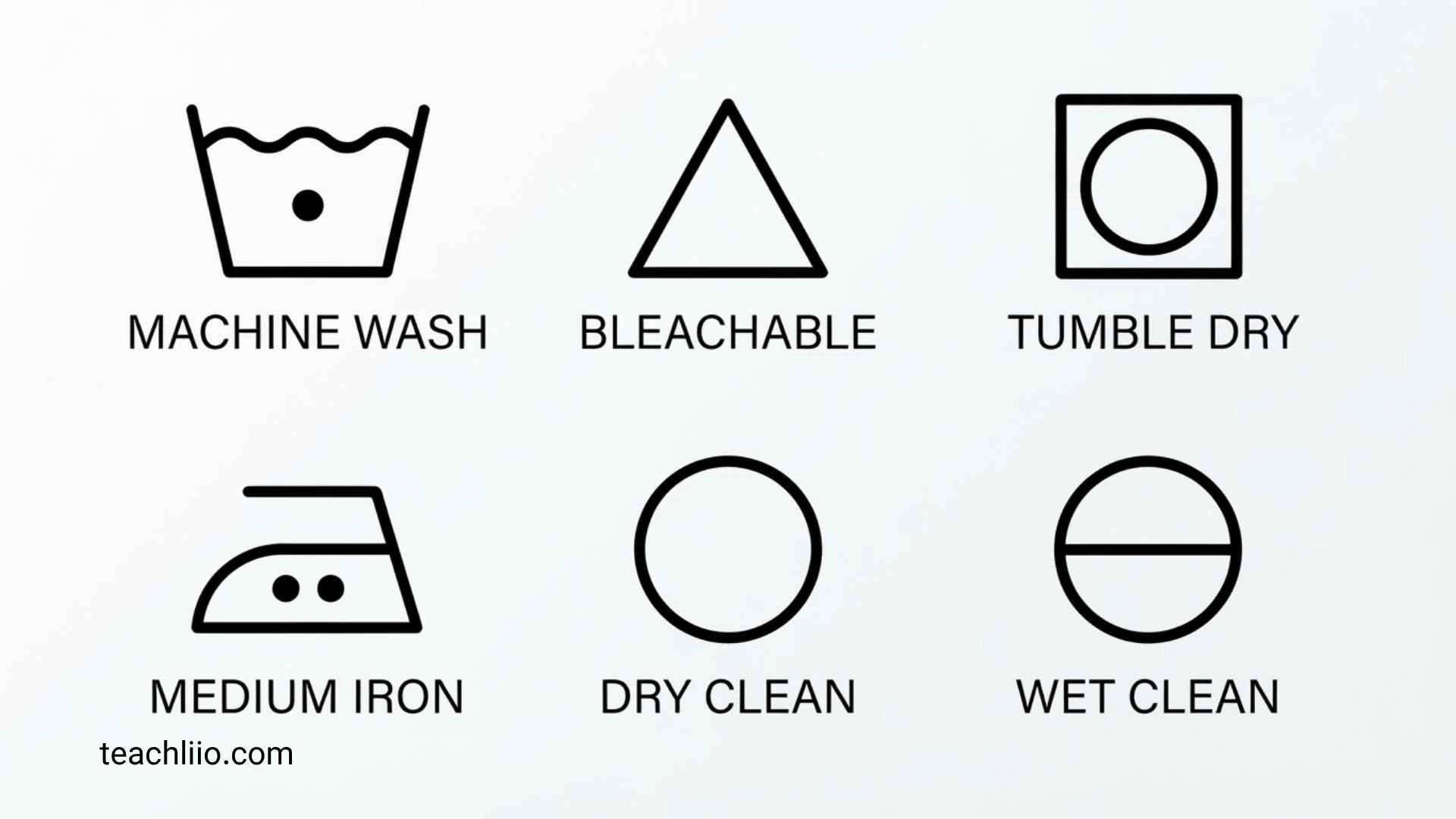
Care label symbols are the small icons found on clothing tags that tell you how to wash, bleach, dry, iron, or professionally clean a garment. Although these symbols may look confusing at first, they follow a logical system that becomes easy to understand once you know what each shape and marking represents.
The five basic care categories are washing, bleaching, drying, ironing, and professional textile care. The current international reference for these symbols is ISO 3758:2023, which describes a system designed to communicate the most severe care treatments that should not cause irreversible damage to textile articles.
This complete guide explains care label symbols and their meanings, including numbers, dots, lines, crosses, hand-wash instructions, tumble-drying symbols, ironing temperatures, professional-care symbols, and common mistakes to avoid.
Care Label Symbols Quick Reference
The easiest way to understand a clothing care label is to recognize its five main symbols.
| Symbol Category | Basic Shape | What It Tells You |
| Washing | Tub | How the garment can be washed |
| Bleaching | Triangle | Whether and what type of bleach can be used |
| Drying | Square | How the garment should be dried |
| Ironing | Iron | Whether and how the garment can be ironed |
| Professional Care | Circle | Professional cleaning instructions |
These basic symbols can contain additional markings that change their meaning. Numbers can indicate maximum washing temperatures, while dots, lines, and crosses provide additional instructions.
What Are Care Label Symbols?
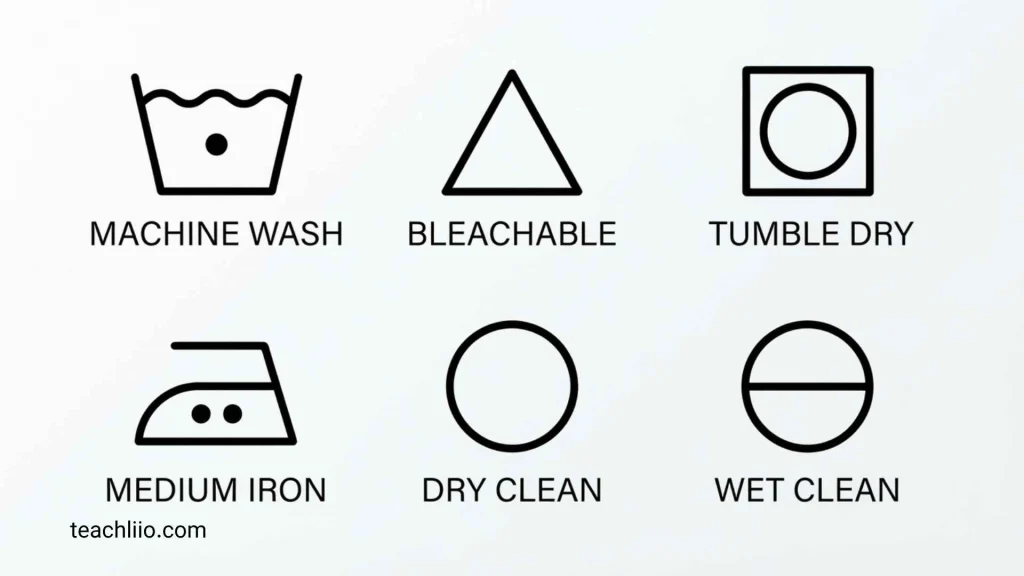
Care label symbols are standardized graphic instructions placed on textile products to help consumers care for garments correctly.
Instead of printing long instructions in multiple languages, manufacturers can use internationally recognized symbols. A clothing label might therefore show several icons in a row, allowing someone to understand the garment’s basic care requirements quickly.
The international ISO system covers domestic washing, bleaching, drying, and ironing as well as professional dry- and wet-cleaning treatments.
The purpose is not simply to tell you how to clean a garment. The symbols communicate treatment limits intended to help prevent irreversible damage during normal textile care.
What Are the Five Main Care Label Symbols?
Washing Symbol
The washing symbol looks like a tub filled with water. It tells you whether the garment can be washed and, when applicable, the maximum washing temperature and level of mechanical action.
A tub can appear with:
- A temperature number
- One line underneath
- Two lines underneath
- A hand
- A cross
The number inside an ISO washing symbol represents the maximum washing temperature in degrees Celsius, not necessarily a temperature that must always be used.
Bleaching Symbol
The bleaching symbol is a triangle. It tells you whether bleaching is permitted and, depending on the marking, which type of bleach is appropriate.
Common variations include:
- Empty triangle: bleaching permitted
- Triangle with specific markings: restricted bleaching
- Crossed triangle: do not bleach
Always follow the exact symbol rather than assuming that every white garment can safely be treated with bleach.
Drying Symbol
The drying symbol is a square. It covers different natural and machine-drying methods.
A square containing a circle represents tumble drying. Additional dots can indicate the permitted heat level.
Other drying symbols can describe methods such as line drying, drip drying, or drying flat.
Ironing Symbol
The ironing symbol resembles an iron. It tells you whether ironing is permitted and, where applicable, the appropriate temperature level.
Dots inside the iron indicate temperature levels. A crossed-out iron means ironing should not be used.
Professional Care Symbol
Professional textile care is represented by a circle in the ISO system.
The circle can contain additional markings that communicate information intended primarily for professional cleaners. Professional care can include dry-cleaning and wet-cleaning processes.
What Do Numbers, Dots, Lines, and Crosses Mean?
What Do Numbers Mean on Care Labels?
Numbers inside the washing tub indicate the maximum washing temperature.
For example:
- 30 = maximum 30°C wash
- 40 = maximum 40°C wash
- 60 = maximum 60°C wash
A lower temperature may be used when appropriate. The important point is not to exceed the temperature indicated by the symbol.
What Do Dots Mean on Care Labels?
Dots are commonly used to indicate heat or temperature levels in symbols such as ironing and tumble drying.
Generally, fewer dots represent lower heat and more dots represent higher heat within the applicable symbol system.
Do not assume that dots have exactly the same meaning in every care category. Read them together with the symbol surrounding them.
What Do Lines Under a Washing Symbol Mean?
Lines underneath a washing tub indicate a gentler washing process.
One line indicates a milder process with reduced mechanical action. Two lines indicate an even gentler process, such as a very mild treatment suitable for particularly sensitive garments.
This means you should not treat a lined washing symbol like an ordinary wash symbol even when the temperature number is the same.
What Does a Cross Mean on a Care Label?
A cross generally means do not use the treatment represented by that symbol.
For example:
- Crossed tub = do not wash
- Crossed triangle = do not bleach
- Crossed dryer = do not tumble dry
- Crossed iron = do not iron
- Crossed professional-care symbol = do not use that professional treatment
Washing Care Label Symbols Explained
30°C Washing Symbol
A washing tub containing 30 means the maximum washing temperature is 30°C.
This setting is commonly associated with garments that should not be exposed to higher washing temperatures.
Always consider other markings around the tub. A 30°C symbol with one or two lines underneath requires gentler mechanical treatment than a plain 30°C symbol.
40°C Washing Symbol
A 40°C symbol allows washing at a maximum temperature of 40°C.
The correct machine cycle still depends on any additional markings beneath the tub.
60°C Washing Symbol
A 60°C symbol means the maximum washing temperature is 60°C.
It does not mean that every washing cycle should automatically use 60°C. Using a lower temperature can be appropriate when it meets the garment’s cleaning needs.
Hand-Wash Symbol
A tub containing a hand indicates hand washing.
When you see this symbol, avoid treating the garment as an ordinary machine-wash item unless the manufacturer provides other instructions.
Gentle handling is particularly important for delicate garments.
Gentle-Wash Symbol
One line beneath the washing tub indicates a milder washing process with reduced mechanical action.
Choose a suitable gentle or easy-care cycle that corresponds with your machine’s available programs.
Very Gentle-Wash Symbol
Two lines beneath the tub indicate a very mild washing process.
These garments need especially gentle mechanical treatment. The temperature and other instructions shown on the label should also be followed.
Do Not Wash Symbol
A crossed-out washing tub means the garment should not be washed.
This does not necessarily mean that the garment cannot be cleaned. Look at the professional-care symbol and other instructions to determine the appropriate method.
Bleaching Symbols Explained
Bleach Allowed Symbol
An empty triangle generally indicates that bleaching is permitted under the applicable care-label system.
Even when bleaching is allowed, follow the instructions of the bleach product and avoid assuming that stronger treatment is better.
Non-Chlorine Bleach Symbol
Some symbols specify that only certain bleaching agents, such as oxygen-based or non-chlorine bleach, should be used.
This distinction is important because different bleaching chemicals can affect dyes and textile fibers differently.
Do Not Bleach Symbol
A crossed-out triangle means do not bleach.
Avoid adding bleach to the wash when this symbol appears, even if the garment is white.
Drying Care Label Symbols Explained
Tumble-Dry Symbol
A square containing a circle represents tumble drying.
Dots within the circle indicate the permitted drying temperature level in the applicable symbol system.
Low-Heat Drying
A tumble-drying symbol with a lower heat indication means the garment should be dried using the appropriate lower-temperature setting.
Do not substitute a high-heat program simply because the garment has already been washed safely.
Do Not Tumble Dry Symbol
A crossed-out tumble-drying symbol means the garment should not be placed in a tumble dryer.
Depending on the label, another drying method may be recommended.
Line Dry Symbol
Natural-drying symbols can indicate that a garment should be dried on a line or by hanging.
This method can be useful for garments that should not receive tumble-dryer heat.
Drip Dry Symbol
Drip-dry instructions indicate that the garment should be allowed to dry naturally while excess water drains away.
Avoid aggressive wringing when the care instructions call for gentle handling.
Dry Flat Symbol
A dry-flat instruction means the garment should be placed flat while drying.
This can be especially important for garments that could stretch or lose their shape when hung while wet.
Dry in Shade Symbol
Some natural-drying symbols include a shade indication.
This means the garment should be dried away from direct sunlight according to the label’s instructions.
Ironing Care Label Symbols Explained
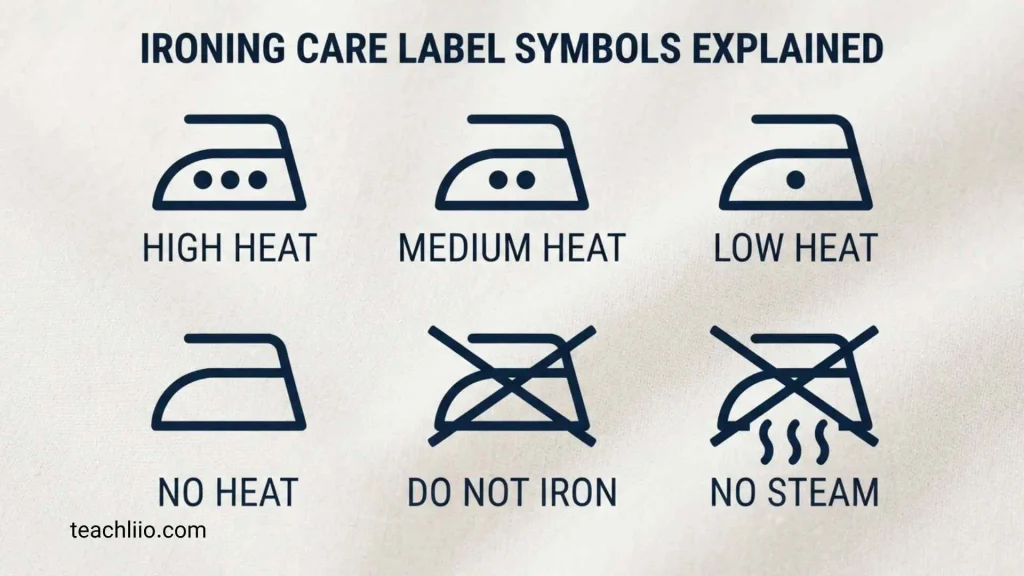
One-Dot Iron Symbol
One dot generally indicates a lower ironing temperature.
Use the appropriate low-temperature setting rather than assuming every fabric can tolerate maximum heat.
Two-Dot Iron Symbol
Two dots indicate a medium ironing temperature.
Check the garment’s complete label before applying steam or additional heat.
Three-Dot Iron Symbol
Three dots indicate a higher ironing temperature within the applicable care-label system.
Even so, the garment’s other care instructions should still be followed.
Do Not Iron Symbol
A crossed-out iron means do not iron.
Using a hot iron on a garment carrying this symbol can cause unwanted damage.
No-Steam Ironing Instruction
Some labels provide an additional restriction concerning steam.
When steam is prohibited, do not assume that ordinary steam ironing is acceptable simply because the garment can otherwise be ironed.
Professional Cleaning Symbols Explained
What Does a Circle Mean on a Care Label?
A circle indicates professional textile care.
The markings inside or around the circle can provide further instructions to professional cleaners rather than ordinary home-laundry instructions.
What Do Letters Inside a Circle Mean?
Letters can identify the type of professional cleaning process or solvent that is appropriate.
These markings are primarily useful to professional cleaners, so consumers should not try to interpret them as ordinary washing instructions.
What Does a Crossed-Out Circle Mean?
A crossed-out professional-care symbol means that the corresponding professional cleaning treatment should not be used.
Check the rest of the label for an alternative cleaning method.
How to Read a Care Label in 10 Seconds
Step 1: Find the Washing Symbol
Look for the tub first. Check whether it shows a temperature, hand washing, gentle lines, or a prohibition.
Step 2: Check Bleaching
Look for the triangle. Determine whether bleaching is allowed, restricted, or prohibited.
Step 3: Check Drying
Look for the square. Determine whether the garment can be tumble dried or requires natural drying.
Step 4: Check Ironing
Find the iron symbol and look for dots or a cross.
Step 5: Check Professional Care
Finally, look at the circle for professional-cleaning information.
Reading the symbols in this order makes even complicated labels much easier to understand.
Care Label Symbols vs. Washing Machine Symbols
Care label symbols and washing-machine symbols are not the same thing.
Care label symbols tell you what treatment the garment can safely receive.
Washing-machine symbols describe programs, functions, or settings available on a particular appliance.
For example, a clothing label may tell you that a garment requires a gentle 30°C wash, while your washing machine may offer programs such as “Delicates,” “Wool,” or “Easy Care.” You should select a machine program that follows the garment’s care requirements rather than assuming that the program name alone determines suitability.
What Happens If You Ignore Care Label Symbols?
Shrinkage and Shape Changes
Excessive heat or unsuitable washing can cause some garments to shrink or lose their original shape.
Color Damage
Incorrect washing temperatures, unsuitable chemicals, or inappropriate bleaching can affect garment colors.
Fabric Damage
Excessive mechanical action can be particularly problematic for mechanically sensitive textiles.
Heat Damage
High temperatures can damage fabrics that require low-temperature drying or ironing.
Damage to Prints and Special Features
Printed designs, coatings, decorative elements, and other garment features may have specific care requirements. Always follow the complete label rather than judging the garment only by its main fabric.
Common Care Label Mistakes
Washing at a Higher Temperature
A 30°C or 40°C maximum should not be treated as a suggestion to use a hotter cycle.
Ignoring Lines Under the Tub
The lines matter because they indicate gentler mechanical treatment.
Putting Everything in the Dryer
A garment may be washable but still unsuitable for tumble drying.
Using Bleach Without Checking the Triangle
Always check the bleaching symbol before using bleach.
Ironing at Maximum Heat
A high iron setting can damage fabrics that require low or medium temperatures.
Reading Only the First Symbol
A clothing label is a complete set of instructions. Washing safely does not automatically mean that tumble drying or ironing is safe.
Care Label Symbols by Fabric Type
Cotton
Cotton garments can have different care requirements depending on construction, dye, finishing, and other factors. Do not rely solely on the word “cotton”; check the actual care label.
Wool
Wool garments often require gentle treatment, but the correct method varies. Some may specify hand washing, a very mild cycle, or professional care.
Silk
Silk can be sensitive to heat, friction, and chemicals. Always follow the specific symbols rather than relying on a general silk-washing rule.
Polyester
Polyester is often relatively easy to care for, but excessive heat can still be unsuitable for some garments.
Linen
Linen garments can wrinkle easily, making the drying and ironing instructions particularly useful.
The key rule is simple: the garment’s care label takes priority over assumptions based only on fiber type.
Are Care Label Symbols the Same in Every Country?
International ISO Symbols
ISO 3758:2023 provides an international system of textile care symbols covering washing, bleaching, drying, ironing, and professional textile care.
U.S. Care Symbols
The United States has its own care-label requirements and uses ASTM-based symbols under the Federal Trade Commission’s Care Labeling Rule. The FTC notes that U.S. ASTM symbols are similar to, but not identical to, ISO symbols.
Therefore, readers should not automatically assume that every care symbol has exactly the same appearance or detailed interpretation in every country.
Real-Life Care Label Examples
Example 1: Everyday T-Shirt
Imagine a shirt showing:
30°C wash + no bleach + low-temperature tumble dry + low-temperature iron
The practical instruction is straightforward: wash at no more than 30°C, avoid bleach, use the permitted lower drying temperature, and iron only at the indicated low setting.
Example 2: Delicate Sweater
Suppose a sweater shows:
30°C + two lines + do not bleach + dry flat + low iron
The important point is not just the 30°C temperature. The two lines mean the garment also needs a very gentle washing process. After washing, it should be dried flat rather than treated like an ordinary T-shirt.
Example 3: Garment Requiring Professional Care
If a garment has a professional-care circle and a specific marking inside it, those instructions are intended to tell a professional cleaner which treatment is appropriate.
Do not substitute an ordinary home-washing method simply because the garment appears washable.
Care Label Symbols Quick Checklist
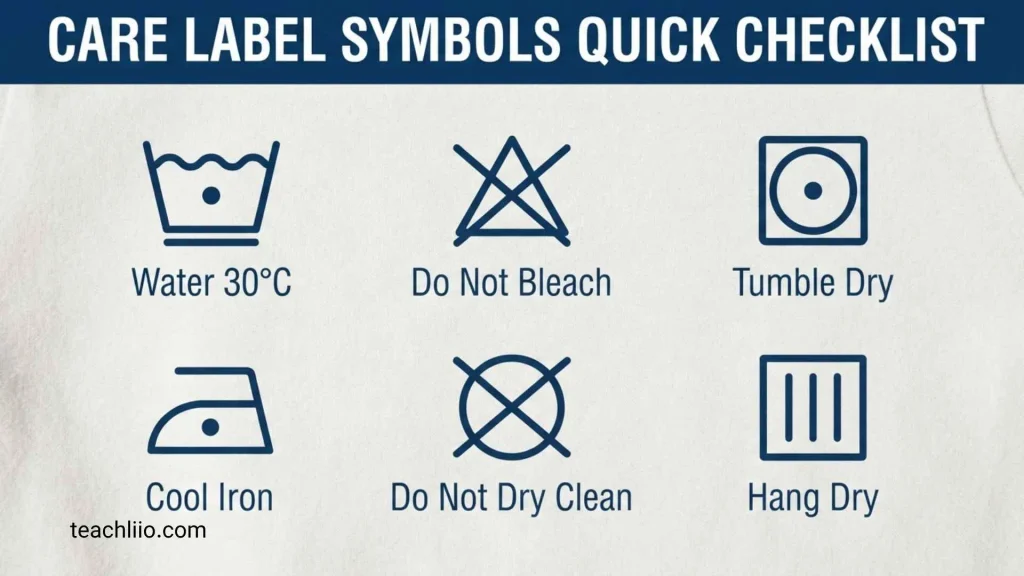
Before washing a garment, ask:
- What does the washing tub say?
- Is there a temperature number?
- Are there one or two lines underneath?
- Does it require hand washing?
- Is bleaching allowed?
- Can it be tumble dried?
- What drying temperature is permitted?
- Should it dry naturally?
- Can it be ironed?
- What ironing temperature is indicated?
- Is professional cleaning required or restricted?
Checking these details takes only a few seconds but can prevent many common laundry mistakes.
Frequently Asked Questions
What are the five main care label symbols?
The five main categories are washing, bleaching, drying, ironing, and professional textile care. Their basic symbols are a tub, triangle, square, iron, and circle respectively.
What does a triangle mean on a clothing label?
A triangle represents bleaching instructions. Additional markings indicate whether bleaching is permitted, restricted, or prohibited.
What does a square mean on a care label?
A square represents drying instructions. A circle inside the square indicates tumble drying, while other markings can describe different drying methods.
What does a circle mean on clothing?
A circle represents professional textile care. Additional markings inside or around the circle provide information about the appropriate professional treatment.
What does a crossed-out laundry symbol mean?
A crossed-out symbol means that the treatment represented by that symbol should not be used.
What do dots mean on care labels?
Dots generally indicate temperature or heat levels in symbols such as ironing and tumble drying. Their meaning should always be interpreted together with the symbol they appear inside.
What do lines under a washing symbol mean?
Lines under a washing tub indicate gentler mechanical treatment. One line represents a milder process, while two lines represent a very mild process.
What does 30°C mean on a clothing label?
A 30°C number inside the washing tub indicates a maximum washing temperature of 30°C under the ISO care-label system.
What does the hand-wash symbol mean?
A hand inside the washing tub indicates that the garment should be washed by hand rather than treated as a normal machine-wash garment.
What does the do-not-tumble-dry symbol mean?
It means the garment should not be placed in a tumble dryer. Follow any alternative natural-drying instructions shown on the label.
What does one dot on an iron mean?
One dot generally indicates a lower ironing temperature. Use the appropriate low-temperature setting.
Are care label symbols universal?
They are standardized, but systems can differ by region. ISO provides an international system, while the United States has ASTM-based symbols and specific federal care-label requirements.
Can I wash a garment at a lower temperature than the label shows?
When the symbol specifies a maximum temperature, a lower temperature can generally be used, provided the garment’s other care requirements are followed. The ISO system is designed around maximum permitted treatments.
Conclusion
Understanding care label symbols does not have to be difficult. Once you recognize the five basic categories—washing, bleaching, drying, ironing, and professional care—you can decode most clothing labels quickly.
The most important details are the markings that modify those basic symbols. Numbers indicate maximum washing temperatures, lines indicate gentler washing processes, dots commonly communicate heat levels, and crosses indicate treatments that should not be used.
Rather than looking at only one symbol, read the complete care label from beginning to end. This helps you choose the right washing cycle, drying method, ironing temperature, and professional-care treatment.
When in doubt, follow the garment’s specific care label instead of relying on general assumptions about its fabric. A few seconds spent checking these symbols can help reduce shrinking, fading, stretching, heat damage, and other avoidable problems while keeping your clothes in better condition for longer.

I’m Oscar Radcliffe, a British writer who enjoys uncovering the numbers hidden within ordinary questions. My work explores quantities, counts, statistics, measurements, and fascinating comparisons across different subjects. I aim to present reliable information clearly, helping readers satisfy their curiosity while discovering interesting facts they may never have considered before.
Books:
The Science of Counting
How Many? Fascinating Numbers Explained