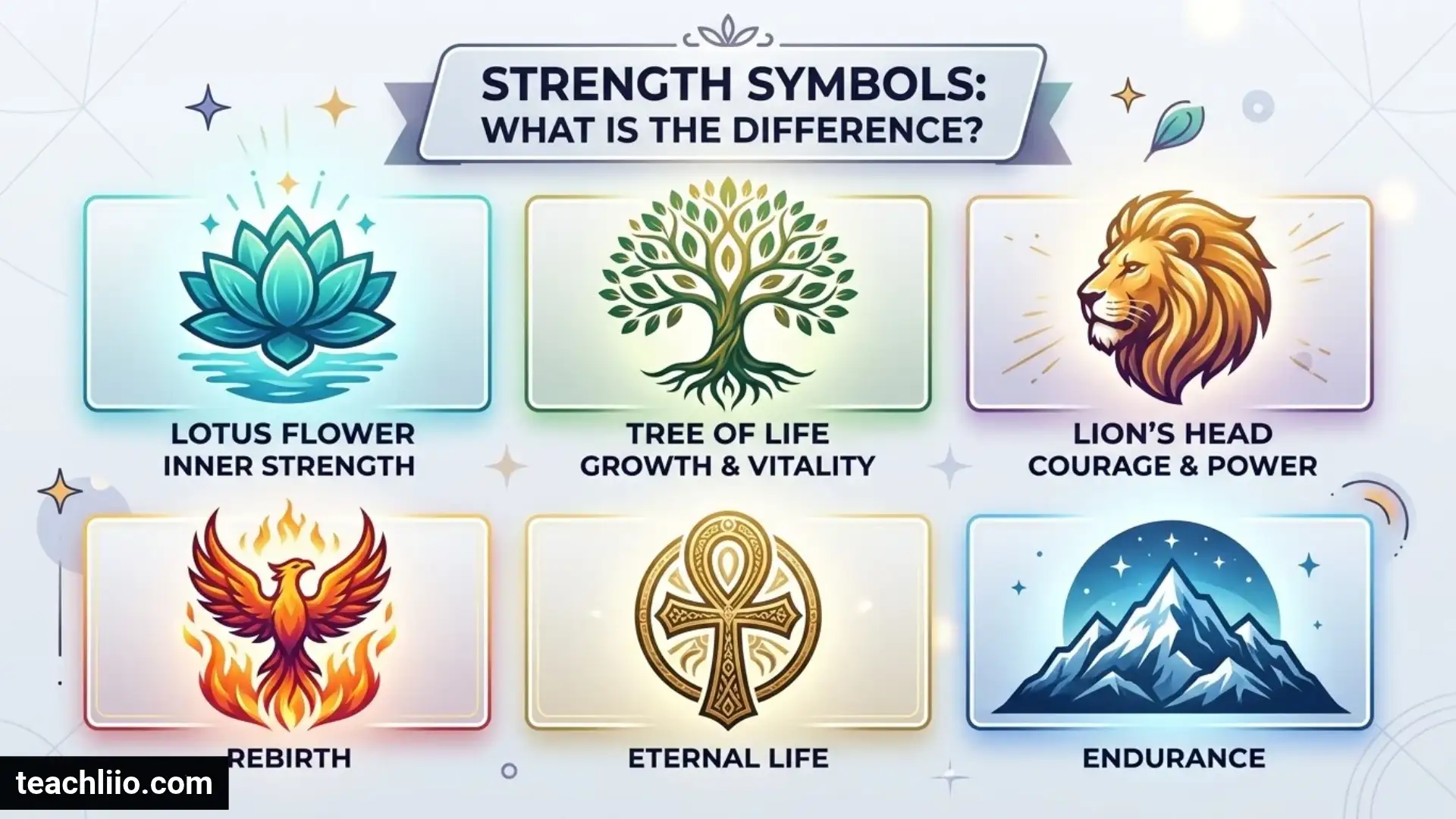
Strength is not always about physical power or the ability to defeat an opponent. Sometimes, it means staying hopeful during difficult times, finding courage when life becomes challenging, or having the determination to start again after failure. Throughout history, people have used animals, plants, natural elements, ancient designs, and mythological figures to express these powerful qualities.
Strength symbols represent different forms of power, including courage, confidence, emotional resilience, spiritual growth, protection, and perseverance. Some, such as the lion and bear, are associated with physical power, while others, like the phoenix and lotus flower, represent transformation and inner strength.
These symbols have different meanings across cultures and traditions. People also use them in tattoos, jewelry, artwork, personal gifts, and meaningful decorations to express their beliefs and experiences.
Whether you are searching for a symbol of inner strength, a meaningful tattoo, feminine power, or the courage to overcome difficult experiences, this guide explores more than 35 symbols and explains their meanings, origins, and significance.
What Are Strength Symbols?
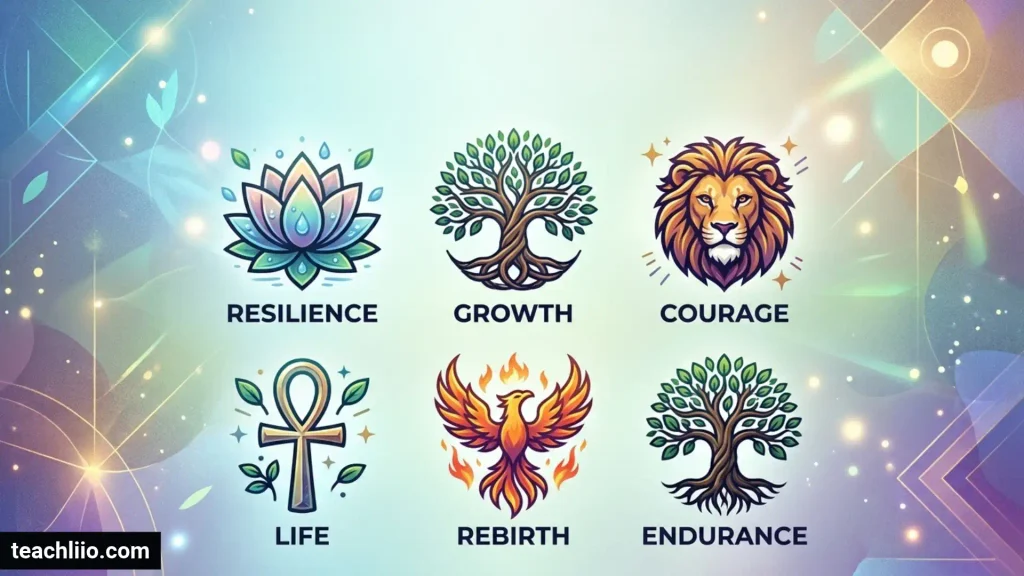
Strength symbols are visual representations of qualities that help people face challenges, protect others, maintain confidence, and overcome difficult circumstances. They can take the form of animals, flowers, trees, mythological objects, ancient characters, and natural elements.
Different symbols communicate different types of strength. For example, the lion represents courage and leadership, while bamboo represents flexibility and the ability to adapt without breaking. The phoenix represents renewal after hardship, and the oak tree symbolizes endurance and stability.
People connect with these symbols for several reasons:
- Personal motivation: They serve as reminders to remain determined during challenging situations.
- Cultural significance: Many symbols carry meanings passed down through generations.
- Personal expression: People use them to communicate their values, experiences, and beliefs.
- Art and tattoos: Their visual designs make them popular choices for meaningful artwork and body art.
- Spiritual meaning: Some symbols represent wisdom, protection, faith, and personal development.
The most meaningful strength symbol is not necessarily the most powerful-looking one. It is the one that represents the qualities a person wants to express.
35+ Powerful Strength Symbols and Their Meanings
Strength can be expressed through many different images. The following symbols represent physical power, courage, emotional stability, spiritual growth, and the ability to overcome obstacles.
1. Lion – Courage and Leadership
The lion is one of the most recognizable symbols of strength, bravery, and authority. Its powerful appearance, confidence, and role as a social group leader have made it a popular representation of courage and leadership.
Throughout history, lions have appeared in royal emblems, coats of arms, sculptures, and ancient artwork. Their image has often been used to communicate authority, protection, and bravery.
Symbolic meanings:
- Courage and fearlessness
- Leadership and authority
- Confidence and personal power
- Protection and bravery
The lion is a meaningful symbol for people who want to represent confidence, strong leadership, and the courage to face difficult situations.
2. Oak Tree – Endurance and Stability
The oak tree represents lasting strength, patience, wisdom, and stability. Its strong trunk and deep root system allow many oak varieties to survive for generations.
In European traditions, particularly Celtic cultural symbolism, the oak has been associated with strength and endurance.
Its roots provide a powerful metaphor for remaining grounded when life becomes unpredictable.
Symbolic meanings:
- Inner strength and stability
- Patience and endurance
- Family roots and heritage
- Long-lasting resilience
The oak tree is particularly meaningful for people who believe true strength comes from staying steady through life’s challenges.
3. Phoenix – Rebirth and Resilience
The phoenix is a legendary bird associated with renewal, transformation, and the ability to rise after destruction. In popular versions of the myth, the bird dies in flames and returns to life from its ashes.
This story makes the phoenix a powerful representation of overcoming hardship and beginning again.
Symbolic meanings:
- Rebirth and transformation
- Recovery after difficult experiences
- Hope and renewal
- Personal growth and resilience
The phoenix is an excellent choice for someone who has overcome a difficult chapter and wants to celebrate a fresh beginning.
4. Eagle – Freedom and Power
The eagle represents independence, courage, vision, and strength. Its ability to soar high above the landscape makes it a popular image of freedom and ambition.
Eagles have appeared in national emblems, military imagery, and historical artwork. The bald eagle, for example, is an important national symbol of the United States.
Symbolic meanings:
- Freedom and independence
- Vision and ambition
- Confidence and determination
- Courage and leadership
5. Bear – Physical Strength and Protection
The bear is widely associated with physical power, courage, and protective instincts. Its impressive size and strength have made it an important animal in the folklore and artistic traditions of many cultures.
The bear can also represent family protection and the ability to survive challenging environments.
Symbolic meanings:
- Physical strength and power
- Protection and loyalty
- Confidence and courage
- Independence and survival
6. Mountain – Perseverance and Determination
Mountains represent stability, endurance, and the determination needed to overcome difficult challenges. Their enormous size and lasting presence make them powerful images of strength.
Climbing a mountain requires patience, preparation, and continuous effort. This makes the mountain a meaningful metaphor for pursuing personal goals despite obstacles.
Symbolic meanings:
- Perseverance and determination
- Patience and stability
- Personal achievement
- Overcoming obstacles
7. Dragon – Authority and Protection
Dragons are powerful mythological creatures with different meanings across cultures. In Chinese traditions, dragons are associated with authority, wisdom, good fortune, and auspicious power.
In many European legends, dragons appear as powerful creatures connected with danger, guardianship, and extraordinary strength.
Symbolic meanings:
- Authority and leadership
- Wisdom and confidence
- Protection and guardianship
- Extraordinary power
8. Bull – Determination and Physical Power
The bull is a traditional representation of physical strength, determination, and persistence. Its muscular body and powerful horns have made it an important figure in ancient art and cultural traditions.
In ancient Mediterranean imagery, bulls were also associated with fertility, vitality, and power.
Symbolic meanings:
- Physical power
- Strong determination
- Confidence and boldness
- Persistence and willpower
9. Lotus Flower – Inner Strength and Growth
The lotus flower is an important symbol in several Asian religious and philosophical traditions. It is associated with purity, spiritual development, and transformation.
Its ability to grow in muddy water while producing a beautiful flower above the surface makes it a meaningful metaphor for personal growth through difficult circumstances.
Symbolic meanings:
- Inner strength
- Spiritual development
- Personal transformation
- Rising above challenges
10. Anchor – Stability and Emotional Strength
An anchor is a traditional maritime symbol of stability, hope, and security. Its purpose is to hold a vessel in place despite changing water conditions.
As a symbol of strength, it represents staying grounded when life becomes unpredictable.
Symbolic meanings:
- Emotional stability
- Hope and security
- Loyalty and commitment
- Staying grounded during hardship
11. Wolf – Loyalty and Survival
The wolf represents courage, loyalty, independence, and survival. Wolves are social animals that live in family groups, making them meaningful symbols of teamwork and connection.
Their ability to adapt to different environments also connects them with determination and resilience.
Symbolic meanings:
- Family and loyalty
- Independence and confidence
- Survival and adaptability
- Courage and determination
12. Tiger – Fearlessness and Personal Power
The tiger represents courage, physical strength, confidence, and independence. Its agility and powerful appearance have made it an important symbol in several Asian cultural traditions.
In some East Asian traditions, tigers are also associated with protection and the ability to drive away harmful forces.
Symbolic meanings:
- Fearlessness and boldness
- Personal power
- Confidence and independence
- Protection and courage
13. Bamboo – Flexible Strength
Bamboo is a meaningful representation of adaptability and resilience. Its flexible structure allows many varieties to bend in strong winds rather than remain completely rigid.
This quality makes bamboo a metaphor for people who adapt to difficult circumstances without losing their values.
Symbolic meanings:
- Flexibility and adaptability
- Patience and endurance
- Quiet inner strength
- Personal growth
14. Sword – Honor and Courage
The sword has represented bravery, justice, authority, and protection throughout history. It appears in mythology, royal traditions, military emblems, and historical artwork.
Beyond physical power, a sword can symbolize the strength to defend personal beliefs and stand up for what is right.
Symbolic meanings:
- Honor and bravery
- Justice and protection
- Determination
- Standing up for personal values
15. Shield – Protection and Resilience
The shield is an ancient symbol of defense and security. Warriors historically used shields to protect themselves and others during battles.
Today, it can also represent emotional boundaries, personal security, and the strength to protect loved ones.
Symbolic meanings:
- Safety and protection
- Emotional resilience
- Responsibility and loyalty
- Defensive strength
16. Mjölnir – Strength and Protection
Mjölnir is the legendary hammer associated with Thor, the Norse god of thunder. It is one of the most recognizable objects in Norse mythology.
Viking-age hammer-shaped pendants provide historical evidence of its importance in Norse religious identity.
Symbolic meanings:
- Strength and protection
- Divine power
- Courage and bravery
- Defense against danger
17. Hercules’ Club – Heroic Strength
Hercules, known as Heracles in Greek mythology, is famous for his extraordinary physical strength and legendary twelve labors.
His club is commonly featured in artistic representations of the hero and symbolizes the power to face seemingly impossible challenges.
Symbolic meanings:
- Heroic courage
- Physical strength
- Determination
- Overcoming difficult tasks
18. Chinese Character 力 – Strength and Force
The Chinese character 力 (lì) means strength, force, or power. It is a written representation of the concept of strength rather than a decorative mythological symbol.
It appears in Chinese words and expressions connected with physical force, effort, and ability.
Symbolic meanings:
- Physical strength
- Personal power
- Effort and determination
- Energy and ability
19. Dwennimmen – Strength Through Humility
Dwennimmen is an Adinkra symbol from the Akan cultural tradition of Ghana. Its name is commonly translated as ram’s horns.
The design communicates the relationship between strength and humility. It represents the idea that someone can be powerful without becoming arrogant.
Symbolic meanings:
- Strength with humility
- Patience and wisdom
- Respect for others
- Balanced leadership
20. Dara Knot – Strength Through Deep Roots
The Dara knot is a Celtic-inspired interlaced design associated with the oak tree and its roots. Its name is connected with the Irish word for oak.
It is commonly interpreted today as a representation of stability, endurance, and the strength that comes from having deep roots.
Symbolic meanings:
- Inner strength
- Stability and endurance
- Connection with heritage
- Personal resilience
21. Vajra – Indestructible Spiritual Strength
The vajra, also known as the dorje in Tibetan traditions, is an important ritual object in Vajrayana Buddhism.
It represents indestructibility, spiritual power, and the unshakable nature of awakened wisdom. Its meaning goes beyond physical strength and focuses on mental clarity and spiritual understanding.
Symbolic meanings:
- Spiritual strength
- Wisdom and clarity
- Indestructibility
- Inner determination
22. Pine Tree – Longevity and Endurance
Pine trees are associated with longevity, patience, and resilience. Many varieties remain green throughout the year and can survive in challenging environments.
In East Asian artistic traditions, evergreen pines have been used to express longevity and steadfastness.
Symbolic meanings:
- Long-lasting strength
- Patience and endurance
- Stability
- Consistency through hardship
23. Sun – Vitality and Life Energy
The sun is a natural symbol of life, energy, renewal, and vitality. Its daily appearance has made it important in the mythology and traditions of numerous civilizations.
As a symbol of strength, it represents optimism, personal energy, and the hope of a new beginning.
Symbolic meanings:
- Vitality and energy
- Confidence and optimism
- Renewal and hope
- Personal power
24. Ram – Determination and Leadership
The ram is associated with persistence, courage, and determination. Its strong horns and ability to move across rocky landscapes make it an impressive representation of physical strength.
The ram also appears in the Akan Adinkra symbol Dwennimmen, where its horns communicate strength combined with humility.
Symbolic meanings:
- Determination and persistence
- Leadership and confidence
- Courage and boldness
- Strength with humility
25. Koi Fish – Perseverance and Success
Koi fish are important in Japanese cultural art and symbolism. They are commonly associated with perseverance, good fortune, and the ability to overcome obstacles.
Stories and artistic representations of koi swimming upstream have strengthened their association with determination and achievement.
Symbolic meanings:
- Perseverance and courage
- Ambition and success
- Overcoming challenges
- Personal transformation
26. Tree of Life – Growth and Connection
The Tree of Life appears in many cultural, spiritual, and artistic traditions, although its meanings vary. Its roots, trunk, and branches provide a powerful image of connection between family, nature, life, and personal development.
Its structure also represents the importance of remaining grounded while continuing to grow.
Symbolic meanings:
- Growth and endurance
- Family and connection
- Wisdom and stability
- Personal development
27. Yin Yang – Strength Through Balance
Yin Yang is a traditional Chinese concept represented by a circular design containing two interconnected, contrasting sections.
It expresses the relationship between complementary forces. Rather than representing physical power, it communicates harmony, balance, and the importance of understanding different sides of life.
Symbolic meanings:
- Balance and harmony
- Emotional stability
- Adaptability
- Strength through understanding
28. Hamsa – Protection and Blessing
The Hamsa is a hand-shaped symbol found in several Middle Eastern and North African cultural and religious traditions. It is commonly associated with protection, blessings, and protection against the evil eye.
Its exact interpretations differ among communities, making its cultural background important to understand.
Symbolic meanings:
- Protection and security
- Blessings and good fortune
- Peace and reassurance
- Spiritual protection
29. Lightning Bolt – Energy and Power
Lightning is one of nature’s most dramatic displays of energy. Its sudden appearance, brightness, and tremendous electrical power have made it a symbol of force and intensity.
Lightning also appears in mythology and religious imagery associated with powerful deities, including Zeus and Thor.
Symbolic meanings:
- Energy and vitality
- Power and authority
- Strength and intensity
- Sudden transformation
30. Kintsugi – Strength Through Healing
Kintsugi is a Japanese art of repairing broken pottery with lacquer, traditionally mixed or finished with powdered precious metals such as gold.
Rather than hiding the cracks, this technique makes the repaired areas visible. It has become a popular metaphor for healing, acceptance, and finding beauty after difficult experiences.
Symbolic meanings:
- Emotional healing
- Resilience after hardship
- Acceptance and transformation
- Beauty through restoration
31. Butterfly – Transformation and Freedom
The butterfly represents transformation, personal growth, and freedom. Its life cycle, from caterpillar to chrysalis to adult butterfly, makes it a powerful image of change.
It can also symbolize the courage to move beyond an earlier stage of life.
Symbolic meanings:
- Personal transformation
- Freedom and independence
- Growth and renewal
- New beginnings
32. Arrow – Direction and Determination
The arrow is a simple but meaningful symbol of direction, focus, and forward movement. Its pointed shape and association with archery make it a natural representation of aiming toward a specific goal.
It can also remind people to keep moving forward when facing obstacles.
Symbolic meanings:
- Focus and determination
- Progress and ambition
- Courage to move forward
- Clear direction
33. Tree Roots – Grounded Strength
Tree roots represent the hidden foundation that supports visible growth. Although roots are usually beneath the surface, they provide stability and help trees obtain water and nutrients.
As a symbol, they represent the quiet qualities that make someone strong, including personal values, experience, family connections, and self-belief.
Symbolic meanings:
- Inner stability
- Family and heritage
- Strong personal values
- Emotional grounding
34. Horse – Freedom and Strength
The horse has been associated with strength, speed, endurance, and freedom throughout human history. Its importance in transportation, agriculture, warfare, and cultural traditions has made it a powerful symbol across many societies.
A horse can also represent the determination to keep moving toward a goal.
Symbolic meanings:
- Physical strength and endurance
- Freedom and independence
- Confidence and courage
- Energy and determination
35. Stag – Dignity and Resilience
The stag, or adult male deer, is an important figure in various European artistic and mythological traditions. Its impressive antlers and association with woodland environments have made it a symbol of dignity, renewal, and natural power.
In some traditions, deer are also connected with spiritual guidance and the natural world.
Symbolic meanings:
- Dignity and confidence
- Natural strength
- Renewal and growth
- Grace and resilience
36. Fire – Transformation and Strength
Fire is a natural element associated with energy, destruction, renewal, and transformation. It has played an important role in human survival, cooking, heating, and traditional ceremonies.
As a symbol, fire can represent the determination and passion needed to overcome difficult circumstances.
Symbolic meanings:
- Passion and energy
- Transformation and renewal
- Courage and determination
- Strength during difficult times
Different Types of Strength and the Symbols That Represent Them
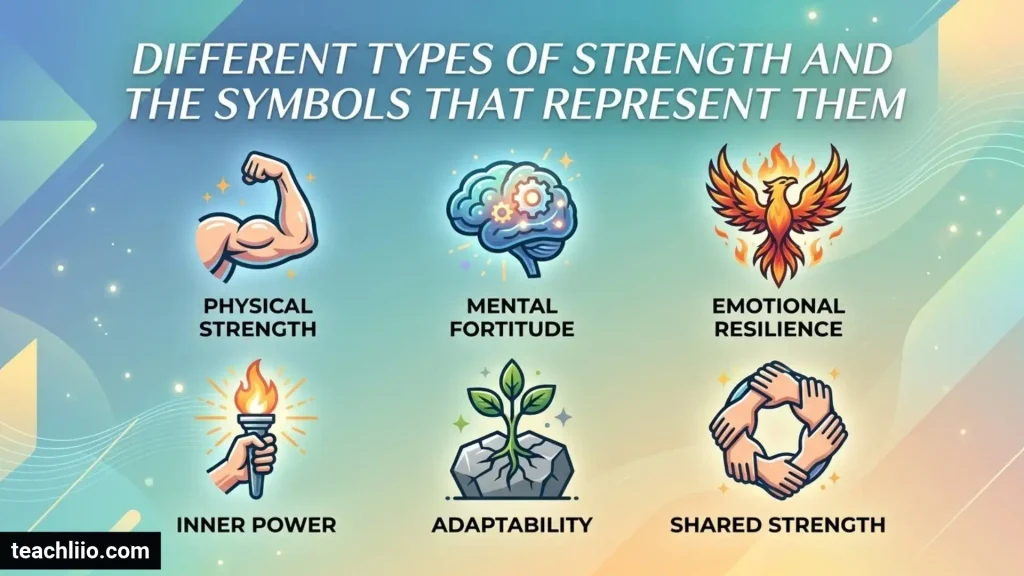
Not every symbol represents the same kind of power. Some communicate physical ability, while others represent emotional stability, spiritual understanding, or the courage to overcome challenges.
Understanding these differences makes it easier to choose a symbol that matches your personal meaning.
Symbols of Inner Strength
Inner strength is the ability to remain confident, patient, and emotionally grounded during difficult experiences. It does not always appear through outward displays of power.
The lotus flower, oak tree, bamboo, and mountain are meaningful examples.
- Lotus: Represents personal growth through difficult circumstances.
- Oak tree: Represents emotional stability and strong foundations.
- Bamboo: Represents the ability to adapt without losing your identity.
- Mountain: Represents patience and the determination to continue.
These symbols are suitable for people who want to express quiet confidence and personal resilience.
Symbols of Physical Strength
Physical strength is commonly represented through powerful animals and mythological figures.
The bear, bull, lion, tiger, and Hercules are popular examples.
- Bear: Represents physical power and protection.
- Bull: Represents determination and muscular strength.
- Lion: Represents courage and leadership.
- Tiger: Represents physical power and fearlessness.
- Hercules: Represents extraordinary heroic strength.
Symbols of Emotional Strength
Emotional strength means maintaining hope, managing difficult feelings, and continuing forward despite personal challenges.
The anchor, phoenix, oak tree, and kintsugi are particularly meaningful examples.
The anchor represents emotional stability, while the phoenix communicates renewal after hardship. Kintsugi offers a different perspective by showing that healing does not require hiding the marks of past experiences.
Symbols of Spiritual Strength
Spiritual strength is associated with wisdom, faith, awareness, and a deeper understanding of life.
The vajra, lotus flower, Tree of Life, and sun can communicate different aspects of spiritual growth.
Their meanings vary across religious and cultural traditions, so it is important to understand the original context before using them as spiritual symbols.
Symbols of Courage and Fearlessness
Courage involves facing uncertainty and taking action despite fear.
The lion, tiger, eagle, dragon, and sword are commonly associated with this quality.
The lion communicates leadership and bravery, while the eagle represents independence and confidence. The sword can symbolize the determination to defend one’s beliefs.
Symbols of Resilience and Perseverance
Resilience is the ability to recover, adapt, and continue after difficult experiences.
The phoenix, koi fish, bamboo, mountain, and kintsugi are meaningful representations.
These symbols communicate different sides of resilience, from starting again to remaining flexible when circumstances change.
Symbols of Protection and Stability
Protection is another important aspect of strength. It involves caring for loved ones, maintaining boundaries, and creating a sense of security.
The shield, Hamsa, anchor, bear, and Mjölnir are associated with different forms of protection.
Their meanings range from physical defense and guardianship to spiritual protection and emotional stability.
Symbols of Feminine Strength and Empowerment
Feminine strength can represent confidence, independence, leadership, emotional resilience, and the ability to overcome challenges. It is not limited to physical power or any single personality trait.
Many symbols can communicate these qualities.
Lioness – Confidence and Protective Strength
The lioness represents courage, leadership, cooperation, and protection. Lionesses are known for their important roles in pride life, including hunting and caring for their young.
They make a meaningful symbol for women who value confidence, independence, and protective strength.
Lotus – Inner Strength and Growth
The lotus represents personal development and the ability to grow through challenging circumstances.
It is particularly meaningful for someone who wants to express emotional growth, confidence, and a new beginning.
Phoenix – Renewal and Independence
The phoenix represents the ability to rise after difficult experiences. It can communicate a woman’s strength in rebuilding her life and moving forward with renewed confidence.
Butterfly – Freedom and Transformation
The butterfly represents change, freedom, and personal development. Its transformation makes it a meaningful symbol for women celebrating independence and new chapters in life.
Oak Tree – Stability and Endurance
The oak tree represents strength that develops over time. It can symbolize the ability to remain grounded, protect personal values, and maintain confidence during difficult circumstances.
Best Strength Symbols for Tattoos
Strength tattoos can carry personal meanings connected with courage, recovery, independence, and determination. Some people choose an animal, while others prefer a flower, ancient design, or simple natural element.
Here are some meaningful choices.
| Tattoo symbol | Meaning | Suitable design |
| Phoenix | Rebirth and resilience | Detailed bird or flame design |
| Lion | Courage and leadership | Lion head or minimalist outline |
| Lotus | Inner strength and growth | Simple flower design |
| Oak tree | Endurance and stability | Tree with visible roots |
| Mountain | Perseverance | Minimalist mountain outline |
| Anchor | Emotional stability | Small traditional anchor |
| Bamboo | Adaptability | Simple bamboo stalk |
| Dara knot | Strength and heritage | Interlaced Celtic-inspired pattern |
| Arrow | Focus and determination | Minimalist arrow |
| Kintsugi | Healing and recovery | Broken pottery with gold lines |
Small and Minimalist Strength Tattoos
Minimalist designs are useful for people who prefer subtle artwork.
Some popular ideas include:
- A small lotus representing inner growth.
- A simple arrow representing forward movement.
- A tiny mountain representing perseverance.
- A small phoenix outline representing renewal.
- A single oak leaf representing endurance.
- A simple anchor representing stability.
Before choosing a culturally significant design, research its meaning and traditional use. This is particularly important for religious and Indigenous symbols.
Ancient and Cultural Symbols of Strength
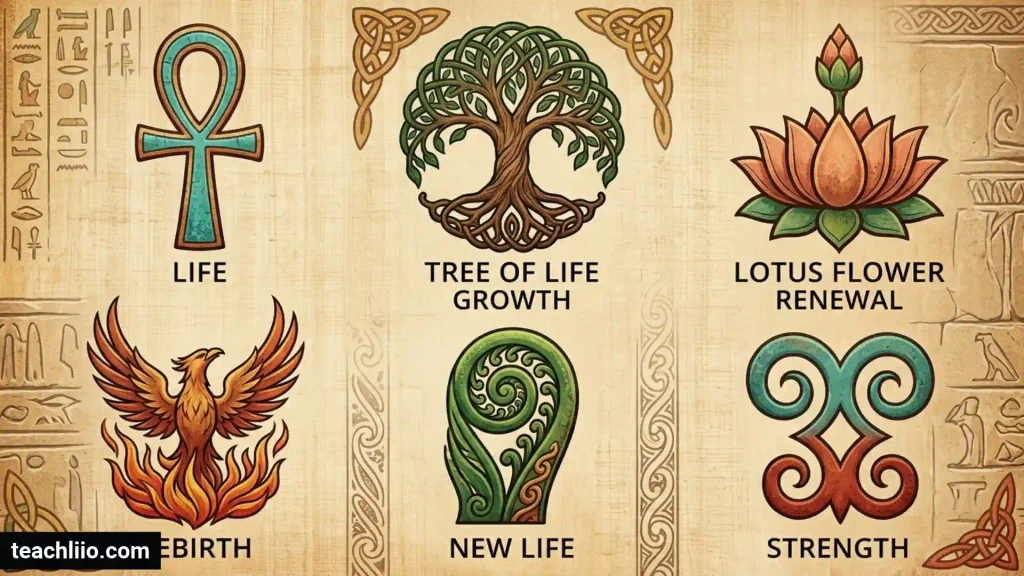
Strength has been an important concept in many civilizations. Different societies developed symbols to communicate power, protection, leadership, and spiritual endurance.
Norse Strength Symbols
Norse mythology contains several objects and figures associated with power and protection.
Mjölnir, Thor’s hammer, is one of the best-known examples. It is connected with Thor and appears in archaeological finds as hammer-shaped pendants from the Viking Age.
Other Norse mythological imagery, including powerful animals and protective objects, also communicates bravery and authority.
Celtic Strength Symbols
The oak tree has strong historical associations in Celtic cultural traditions. The Dara knot is a modern Celtic-inspired design connected with the oak and its roots.
Its contemporary interpretation emphasizes endurance, stability, and deep personal foundations.
Akan Strength Symbols
Dwennimmen is an important Adinkra symbol from the Akan tradition of Ghana. Its ram’s horns represent the relationship between strength and humility.
It communicates that genuine power does not require arrogance or disrespect toward others.
Greek Strength Symbols
Greek mythology contains several figures and objects associated with extraordinary power.
Hercules is a famous example because of his legendary strength and twelve labors. His club is frequently used in artwork to represent heroic courage and determination.
The eagle and lightning are also associated with Zeus, whose mythological authority connects them with divine power.
Buddhist Strength Symbols
The vajra is a significant ritual object in Vajrayana Buddhism. It symbolizes indestructibility and spiritual awakening.
The lotus is another important symbol in Buddhist traditions, representing purity, spiritual development, and awakening.
These symbols have specific religious meanings and should not be treated as interchangeable decorative designs.
Chinese Strength Symbols
The Chinese character 力 (lì) directly means strength or force. It can be used in writing and expressions related to physical ability and effort.
The dragon is another important symbol in Chinese traditions, associated with authority, auspicious power, wisdom, and good fortune.
Symbols That Represent Overcoming Hard Times
Sometimes people search for strength symbols because they want something that represents surviving difficult experiences. These symbols often focus more on recovery and personal development than physical power.
Phoenix – Starting Again
The phoenix represents the ability to rebuild after destruction. It is especially meaningful for people who have experienced major changes and want to celebrate a new beginning.
Kintsugi – Finding Strength Through Healing
Kintsugi represents the idea that something can become meaningful after being broken and repaired.
Its visible golden repair lines offer a powerful metaphor for accepting past experiences rather than pretending they never happened.
Bamboo – Adapting to Change
Bamboo represents flexibility and the ability to adjust when life becomes difficult. It communicates that changing your approach does not mean losing your strength.
Lotus – Growing Through Difficult Experiences
The lotus symbolizes the ability to develop and grow despite challenging surroundings. It is a meaningful image of hope, patience, and personal transformation.
Mountain – Continuing Despite Obstacles
The mountain represents the long journey toward a goal. It reminds people that progress can require patience, determination, and consistent effort.
How to Choose the Right Symbol of Strength
Choosing a symbol is a personal decision. The right option depends on what strength means to you and the qualities you want to express.
1. Identify the Type of Strength You Value
Start by thinking about the meaning you want your symbol to communicate.
If you value physical power, consider the bear or bull. If you want emotional resilience, the phoenix, lotus, or oak tree may be more meaningful.
2. Understand Its Cultural Background
Some symbols have deep historical, cultural, or religious significance. Research their origins before using them in tattoos, jewelry, or artwork.
This helps you understand their traditional meaning rather than relying only on modern interpretations.
3. Connect It With Your Personal Experiences
Think about the experiences that have shaped your life.
Someone who has overcome difficult circumstances may connect with the phoenix. Someone who values family and loyalty may prefer the wolf or Tree of Life.
4. Choose a Design You Appreciate
A symbol should have personal meaning and visual appeal. You might prefer a simple outline, traditional illustration, geometric pattern, or detailed artistic design.
5. Consider Where You Will Use It
A small symbol may work well for jewelry, while a detailed design may suit artwork or a larger tattoo.
Think about size, placement, and level of detail before making a final choice.
Strength Symbols at a Glance
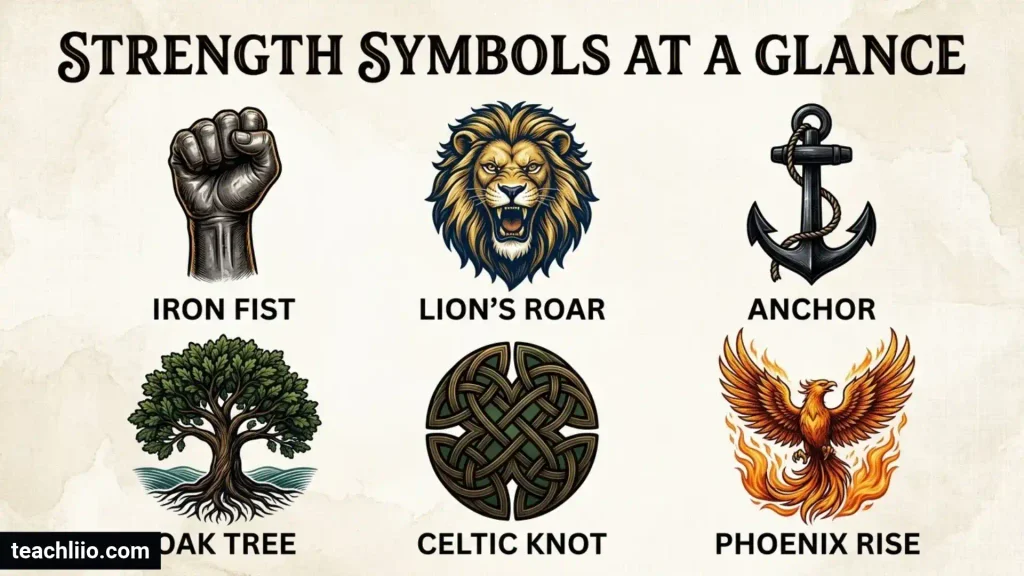
The following comparison makes it easier to find a symbol according to the quality you want to represent.
| Symbol | Main meaning | Type of strength |
| Lion | Courage and leadership | Personal power |
| Oak tree | Endurance and stability | Inner strength |
| Phoenix | Rebirth and renewal | Resilience |
| Eagle | Freedom and confidence | Independence |
| Bear | Protection and physical power | Physical strength |
| Mountain | Perseverance | Determination |
| Dragon | Authority and wisdom | Mythological power |
| Bull | Persistence | Physical strength |
| Lotus | Growth and transformation | Spiritual strength |
| Anchor | Hope and stability | Emotional strength |
| Wolf | Loyalty and survival | Protective strength |
| Tiger | Fearlessness | Courage |
| Bamboo | Adaptability | Flexible strength |
| Sword | Honor and justice | Courage |
| Shield | Protection | Defensive strength |
| Mjölnir | Power and protection | Norse symbolism |
| Hercules’ club | Heroic ability | Physical strength |
| 力 | Force and strength | Written symbolism |
| Dwennimmen | Strength and humility | Cultural symbolism |
| Dara knot | Deep roots and endurance | Celtic-inspired symbolism |
| Vajra | Indestructible wisdom | Spiritual strength |
| Pine tree | Longevity | Endurance |
| Sun | Energy and vitality | Life strength |
| Ram | Determination | Courage |
| Koi fish | Perseverance | Resilience |
| Tree of Life | Growth and connection | Personal development |
| Yin Yang | Balance and harmony | Emotional strength |
| Hamsa | Protection and blessings | Protective symbolism |
| Lightning bolt | Energy and force | Natural power |
| Kintsugi | Healing and restoration | Emotional resilience |
| Butterfly | Transformation | Personal growth |
| Arrow | Direction and focus | Determination |
| Tree roots | Stability and heritage | Inner strength |
| Horse | Freedom and endurance | Physical strength |
| Stag | Dignity and renewal | Natural strength |
| Fire | Passion and transformation | Personal power |
Frequently Asked Questions
What Is the Most Powerful Symbol of Strength?
The lion is one of the most widely recognized symbols of strength because it represents courage, leadership, and authority. However, the phoenix, oak tree, bear, and mountain also represent powerful forms of strength, depending on the meaning you want to express.
What Symbol Represents Inner Strength?
The lotus flower, oak tree, bamboo, and mountain are popular symbols of inner strength. They communicate personal growth, emotional stability, patience, and the ability to remain determined during difficult experiences.
What Symbol Represents a Strong Woman?
The lioness, lotus, phoenix, butterfly, and oak tree can represent feminine strength. Their meanings include confidence, independence, personal growth, resilience, and protective courage.
What Symbol Represents Strength After Hard Times?
The phoenix is one of the most recognizable symbols of strength after hardship. Its legendary rebirth represents recovery, transformation, and the courage to begin again after a difficult chapter.
What Animal Represents Strength and Courage?
The lion is a widely recognized animal symbol of courage and strength. Other examples include the tiger, bear, eagle, bull, and wolf, each representing different qualities such as fearlessness, protection, independence, and physical power.
What Flower Represents Strength?
The lotus flower is commonly associated with inner strength, spiritual growth, and resilience. Its ability to grow in muddy water makes it a meaningful metaphor for developing through difficult circumstances.
What Tree Represents Strength?
The oak tree is a traditional symbol of endurance, stability, and strength. Its deep roots and strong trunk make it a meaningful representation of lasting resilience and grounded confidence.
What Is a Celtic Symbol of Strength?
The Dara knot is a popular Celtic-inspired design associated with the oak tree and its roots. It is commonly interpreted as a symbol of endurance, stability, and inner strength.
What Is an African Symbol of Strength?
Dwennimmen is an Adinkra symbol from the Akan tradition of Ghana. Its ram’s horns represent strength combined with humility, communicating that genuine power can exist alongside patience and respect.
What Symbol Represents Strength and Protection?
The shield, bear, Hamsa, lion, and Mjölnir are commonly associated with strength and protection. Their interpretations connect with defense, guardianship, courage, and security.
What Is a Good Small Tattoo Symbol for Strength?
A small lotus, arrow, mountain, anchor, or phoenix outline can make a meaningful strength tattoo. Each design represents a different quality, including inner growth, determination, stability, and renewal.
What Symbol Represents Mental Toughness?
The mountain, oak tree, bamboo, and phoenix can represent mental toughness. They communicate patience, adaptability, determination, and the ability to recover after difficult experiences.
What Symbol Represents Strength Without Aggression?
The lotus flower, bamboo, oak tree, and Tree of Life are meaningful examples of strength without aggression. They emphasize patience, growth, adaptability, and stability rather than dominance or physical force.
What Is the Difference Between Strength and Resilience?
Strength refers to the ability to face challenges, maintain confidence, and use personal resources to handle difficult situations. Resilience focuses more specifically on adapting, recovering, and continuing after setbacks. The oak tree can represent lasting strength, while the phoenix is a popular symbol of resilience.
Conclusion
Strength comes in many forms, and not every powerful symbol needs to represent physical force. The lion communicates courage and leadership, the oak tree represents endurance, the phoenix tells a story of renewal, and the lotus reflects inner growth.
Other symbols, such as Dwennimmen, Mjölnir, the vajra, and Kintsugi, offer different cultural, historical, and personal interpretations of strength.
Whether you are choosing a meaningful tattoo, designing jewelry, creating artwork, or exploring ancient symbolism, understanding the story behind each symbol can help you make a more thoughtful choice.
Ultimately, the best strength symbol is the one that reflects your experiences, values, and personal understanding of courage. True strength is not only about standing firm; it is also about adapting, healing, growing, and finding the determination to move forward.

I’m Hugo Wetherby, a British author interested in the numbers behind everyday questions. I explore quantities, populations, measurements, records, comparisons, and surprising statistics, turning complicated information into accessible answers. I believe a simple “how many” question can lead to fascinating discoveries, and I enjoy helping readers find those answers.
Books:
How Many? A Guide to Everyday Numbers
The Great Book of Numbers and Quantities