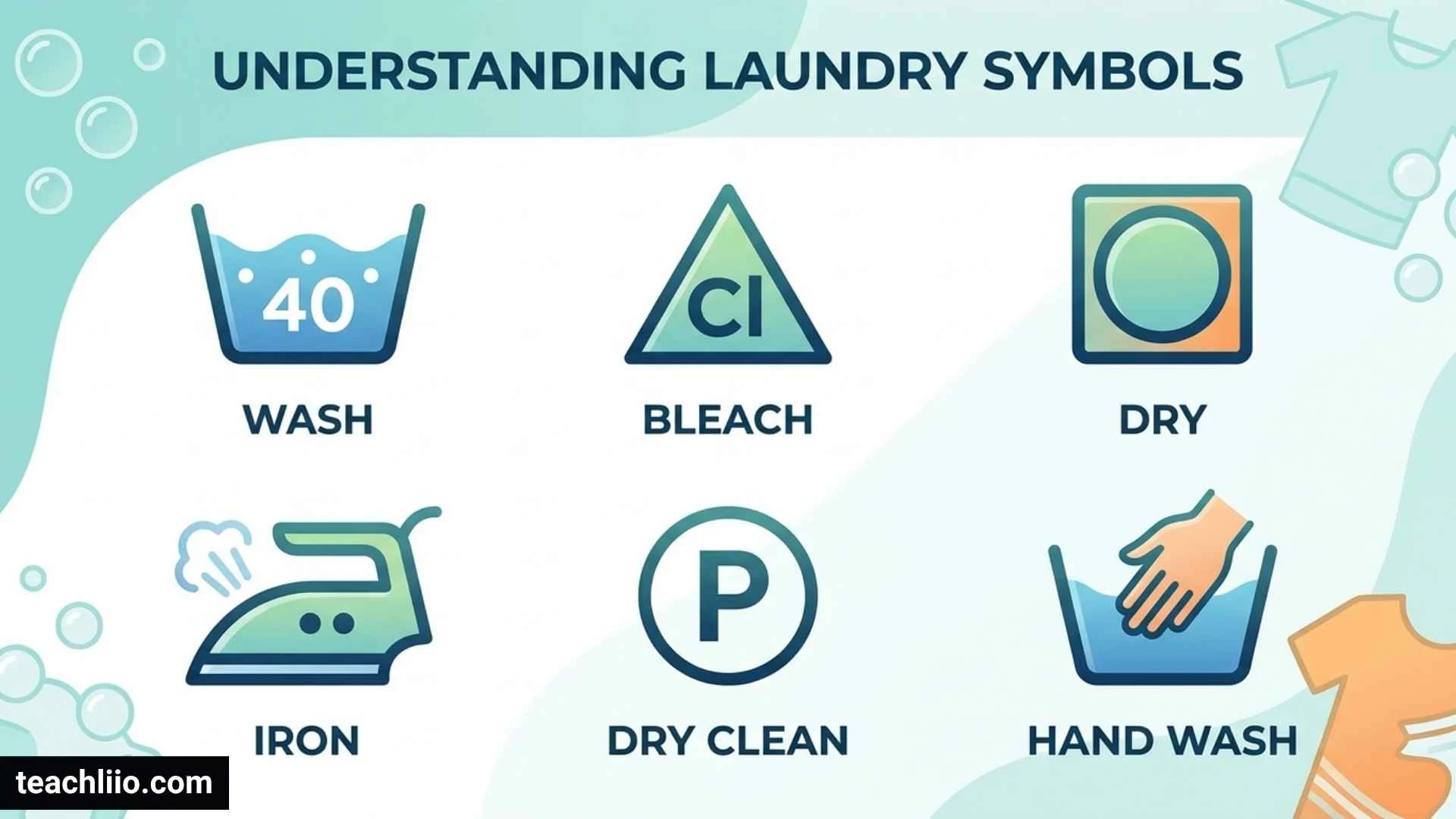
Washing symbols are small pictures on clothing labels that explain how to clean, dry, iron, and care for your clothes. They help you choose the right washing temperature, avoid harmful cleaning products, and protect fabrics from shrinking, fading, stretching, or heat damage. Understanding these symbols can make laundry easier, whether you are washing everyday T-shirts, delicate dresses, wool sweaters, or expensive garments.
But what do washing symbols mean when you see a tub filled with water, a crossed-out triangle, a square with a circle, or an iron with dots? Each symbol communicates a specific instruction, and small details can change its meaning.
This guide explains the main laundry symbols, their variations, the differences between clothing labels and washing machine icons, and the common mistakes you should avoid. By the end, you will know how to read care labels and choose a suitable cleaning method for your clothes.
What Do Washing Symbols Mean?
Washing symbols are standardized or commonly used care instructions printed on clothing labels. They tell you how a garment should be washed and whether it can be bleached, tumble-dried, ironed, or professionally cleaned.
Most international clothing care labels use five basic symbol shapes.
| Symbol shape | Meaning | What to check |
| Water tub | Washing | Temperature, hand washing, and cycle intensity |
| Triangle | Bleaching | Whether bleach is permitted |
| Square | Drying | Tumble drying or natural drying |
| Iron | Ironing | Permitted heat level and steam restrictions |
| Circle | Professional cleaning | Whether professional cleaning is permitted and which process is suitable |
The shape gives you the general category, while the details inside, around, or underneath it provide additional instructions.
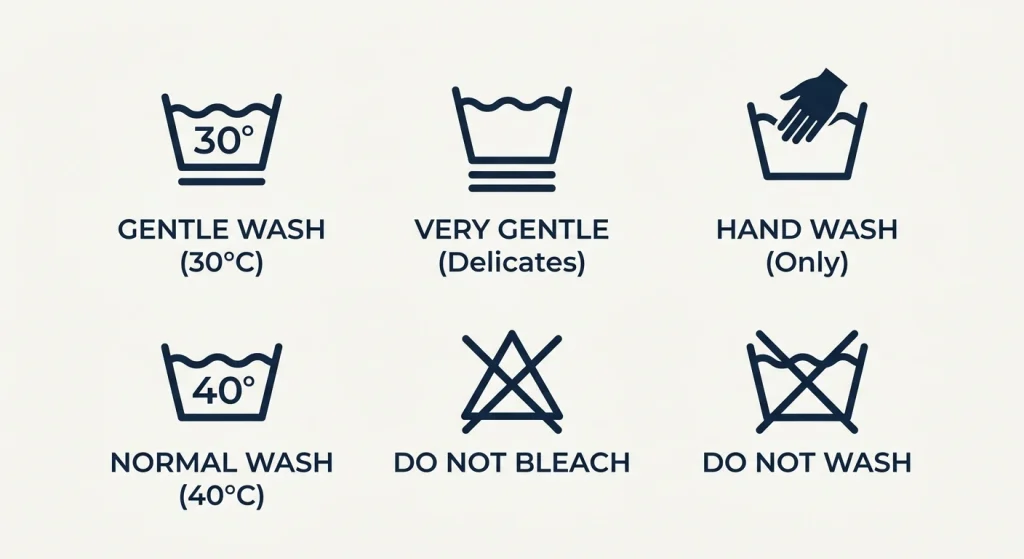
For example, a water tub containing the number 30 indicates a maximum washing temperature of 30°C. A crossed-out triangle means you should not bleach the garment. A square containing a circle represents tumble drying, while a crossed-out version means tumble drying is not allowed.
The most important rule is to read the complete symbol rather than interpreting one part of it in isolation.
Complete Washing Symbols Chart
A quick-reference chart makes it easier to identify the most common care-label instructions before you start washing.
| Symbol description | What it means | Recommended action |
| Water tub with a temperature number | Maximum washing temperature | Do not exceed the stated temperature |
| Water tub with one line underneath | Reduced washing action | Select a gentler cycle |
| Water tub with two lines underneath | Very gentle washing action | Use a delicate or equivalent cycle |
| Hand inside a water tub | Hand wash | Wash gently by hand |
| Crossed-out water tub | Do not wash | Avoid ordinary water-based washing |
| Empty triangle | Bleaching generally permitted | Follow the garment and bleach instructions |
| Triangle with two diagonal lines | Non-chlorine bleach only | Avoid chlorine bleach |
| Crossed-out triangle | Do not bleach | Do not use bleaching products |
| Square with a circle | Tumble drying | Check the heat setting |
| Crossed-out square with a circle | Do not tumble dry | Choose a suitable alternative |
| Square with a vertical line | Line drying | Hang the garment to dry |
| Square with a horizontal line | Flat drying | Dry the garment on a flat surface |
| Iron with one, two, or three dots | Ironing temperature | Use the permitted heat setting |
| Crossed-out iron | Do not iron | Avoid direct ironing |
| Circle with a letter | Professional cleaning instructions | Follow the cleaner’s guidance |
| Crossed-out circle | Do not dry-clean | Avoid dry-cleaning processes |
The exact symbols and their details can vary by care-label system. The descriptions above follow common international conventions, but you should consider the complete label and any accompanying written instructions.
What Do Washing Symbols Mean on Clothes?
Washing symbols usually look like a tub filled with water. They indicate whether a garment can be washed and how much heat or washing action it can tolerate.
What Does a Water Tub Symbol Mean?
A plain water tub generally indicates that washing is permitted. Additional details determine the maximum temperature and the required washing method.
If the tub contains a number, that number indicates the maximum washing temperature in degrees Celsius. If lines appear underneath the tub, they indicate that the garment needs a gentler washing process.
Do not assume that every garment marked for washing should be placed in a machine. Check for the hand-wash symbol and any other restrictions before choosing a cycle.
What Do 30°C and 40°C Washing Symbols Mean?
The numbers inside a washing tub show the maximum permitted water temperature.
| Label temperature | Fahrenheit equivalent | General guidance |
| 20°C | 68°F | Very cool washing |
| 30°C | 86°F | Cool washing |
| 40°C | 104°F | Moderate-temperature washing |
| 50°C | 122°F | Higher-temperature washing |
| 60°C | 140°F | Hot washing |
| 95°C | 203°F | Very high-temperature washing |
These are maximum temperatures, not instructions that you must always use that exact setting. A garment marked 40°C can often be washed at a lower temperature when appropriate.
Cooler washing can help protect many dark or delicate garments and may reduce energy use. However, the right temperature also depends on the fabric, the type of soil, and the cleaning requirements.
What Do Lines Under a Washing Symbol Mean?
Lines beneath the water tub indicate a reduced washing action.
- No line: The normal washing process permitted by the label.
- One line: A gentler process with reduced mechanical action.
- Two lines: A very gentle process for particularly delicate items.
The names of cycles differ between washing machines. Look for settings such as gentle, delicate, or a suitable equivalent, and avoid aggressive spinning when the label requires very gentle treatment.
What Does the Hand-Wash Symbol Mean?
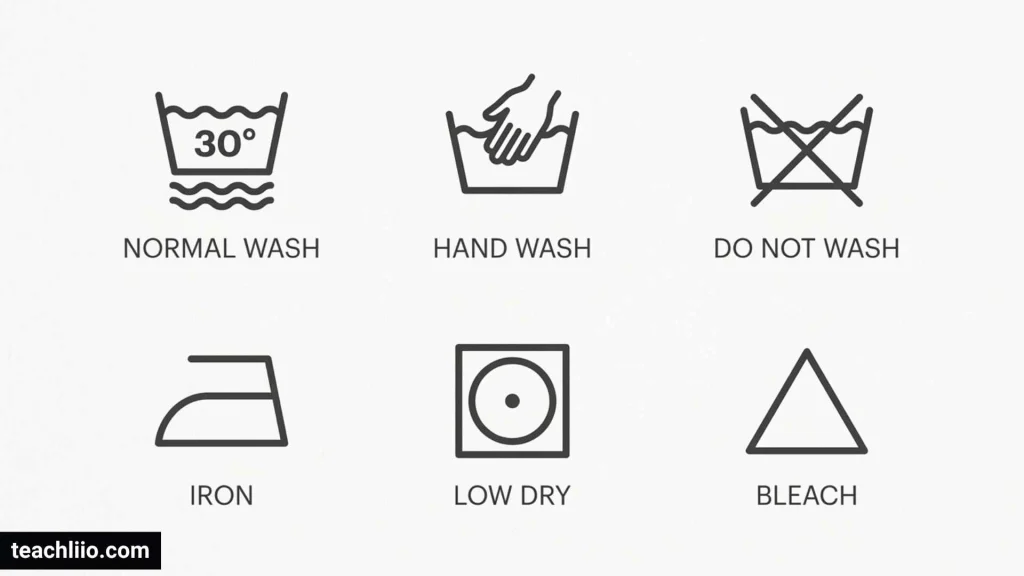
A hand inside the water tub means the garment should be hand-washed.
This symbol commonly appears on delicate clothing that may be damaged by vigorous machine agitation. Depending on the label, it may be suitable for some wool garments, delicate knits, or other sensitive materials.
To hand-wash safely, use water at the recommended temperature and a suitable detergent. Move the garment gently through the water, rinse carefully, and avoid aggressive rubbing or twisting. Press out excess water without wringing the fabric.
What Does a Crossed-Out Washing Tub Mean?
A crossed-out water tub means the garment should not be washed using ordinary water-based washing methods.
Do not put the item in a washing machine or soak it in a basin without confirming an appropriate care method. Look for any professional-cleaning instructions and ask a qualified cleaner for advice if the label is unclear.
What Do Bleaching Symbols Mean?
Bleaching symbols use a triangle. They tell you whether bleaching products can be used safely on the garment.
What Does an Empty Triangle Mean?
An empty triangle generally indicates that bleaching is permitted under the applicable care-label system.
However, this does not mean every bleach product is suitable for every garment. Always follow the product’s instructions and test only when appropriate.
What Does a Triangle With Two Diagonal Lines Mean?
A triangle containing two diagonal lines indicates that only non-chlorine bleach should be used when necessary.
Non-chlorine or color-safe bleaching products are different from traditional chlorine bleach. Use them only when the product instructions and garment label allow it.
What Does a Crossed-Out Triangle Mean?
A crossed-out triangle means do not bleach.
Avoid chlorine bleach and other bleaching products on the garment. They may cause fading, discoloration, or damage to the fibers.
When bleaching is prohibited, use a suitable detergent and an appropriate washing method instead.
What Do Drying Symbols Mean?
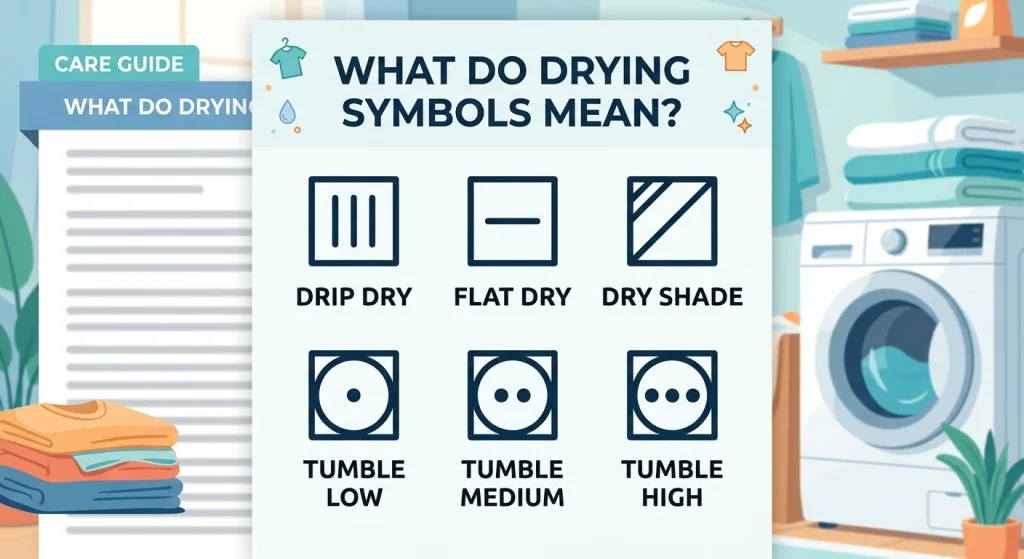
Drying symbols use a square. The shapes and lines inside the square explain how a garment should be dried.
Understanding these symbols is particularly important because excessive heat or incorrect handling can shrink clothing or cause it to lose its shape.
What Does a Square With a Circle Mean?
A square containing a circle represents tumble drying in a machine.
In common international care-label systems, dots inside the circle indicate the permitted heat level. One dot generally means low heat, while two dots indicate a higher or normal heat setting. Some regional systems use additional dot levels.
Always check the symbol used on your garment and the settings available on your dryer.
What Does a Crossed-Out Tumble-Drying Symbol Mean?
A square containing a crossed-out circle means the garment should not be tumble-dried.
Use an appropriate natural-drying method instead, following any additional instructions on the label. Tumble drying against the instructions can cause shrinkage, stretching, or damage to delicate fibers and finishes.
What Does the Line-Drying Symbol Mean?
A square containing a vertical line generally indicates line drying.
Hang the garment on a suitable clothesline or drying rack and allow air to circulate around it. Follow any additional instructions about shade or handling.
What Does the Flat-Drying Symbol Mean?
A square containing a horizontal line indicates flat drying.
Place the garment on a clean, flat surface and reshape it gently if needed. This method helps prevent certain garments, especially some knitted items, from stretching under their own weight.
What Does the Drip-Drying Symbol Mean?
A square containing vertical lines indicates drip drying. The garment should generally be hung while wet so that water can drain naturally.
Avoid wringing the item if the care instructions prohibit twisting or squeezing. Additional lines or markings may specify drying in the shade, depending on the care-label system.
What Do Ironing Symbols Mean?
Ironing symbols resemble a small iron. Dots inside the iron indicate the permitted heat level, while a crossed-out iron means ironing is prohibited.
What Does One Dot on an Iron Mean?
One dot indicates a low ironing temperature. This setting is commonly used for heat-sensitive fabrics.
Use the lowest suitable heat and avoid pressing too long in one place. Check whether the label also prohibits steam.
What Do Two Dots on an Iron Mean?
Two dots indicate a medium ironing temperature.
Use this setting only when the garment’s label permits it. Be particularly careful with synthetic blends, printed designs, and decorative finishes that may be damaged by heat.
What Do Three Dots on an Iron Mean?
Three dots indicate a high ironing temperature in the applicable care-label system.
This setting is intended for fabrics that can tolerate higher heat. Never assume a garment can withstand high temperatures just because its fabric feels thick.
What Does a Crossed-Out Iron Mean?
A crossed-out iron means the garment should not be ironed.
Direct heat can melt certain synthetic fibers, damage coatings, flatten textured surfaces, or leave permanent marks. If wrinkles are a concern, use another care method permitted by the label.
What Does the No-Steam Iron Symbol Mean?
A crossed-out steam feature on an iron indicates that steam should not be used.
Depending on the complete symbol, dry ironing may still be allowed. Read the whole instruction before deciding whether to iron the garment.
What Do Dry-Cleaning Symbols Mean?
Dry-cleaning symbols use a circle. They provide instructions about professional textile-cleaning processes.
What Does an Empty Circle Mean?
An empty circle generally indicates that professional dry cleaning is permitted.
It does not automatically mean dry cleaning is required. Check the other care instructions to determine whether another cleaning method is suitable.
What Do the Letters P and F Mean?
Letters inside a dry-cleaning circle provide technical information for professional cleaners.
- P: Indicates a professional cleaning process with a specified range of permitted solvents.
- F: Indicates a professional cleaning process with a more restricted solvent range.
These letters are not intended as instructions for ordinary home washing. If you are uncertain about a garment’s requirements, show the complete label to a professional cleaner.
What Does a Crossed-Out Circle Mean?
A crossed-out circle means the garment should not be dry-cleaned.
Follow the other care instructions to determine whether home washing or another professional method is appropriate.
What Is the Difference Between Clothing Symbols and Washing Machine Symbols?
Clothing care symbols and washing machine symbols serve different purposes.
Clothing symbols tell you how a garment should be treated. Washing machine symbols identify the programs, temperatures, and functions available on a particular appliance.
For example, a clothing label may recommend a gentle washing process, while the machine offers a delicate cycle that may be suitable for that instruction.
Washing machine icons can vary by brand and model. A spiral, leaf, clock, or other icon may represent a specific spin setting, energy-saving program, or timing feature on one appliance and have a different use on another.
If you do not recognize a washing machine symbol, check the appliance’s manual rather than assuming that it has the same meaning as a clothing care symbol.
Do Washing Symbols Differ by Country?
The basic shapes used for laundry care are widely recognized, but not every country or manufacturer presents all instructions in exactly the same way.
The international ISO 3758 care-label standard describes symbols for washing, bleaching, drying, ironing, and professional care. Clothing sold in the United States may follow different labeling conventions or include additional written instructions.
For example, some systems express washing temperature with numbers in the tub, while others may use dots in particular contexts. Drying and ironing symbols also need to be interpreted according to their complete shape.
When reading an unfamiliar label, identify the main symbol first, examine the details, and consider any accompanying text. Avoid applying the meaning of dots or lines from one category to another.
Common Washing Symbol Mistakes to Avoid
Even a small misunderstanding can lead to damaged clothing. Avoid these common laundry mistakes.
Using Water That Is Too Hot
A higher temperature does not always produce a better wash. Excessive heat can shrink some garments, fade colors, or damage elastic fibers.
Follow the maximum temperature shown on the label and select a cooler setting when it is appropriate for the garment and cleaning task.
Ignoring Gentle-Cycle Instructions
A garment marked for reduced or very gentle washing action may be damaged by vigorous agitation or excessive spinning.
Choose a suitable delicate cycle and avoid unnecessary mechanical stress.
Tumble-Drying Clothes Without Checking the Label
Some garments need to be air-dried or dried flat. Using a tumble dryer against the care instructions can cause shrinkage or stretching.
Check the drying symbol before choosing a dryer setting.
Using Bleach Without Checking the Triangle
Bleaching products can damage fabrics when used incorrectly. Check whether bleaching is permitted and follow the product instructions.
Never mix bleach with other cleaning chemicals.
Confusing Symbols With Similar Details
Dots, lines, and circles have different meanings depending on the main symbol. Dots inside an iron indicate ironing heat, while a number inside a washing tub indicates the maximum washing temperature.
Always identify the main shape before interpreting its details.
Assuming All Fabrics Need the Same Care
Wool, silk, denim, stretch clothing, and printed garments may have different care requirements. Do not rely on fabric names alone; follow the complete garment label.
How to Read a Clothing Care Label Step by Step
You can use a simple routine every time you do laundry.
- Read the washing symbol. Check whether washing is permitted and identify the maximum temperature.
- Check washing intensity. Look for lines underneath the tub or a hand-wash instruction.
- Examine the triangle. Confirm whether bleaching is permitted.
- Read the drying symbol. Decide whether the garment can be tumble-dried or needs natural drying.
- Check the iron. Choose the permitted heat setting or avoid ironing.
- Read the circle. Check whether professional cleaning is allowed and whether special instructions are present.
If the label includes written instructions, follow them along with the symbols. When a garment has an unusual construction or an unclear label, a professional cleaner may be able to help you choose an appropriate method.
Frequently Asked Questions
What Is the Most Important Washing Symbol?
The water tub is one of the most important laundry symbols because it explains whether a garment can be washed and indicates the maximum washing temperature and, in some cases, the required washing intensity.
However, drying and ironing symbols are equally important when heat could damage the garment.
What Does 30 Mean on a Washing Label?
The number 30 inside a water tub generally means the garment should be washed at a maximum of 30°C, which is approximately 86°F.
What Does 40 Mean on a Washing Label?
The number 40 inside a water tub means the maximum recommended washing temperature is 40°C, or approximately 104°F. Any additional lines underneath the tub indicate whether a gentler process is required.
Can I Wash Clothes Marked Do Not Tumble Dry?
Yes. A crossed-out tumble-drying symbol prohibits tumble drying, not necessarily washing. If the washing symbol allows it, you can wash the garment and then use a suitable air-drying method.
What Does a Triangle Mean on a Clothing Label?
A triangle relates to bleaching. An empty triangle generally permits bleaching, a triangle with two diagonal lines indicates non-chlorine bleach only, and a crossed-out triangle means bleaching is not allowed.
What Does a Square Mean on a Clothing Label?
A square represents drying. A circle inside it indicates tumble drying, a vertical line generally indicates line drying, and a horizontal line indicates flat drying.
What Does a Circle Mean on a Clothing Label?
A circle generally represents professional cleaning. Letters inside it provide additional instructions for cleaners, while a crossed-out circle indicates that dry cleaning is prohibited.
What Should I Do if My Clothing Label Has No Symbols?
Look for written care instructions and information about the fabric. If you cannot determine a safe cleaning method, use caution and consider asking a professional cleaner, especially for delicate or expensive garments.
Conclusion
Washing symbols explain how to clean, dry, iron, and care for clothes while reducing the risk of unnecessary damage. The water tub represents washing, the triangle represents bleaching, the square represents drying, the iron represents ironing, and the circle represents professional cleaning.
Pay attention to numbers, dots, lines, and crossed-out shapes because these details can change the recommended treatment. Remember that some conventions differ by country and care-label system, so always interpret the complete symbol rather than relying on a single detail.
Once you understand these laundry symbols, you can read clothing labels more confidently, choose suitable washing and drying settings, and help your clothes maintain their appearance and shape for longer.

I’m Hugo Wetherby, a British author interested in the numbers behind everyday questions. I explore quantities, populations, measurements, records, comparisons, and surprising statistics, turning complicated information into accessible answers. I believe a simple “how many” question can lead to fascinating discoveries, and I enjoy helping readers find those answers.
Books:
How Many? A Guide to Everyday Numbers
The Great Book of Numbers and Quantities