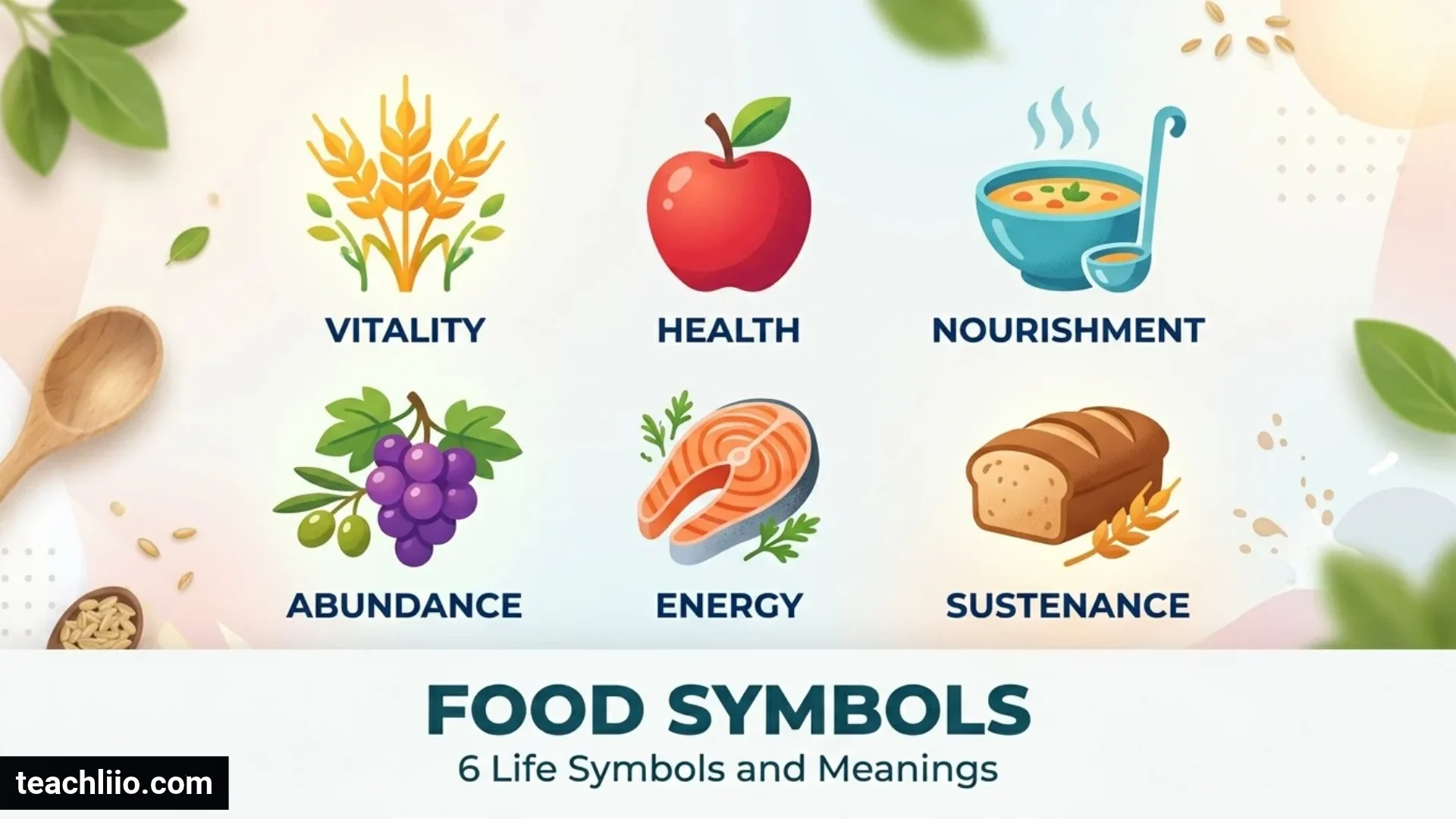
Food is more than something people eat to satisfy hunger. Throughout history, different foods have represented love, happiness, prosperity, fertility, peace, protection, spirituality, and new beginnings. From bread and rice to apples, pomegranates, and honey, ordinary ingredients can carry powerful meanings in different cultures and traditions.
Food symbols are foods that represent deeper ideas, emotions, beliefs, or cultural values. Some are connected with religious ceremonies, while others appear in mythology, weddings, festivals, paintings, literature, and family celebrations. For example, bread often represents life and community, pomegranates are associated with fertility and abundance, and olives are widely recognized as symbols of peace.
Understanding food symbolism helps us discover how different societies express their beliefs and preserve their traditions through everyday meals. It also provides inspiration for artists, writers, designers, students, and anyone interested in the deeper meanings behind familiar foods.
In this guide, you will discover more than 35 food symbols and their meanings, including their historical backgrounds, cultural connections, spiritual significance, and uses in creative projects.
What Are Food Symbols?
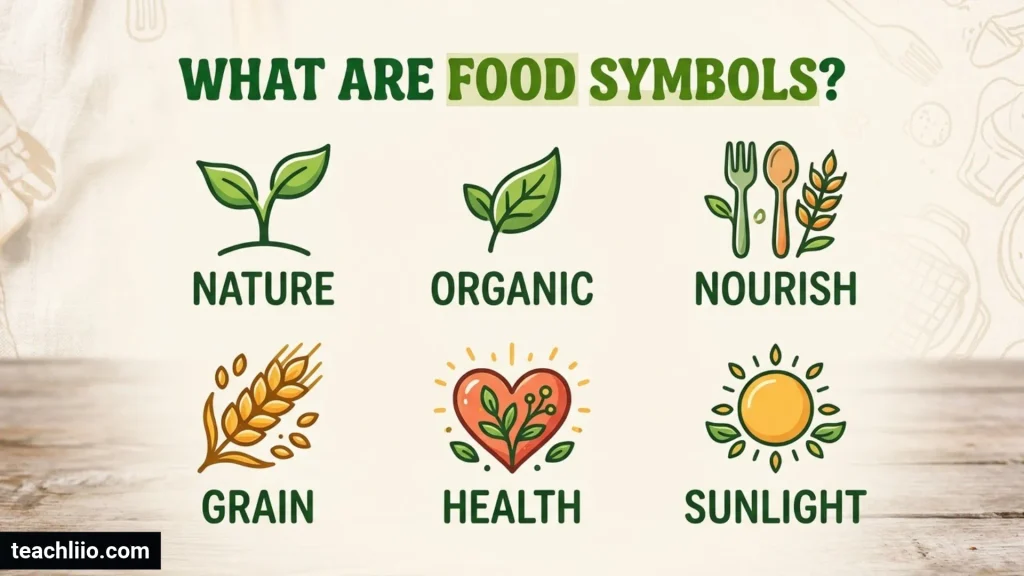
Food symbols are ingredients, dishes, fruits, or beverages that represent something beyond their practical purpose as food. They communicate ideas through their appearance, taste, preparation, history, and cultural importance.
For example, an egg can represent birth and new beginnings because it contains the potential for new life. Honey can represent sweetness and affection because of its naturally sweet taste. Similarly, rice is associated with prosperity and fertility in some Asian traditions because of its importance in agriculture and family life.
Food symbolism develops through several influences:
- Culture: Traditional meals and ingredients reflect the history and identity of communities.
- Religion: Certain foods have special meanings in religious ceremonies and spiritual practices.
- History: Foods that helped communities survive or prosper often became symbols of abundance and security.
- Nature: The appearance, growth, and characteristics of ingredients inspire symbolic interpretations.
- Celebrations: Foods served during weddings, birthdays, and festivals often represent happiness, unity, and good fortune.
One important detail is that food meanings are not universal. A particular ingredient may represent prosperity in one culture and have a different meaning in another.
35+ Food Symbols and Their Meanings
The following foods have interesting symbolic associations. Some have well-documented historical or religious meanings, while others are commonly used as modern cultural and creative symbols.
1. Bread – Life, Nourishment, and Community
Bread is one of the oldest and most recognizable food symbols. Because it has provided nourishment to people for thousands of years, it represents survival, comfort, and the basic necessities of life.
In Christian traditions, bread also carries spiritual significance and is associated with the Eucharist. In everyday life, sharing bread represents hospitality, generosity, friendship, and family unity.
Symbolic meanings: Life, survival, nourishment, hospitality, community, and spiritual connection.
2. Apple – Knowledge, Wisdom, and Temptation
Apples have several meanings in mythology, religion, art, and popular culture. They are commonly associated with knowledge, curiosity, temptation, and health.
In Western artistic traditions, apples have often been connected with the biblical story of Adam and Eve. Although the Bible does not identify the forbidden fruit as an apple, European artistic traditions helped establish this association.
Symbolic meanings: Knowledge, wisdom, temptation, curiosity, health, and discovery.
3. Rice – Prosperity, Fertility, and Abundance
Rice is an important staple food in many Asian communities. Its role in feeding families and supporting agricultural societies has made it a symbol of nourishment, prosperity, and abundance.
In some wedding traditions, rice is thrown over newlyweds to express wishes for fertility, happiness, and a prosperous marriage. It also represents family traditions and the importance of sharing food.
Symbolic meanings: Prosperity, fertility, abundance, family unity, and good fortune.
4. Pomegranate – Fertility, Love, and Rebirth
The pomegranate is one of the most interesting fruits in historical symbolism. Its many seeds make it a natural representation of fertility, abundance, and the continuation of life.
In Greek mythology, the fruit is connected with Persephone and the changing seasons. In European religious paintings, it has also represented desire, marriage, resurrection, and immortality.
The Metropolitan Museum of Art+1
Symbolic meanings: Fertility, love, abundance, rebirth, marriage, and immortality.
5. Grapes – Celebration, Pleasure, and Spirituality
Grapes have been associated with celebrations, prosperity, pleasure, and abundance for centuries. Their connection with vineyards and harvests makes them symbols of plenty and enjoyment.
In Greek mythology, grapes are associated with Dionysus, the god of wine and celebration. In Christian artwork, grapes and wine can also carry spiritual meanings connected with the Eucharist.
Symbolic meanings: Celebration, happiness, abundance, pleasure, and spiritual nourishment.
6. Honey – Sweetness, Love, and Happiness
Honey represents sweetness, affection, comfort, and happiness. Its golden color and naturally sweet taste make it an appealing symbol of positive experiences and loving relationships.
In different cultural traditions, honey is also associated with hospitality, prosperity, and the rewards of patience.
Symbolic meanings: Love, affection, sweetness, happiness, prosperity, and comfort.
7. Egg – Birth, Creation, and New Beginnings
An egg represents the potential for new life. Its connection with birth and development makes it a powerful symbol of creation, transformation, hope, and fresh opportunities.
Eggs are particularly important in Easter traditions, where decorated eggs can symbolize resurrection and renewed life.
Symbolic meanings: Birth, creation, hope, transformation, renewal, and new beginnings.
8. Fish – Faith, Life, and Abundance
Fish have carried spiritual and cultural meanings in many societies. In early Christianity, the fish became an important symbol of faith and religious identity.
Fish are also connected with water, fertility, survival, and abundance. In fishing communities, they can represent livelihood, nourishment, and the relationship between people and nature.
Symbolic meanings: Faith, spirituality, life, fertility, abundance, and survival.
9. Salt – Purity, Protection, and Preservation
Salt has been valuable throughout history because it adds flavor and helps preserve food. These practical qualities contributed to its associations with preservation, protection, loyalty, and purity.
In some traditions, salt is used in rituals or symbolic practices intended to protect homes and remove negative influences.
Symbolic meanings: Purity, protection, preservation, loyalty, stability, and endurance.
10. Cake – Celebration, Love, and Achievement
Cake is a familiar symbol of happiness and special occasions. It is served at birthdays, weddings, anniversaries, graduations, and family gatherings.
Because people often share cake during important moments, it represents affection, achievement, friendship, and togetherness.
Symbolic meanings: Celebration, happiness, love, achievement, family, and friendship.
11. Olive – Peace, Wisdom, and Hope
Olives and olive branches are widely recognized symbols of peace and reconciliation. Their association with peace has roots in ancient Mediterranean traditions.
Olive trees can also live for many years, making them meaningful symbols of endurance, wisdom, and longevity.
Symbolic meanings: Peace, harmony, hope, wisdom, reconciliation, and longevity.
12. Strawberry – Romance, Affection, and Sweetness
Strawberries are popular romantic symbols because of their red color, heart-like shape, and sweet flavor. They frequently appear in Valentine’s Day decorations, romantic gifts, and special desserts.
They can also represent innocence, beauty, pleasure, and happiness.
Symbolic meanings: Romance, love, affection, sweetness, beauty, and happiness.
13. Corn – Harvest, Fertility, and Prosperity
Corn has deep agricultural and cultural importance, particularly among communities in the Americas. It represents nourishment, harvest, fertility, and the connection between people and the land.
In several Indigenous American traditions, corn has important spiritual and cultural meanings associated with life, community, and gratitude.
Symbolic meanings: Harvest, fertility, growth, nourishment, prosperity, and gratitude.
14. Milk – Motherhood, Care, and Innocence
Milk is associated with motherhood, childhood, protection, and nourishment. Its importance in early human development makes it a familiar symbol of maternal care and the beginning of life.
In some religious and cultural traditions, milk can also represent purity, generosity, and abundance.
Symbolic meanings: Motherhood, innocence, care, nourishment, purity, and protection.
15. Dates – Hospitality, Blessings, and Nourishment
Dates are important in Middle Eastern food traditions and have a particularly meaningful place in Islamic culture. They are commonly eaten to break the daily fast during Ramadan.
Sharing dates with guests can also express hospitality and generosity. Their nutritional value and long history as an important staple have connected them with nourishment and abundance.
Symbolic meanings: Hospitality, blessings, generosity, nourishment, and tradition.
16. Wheat – Life, Growth, and Harvest
Wheat represents agriculture, nourishment, growth, and the importance of successful harvests. It has supported civilizations for thousands of years and remains an important staple crop.
In classical mythology, wheat was associated with Ceres, the Roman goddess of agriculture and grain. It also appears in religious and artistic imagery connected with harvest and spiritual nourishment.
The Metropolitan Museum of Art+1
Symbolic meanings: Life, growth, harvest, abundance, nourishment, and prosperity.
17. Orange – Good Fortune, Joy, and Prosperity
Oranges are associated with happiness, freshness, and good fortune. In Chinese New Year traditions, mandarins and oranges are commonly exchanged or displayed as symbols of luck and prosperity.
Their bright color and association with successful harvests also make them symbols of energy and positivity.
Symbolic meanings: Good fortune, happiness, prosperity, freshness, and success.
18. Noodles – Longevity and Good Fortune
Long noodles have a special place in Chinese birthday traditions. Their length represents a wish for a long and healthy life.
They are often served during birthday celebrations, and some traditions discourage cutting them because keeping the noodles long expresses the wish for longevity.
Google Arts & Culture+1
Symbolic meanings: Longevity, good fortune, health, happiness, and continuity.
19. Coconut – Purity, Protection, and New Beginnings
Coconuts are important in several South Asian cultural and religious traditions. In Hindu ceremonies, they are commonly offered during prayers and auspicious beginnings.
Their hard outer shell and nourishing interior can also represent protection, inner strength, and the value of what lies beneath the surface.
Symbolic meanings: Purity, devotion, protection, strength, prosperity, and new beginnings.
20. Fig – Fertility, Knowledge, and Abundance
Figs have a long history in Mediterranean and Middle Eastern food traditions. They appear in religious references, ancient literature, and historical artwork.
Because fig trees produce abundant fruit, figs can represent fertility, prosperity, and nourishment. Their historical significance also connects them with knowledge and cultural heritage.
Symbolic meanings: Fertility, knowledge, abundance, peace, and nourishment.
21. Lentils – Wealth, Prosperity, and Good Fortune
Lentils are associated with prosperity and abundance in certain food traditions. Their small, coin-like appearance has helped create connections with wealth and financial good fortune.
In some Italian New Year celebrations, lentils are eaten as a wish for prosperity in the coming year.
Symbolic meanings: Wealth, prosperity, abundance, good fortune, and nourishment.
22. Mooncakes – Family Unity and Reunion
Mooncakes are traditional pastries associated with China’s Mid-Autumn Festival. Their round shape represents completeness, unity, and family reunion.
Families traditionally share these pastries during the festival, making them meaningful symbols of togetherness, gratitude, and relationships.
Symbolic meanings: Family unity, reunion, completeness, gratitude, and tradition.
23. Red Beans – Protection and Positivity
Red beans have symbolic importance in some East Asian traditions. In Korean culture, red bean porridge, known as patjuk, is traditionally eaten around the winter solstice.
The red color has been associated with protection against negative influences and the welcoming of a positive new season.
Symbolic meanings: Protection, positivity, seasonal renewal, and tradition.
24. Peach – Longevity, Beauty, and Good Fortune
Peaches are particularly meaningful in traditional Chinese symbolism. They are associated with longevity and immortality and frequently appear in artwork connected with long life.
Their sweet taste and attractive appearance also make them symbols of beauty, youth, and happiness.
The Metropolitan Museum of Art
Symbolic meanings: Longevity, beauty, youth, immortality, and good fortune.
25. Garlic – Protection, Strength, and Resilience
Garlic has an interesting place in traditional folklore. Its strong smell and flavor have contributed to its association with protection and strength.
European vampire folklore famously connects garlic with protection against supernatural evil. It has also been used in traditional food practices as a symbol of health and resilience.
Symbolic meanings: Protection, strength, resilience, purification, and courage.
26. Pumpkin – Harvest, Gratitude, and Transformation
Pumpkins are closely associated with autumn, harvest celebrations, and seasonal change. Their large size and many seeds make them suitable symbols of abundance and growth.
In modern Western traditions, pumpkins are also strongly connected with Halloween, creativity, and seasonal celebrations.
Symbolic meanings: Harvest, gratitude, abundance, transformation, and creativity.
27. Chocolate – Romance, Comfort, and Pleasure
Chocolate is widely used to express love, affection, and appreciation. It is a popular gift during Valentine’s Day, anniversaries, and other romantic celebrations.
Its rich flavor also makes it a symbol of pleasure, comfort, indulgence, and happiness.
Symbolic meanings: Romance, affection, pleasure, appreciation, and comfort.
28. Lemon – Freshness, Renewal, and Cleansing
Lemons are commonly associated with freshness, energy, and renewal. Their bright yellow color suggests sunshine and optimism, while their sour taste can represent life’s challenges.
In European still-life paintings, lemons sometimes carried additional meanings connected with wealth, luxury, temperance, and the temporary nature of worldly pleasures.
Museo Nacional Thyssen-Bornemisza+1
Symbolic meanings: Freshness, renewal, optimism, cleansing, and transformation.
29. Almond – Wisdom, Fertility, and Good Fortune
Almonds appear in several cultural traditions as symbols of fertility, prosperity, and hope. Their connection with spring blossoms makes them meaningful symbols of renewal and new beginnings.
In some European wedding customs, sugared almonds are given to guests to represent wishes for happiness, health, wealth, fertility, and long life.
Symbolic meanings: Wisdom, fertility, prosperity, hope, and renewal.
30. Tea – Friendship, Hospitality, and Peace
Tea is more than a popular beverage. In many countries, sharing tea is an important social tradition that represents hospitality, friendship, and connection.
In Pakistan, India, China, and the United Kingdom, tea often plays a meaningful role in welcoming guests, starting conversations, and bringing people together.
Symbolic meanings: Friendship, hospitality, peace, comfort, and community.
31. Coffee – Energy, Ambition, and Connection
Coffee is commonly associated with energy, focus, productivity, and motivation. For many people, it represents the beginning of a new day and the determination to accomplish important tasks.
Coffee shops and shared coffee breaks also make it a symbol of conversation, friendship, and social connection.
Symbolic meanings: Energy, ambition, motivation, productivity, and connection.
32. Watermelon – Happiness, Friendship, and Summer
Watermelon is associated with summer, relaxation, refreshment, and outdoor celebrations. It is commonly shared during picnics, family gatherings, and social events.
Because a watermelon can be divided among several people, it can also represent generosity, friendship, and sharing.
Symbolic meanings: Happiness, friendship, relaxation, generosity, and summer.
33. Onion – Emotional Depth, Strength, and Discovery
An onion is an interesting creative symbol because it has several layers. In literature and everyday expressions, peeling an onion can represent discovering hidden truths or understanding someone’s complicated personality.
Its strong flavor and ability to bring tears also make it a useful symbol of emotional experiences.
Symbolic meanings: Emotional depth, hidden truths, strength, discovery, and complexity.
34. Mushroom – Mystery, Transformation, and Nature
Mushrooms often represent mystery, transformation, and the hidden power of nature. Their unusual shapes and sudden appearance in forests have made them popular in fairy tales, folklore, and fantasy stories.
Because many mushrooms grow from decaying organic material, they can also represent renewal and nature’s ability to transform.
Symbolic meanings: Mystery, imagination, transformation, renewal, and connection with nature.
35. Olive Oil – Healing, Peace, and Abundance
Olive oil has played an important role in Mediterranean food, religious practices, and traditional life. In various historical traditions, it has been associated with anointing, hospitality, healing, and spiritual significance.
Its connection with the olive tree also gives it associations with peace, endurance, and prosperity.
Symbolic meanings: Healing, peace, hospitality, abundance, and spiritual significance.
36. Banana – Energy, Growth, and Prosperity
Bananas are associated with nourishment, energy, and growth. In some South Asian traditions, banana plants and leaves are used in religious ceremonies, weddings, and celebrations as signs of auspicious beginnings and prosperity.
Symbolic meanings: Energy, nourishment, fertility, growth, and good fortune.
37. Carrot – Health, Vision, and Vitality
Carrots are commonly associated with health, nutrition, and vitality. Their bright orange color suggests energy and optimism. They are also popularly connected with good eyesight because they contain beta-carotene, which the body uses to produce vitamin A.
Symbolic meanings: Health, vision, awareness, energy, and vitality.
38. Pumpkin Seeds – Potential, Growth, and New Life
Seeds represent the beginning of something new. Pumpkin seeds can symbolize potential because a small seed can eventually grow into a plant that produces more fruit and seeds.
Symbolic meanings: New opportunities, growth, fertility, potential, and perseverance.
Quick Guide to Food Symbols and Their Meanings
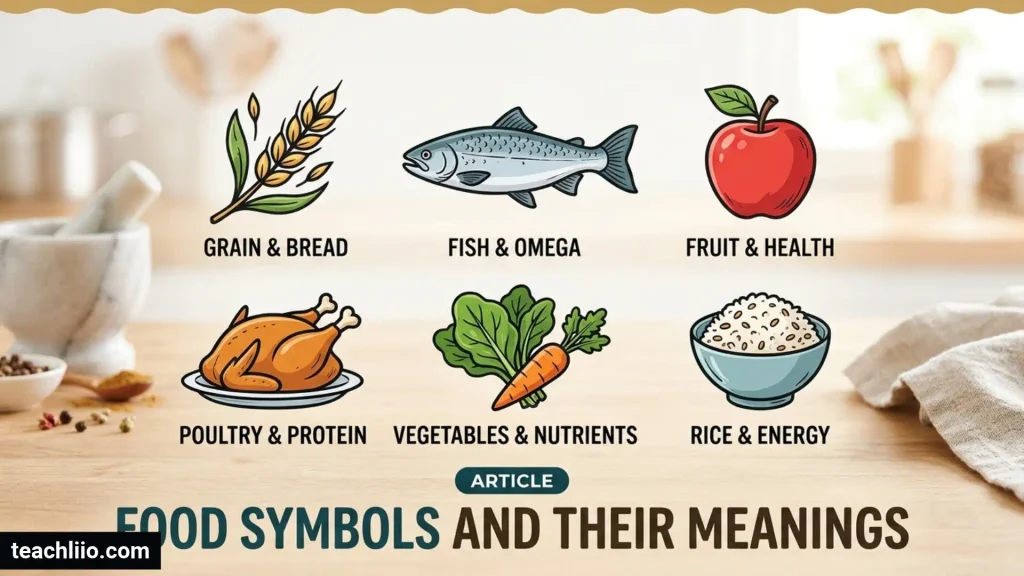
Here is a simple reference table featuring popular foods and their symbolic meanings.
| Food | Symbolic meaning |
| Bread | Life and community |
| Apple | Knowledge and temptation |
| Rice | Prosperity and fertility |
| Pomegranate | Love and rebirth |
| Grapes | Celebration and abundance |
| Honey | Sweetness and affection |
| Egg | New beginnings |
| Fish | Faith and life |
| Salt | Purity and protection |
| Olive | Peace and hope |
| Strawberry | Romance and love |
| Corn | Harvest and growth |
| Dates | Hospitality and blessings |
| Wheat | Nourishment and abundance |
| Orange | Good fortune |
| Noodles | Longevity |
| Coconut | Purity and devotion |
| Peach | Long life |
| Tea | Friendship and hospitality |
| Coffee | Energy and ambition |
| Chocolate | Romance and pleasure |
| Lentils | Wealth and prosperity |
| Mooncakes | Family reunion |
| Pumpkin | Gratitude and harvest |
How Food Symbols Differ Across Cultures
Food symbolism changes according to geography, religion, history, and traditional practices. Understanding these differences helps explain why the same ingredient can carry several meanings.
Asian Food Symbolism
In many Asian traditions, foods are connected with prosperity, family relationships, longevity, and good fortune.
For example, long noodles are served during some Chinese birthday celebrations to express wishes for a long life. Rice is associated with prosperity and fertility in several Asian wedding customs. In Chinese traditions, peaches are also connected with longevity and immortality.
Middle Eastern Food Symbolism
Dates, bread, olives, and other traditional ingredients have important roles in Middle Eastern food culture.
Dates are especially significant during Ramadan, when Muslims commonly eat them to break their daily fast. Sharing food also expresses generosity, hospitality, and community.
European Food Symbolism
European food symbolism is strongly represented in classical mythology, Christianity, historical paintings, and seasonal celebrations.
Apples, grapes, wheat, and pomegranates appear in European artwork with meanings connected to knowledge, fertility, spiritual life, and abundance.
The Metropolitan Museum of Art+1
South Asian Food Symbolism
In South Asian traditions, coconuts, rice, bananas, sweets, and other foods can have religious and cultural importance.
Coconuts are frequently offered during Hindu ceremonies, while rice and sweets are commonly associated with celebrations, hospitality, and auspicious occasions.
Food Symbols in Religion and Spiritual Traditions
Food has an important place in many religious traditions. It can represent gratitude, devotion, sacrifice, purity, and spiritual nourishment.
Christianity
Bread and wine are important symbols in Christian traditions, particularly through their connection with the Eucharist. Grapes, apples, and pomegranates also appear in Christian artwork with different religious interpretations.
Hinduism
Coconuts, fruits, sweets, and other foods are commonly used as offerings in Hindu worship. They can represent devotion, gratitude, purity, and auspicious beginnings.
Islam
Dates have particular importance in Islamic traditions, especially during Ramadan. Sharing meals and providing food to others also express generosity, gratitude, and community.
Buddhism
Food offerings can represent generosity, respect, mindfulness, and gratitude. The meaning of particular offerings varies across Buddhist communities and traditions.
Food Symbols in Art, Literature, and Storytelling
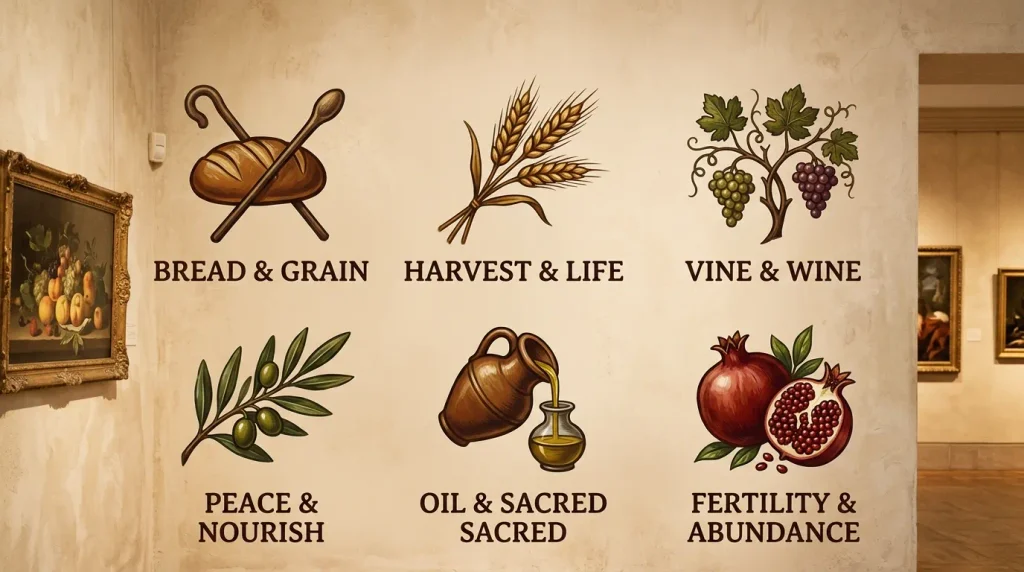
Food is a powerful creative tool because familiar ingredients can communicate complicated ideas without requiring lengthy explanations.
Food Symbolism in Paintings
Artists have historically used fruits, grains, bread, and wine to communicate religious beliefs, wealth, temptation, and the temporary nature of life.
For example, grapes can represent pleasure and religious ideas, while pomegranates can suggest fertility, rebirth, and abundance. In European still-life paintings, food could also communicate luxury and remind viewers that material pleasures do not last forever.
The Metropolitan Museum of Art+1
Food Symbolism in Literature
Writers use food to describe emotions, personalities, relationships, and personal experiences.
An apple might represent temptation, honey might describe a loving relationship, and bread might communicate comfort or belonging.
Food Symbolism in Creative Design
Food symbols can also make logos, illustrations, tattoos, greeting cards, and educational projects more meaningful.
For example, an olive branch can communicate peace, a pomegranate can represent fertility, and a strawberry can express romantic affection.
Frequently Asked Questions
What are the most common food symbols?
Bread, apples, rice, grapes, pomegranates, eggs, honey, fish, and olives are among the most recognizable food symbols. They commonly represent life, knowledge, prosperity, fertility, love, faith, and peace.
What foods symbolize love and affection?
Strawberries, chocolate, honey, and pomegranates are associated with love and affection. Their meanings come from romantic traditions, sweetness, historical mythology, and cultural artwork.
What food represents abundance and good fortune?
Rice, corn, grapes, pomegranates, lentils, and oranges are associated with abundance and good fortune in different cultural traditions.
What foods symbolize life and rebirth?
Eggs, bread, wheat, seeds, and pomegranates can represent life and renewal. Eggs symbolize new life, while seeds represent growth and future possibilities.
What food symbolizes peace?
Olives and olive branches are among the best-known symbols of peace. They represent harmony, hope, and reconciliation.
Why do different cultures use food as a symbol?
Different cultures use food symbols because ingredients have historical, religious, agricultural, and social importance. Traditional meals and offerings help communities communicate beliefs, celebrate important events, and preserve cultural identity.
What do fruits symbolize in art and literature?
Fruits can represent fertility, temptation, beauty, abundance, pleasure, and the temporary nature of life. Their meanings depend on the particular fruit and the cultural context of the artwork or story.
What food symbolizes family and unity?
Bread, rice, noodles, mooncakes, and traditional shared meals can represent family unity and togetherness. They are often connected with hospitality, celebrations, and family traditions.
Conclusion
Food symbols show how everyday ingredients can carry meaningful messages about life, love, prosperity, spirituality, and human relationships. Bread represents nourishment and community, rice is associated with abundance, pomegranates symbolize fertility and rebirth, and olives communicate peace and reconciliation.
From ancient mythology and religious traditions to modern celebrations, paintings, and literature, food continues to connect people with their cultural identities and shared experiences.
The most important thing to remember is that food symbolism is not universal. Its meaning depends on the traditions, history, and beliefs of the people who use it. Exploring these differences makes ordinary foods more interesting and helps us appreciate the deeper stories behind what we eat.
Whether you are researching cultural traditions, creating artwork, writing a story, or looking for inspiration, these food symbols provide a meaningful starting point.

I’m Hugo Wetherby, a British author interested in the numbers behind everyday questions. I explore quantities, populations, measurements, records, comparisons, and surprising statistics, turning complicated information into accessible answers. I believe a simple “how many” question can lead to fascinating discoveries, and I enjoy helping readers find those answers.
Books:
How Many? A Guide to Everyday Numbers
The Great Book of Numbers and Quantities